Events
Moments, milestones, and incidents that defined East Dundee.
54 events
1834 First School Kane County
In the fall of 1834, a man identified only as Mr. Knowles gathered nine students in a log cabin on Colonel Lyon's claim in East Batavia, establishing what is regarded as the first school in Kane County. The event reflects the early settlers' commitment to education — a priority carried west with them from New England and the northeastern states. Dundee was among the handful of settlements that established schools in these earliest years, with Miss Amanda Cochrane believed to have taught there before the close of 1837.
1835 First Congregationalist Church Kane County
The first church organized in Kane County was a Congregationalist congregation established in Batavia in 1835, marking the beginning of formal religious life in the county. By 1840, church buildings had been erected at two locations — Batavia and Dundee — representing an early expansion of Congregationalist infrastructure into what would become the Dundee township area. (Source: *Past and Present of Kane County, Illinois* (1878, Internet Archive))
1836 First Election Lake Precinct
The first election ever held in Lake Precinct — an early electoral district encompassing both Elgin and Dundee — took place circa 1836 at the home of the father of Thompson, M. H., shortly after the Thompson family relocated to Dundee. The event marks one of the earliest acts of organized civic life in what would become Kane County's northern settlements.
1837 Dundee First Election
Dundee's first recorded election took place in 1837, when residents of the young settlement chose their earliest local officials — a Justice of the Peace and a Constable. The election marks one of the earliest acts of formal civic organization in what would become East Dundee, Illinois, and provides a rare glimpse into the names of the community's founding generation.
1837 Dundee Saw Mill Construction
The Dundee saw-mill was erected in 1837, marking one of the earliest significant industrial developments in the young village of Dundee. Its construction coincided with a broader period of foundational infrastructure-building in the settlement, reflecting the practical demands of a frontier community beginning to take shape along the Fox River.
1837 Dundee Schoolhouse Construction
In 1837, a schoolhouse was built at Dundee, marking one of the earliest investments in public infrastructure in the young settlement along the Fox River. The construction occurred during a period of rapid early development, the same year a saw-mill was erected in the village, and just two years before a bridge would span the river.
1840 Congregationalist Church Buildings Construction
In 1840, Congregationalist church buildings were erected in both Batavia and Dundee, marking an early milestone in the organized religious life of Kane County and representing some of the first purpose-built church structures in the region. (Source: *Past and Present of Kane County, Illinois* (1878, Internet Archive))
1850 First Teachers Institute
The first teachers' institute held in Kane County convened in 1850 at the old court house in Geneva, Illinois. Organized under the supervision of Father Brewster, then serving as School Commissioner, the institute was directed by Prof Sweet and represented an early effort to formalize and elevate educational standards across the county's growing communities, including Dundee.
1861 Jencks Postmaster Appointment
In 1861, Denison R. Jencks was appointed Postmaster of Dundee, Illinois, a position he would hold for six years. His tenure and subsequent resignation offer a small but telling window into civic life in Dundee during and immediately after the Civil War era.
1861–1865 Dundee Civil War Service
During the American Civil War, a number of men from Dundee in Kane County, Illinois enlisted in the Union Army, serving primarily in the Illinois Infantry regiments raised in the early years of the conflict. The records preserved in the 1908 *History of Kane County* document at least six soldiers with Dundee connections, including men who were discharged early due to disability, one who died during the war, and others who served through mustering out. Their service reflects the broader participation of small Kane County communities in the national conflict of 1861–1865.
1862 Civil War Military Enrollment
In October 1862, an official military enrollment of men between the ages of 18 and 45 was conducted across Kane County, Illinois, as part of the Union government's effort to assess available manpower during the Civil War. Dundee township returned 356 enrolled men, of whom 90 were already in active service at the time of the count. The enrollment formed the baseline against which later draft quotas and credits were calculated through the remainder of the war.
1862 Sixty-Ninth Infantry Regiment
In the summer of 1862, at least four residents of Dundee enlisted in Company B of the Sixty-ninth Illinois Infantry Regiment, a three-months unit organized at Camp Douglas, Chicago. The regiment mustered into federal service on June 14, 1862, and spent its term of service on duty at Camp Douglas, guarding the post and its Confederate prisoners. All four known Dundee men were mustered out together on September 27, 1862, upon the expiration of their enlistment. (Source: *History of Kane County, Ill.*, Vol. 1 (Joslyn, 1908))
1864 Company C Mustering Out
On October 10, 1864, six soldiers from Dundee, Illinois were mustered out of Company C following their Civil War service. All six had enlisted from Dundee and served as privates in a company drawn primarily from Elgin and surrounding Kane County towns.
1864 Dundee Draft
In the 1864 federal draft, Dundee Township not only met its assigned quota of men but exceeded it — crediting 200 men against a required quota of 178, a surplus of 22. This result placed Dundee among the townships in Kane County that fulfilled their Civil War manpower obligations without resort to compulsory enforcement, reflecting both the township's earlier enrollment efforts and its continued contribution to the Union cause.
1865 February Recruit Call
In February 1865, Dundee township received an assigned quota of ten men to be raised as part of a late-war Union recruit call. The quota was relatively modest, reflecting the township's strong prior record of meeting and exceeding earlier Civil War enlistment and draft obligations.
1867 Jencks Postmaster Resignation
In 1867, Denison R. Jencks voluntarily stepped down from his position as Postmaster of Dundee, a role he had held since 1861, in favor of A. M. Dunton, a Civil War veteran who had been disabled during the conflict. The resignation is notable as an act of civic deference toward a wounded soldier and marks the end of Jencks's six-year tenure overseeing postal operations in Dundee.
1877 Todd Residence Completion
In 1877, Hugh Todd, a farmer and dairyman long established in Dundee, completed construction of what contemporary sources describe as a "fine residence" in the township. The completion of this home marked a notable moment in the material development of Dundee's agricultural community during the Gilded Age, reflecting the accumulated prosperity of one of the area's early Scottish immigrant settlers.
1887 East Dundee Village Governance
The oldest surviving village record book — titled *Record Book of the Corporation of East Dundee, June 13, 1887* — opens with the village already functioning as an organized municipal corporation. The book's first dated entry is a **Special Meeting on June 26, 1887**. The founding officers are identified throughout as President Fred Buchert and Clerk Charles Duncker.
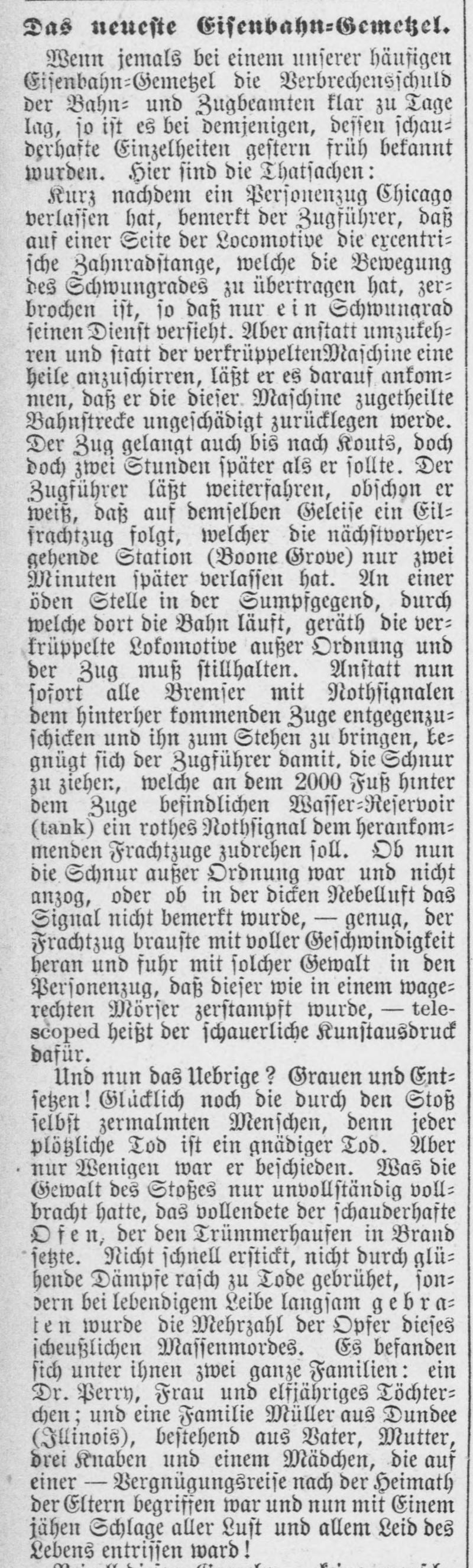
1887 Railroad Collision Disaster
On October 16, 1887, a catastrophic railroad collision claimed the lives of multiple passengers, including the entire Müller family of Dundee, Illinois. The disaster, which occurred in a remote swampy area along the rail line, resulted in a fire that burned many victims alive. The destruction of a complete local family made the event a defining tragedy in the community's history during the Gilded Age & Progressive Era (1870–1917).
1888 East Dundee First Election
On Tuesday, April 17, 1888, the Village of East Dundee held its first annual spring election for village officers. Voters chose one President of the Board of Trustees, six Trustees, and one Police Magistrate. The polls opened at 8 o'clock in the morning and closed at 7 o'clock in the afternoon. A total of **114 votes** were cast. The election was held at the Engine House — the village's newly acquired firehouse.
1891 1892 East Dundee Town Hall Jail Construction
Over the course of about a year, the Village of East Dundee planned, rejected, re-approved, bid out, and eventually rebuilt a combined town hall, jail, and fire engine house — the village's first purpose-built municipal building. The project survived a split board vote against its own plans, a scathing inspection report on the old jail, and a contractor who took the job and then couldn't finish it.
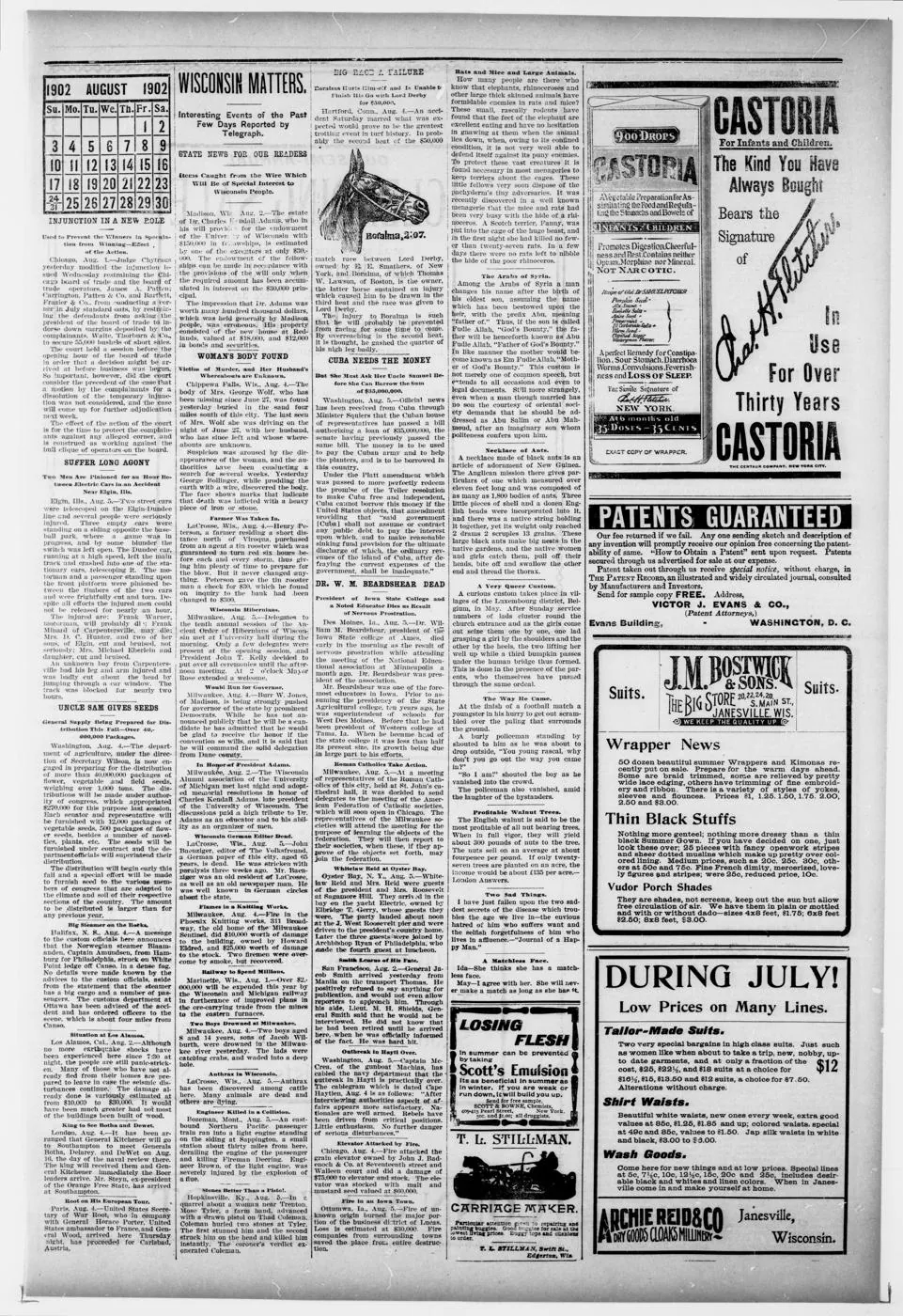
1902 Elgin-Dundee Streetcar Accident
On August 5, 1902, a serious streetcar collision occurred on the Elgin-Dundee line when a car running at high speed was diverted from the main track by an improperly set switch and telescoped into a stationary car. At least five people were injured, two of them critically, and the track was blocked for nearly two hours. The accident drew regional attention and represented one of the more severe incidents in the early history of interurban rail travel in the Fox River Valley.
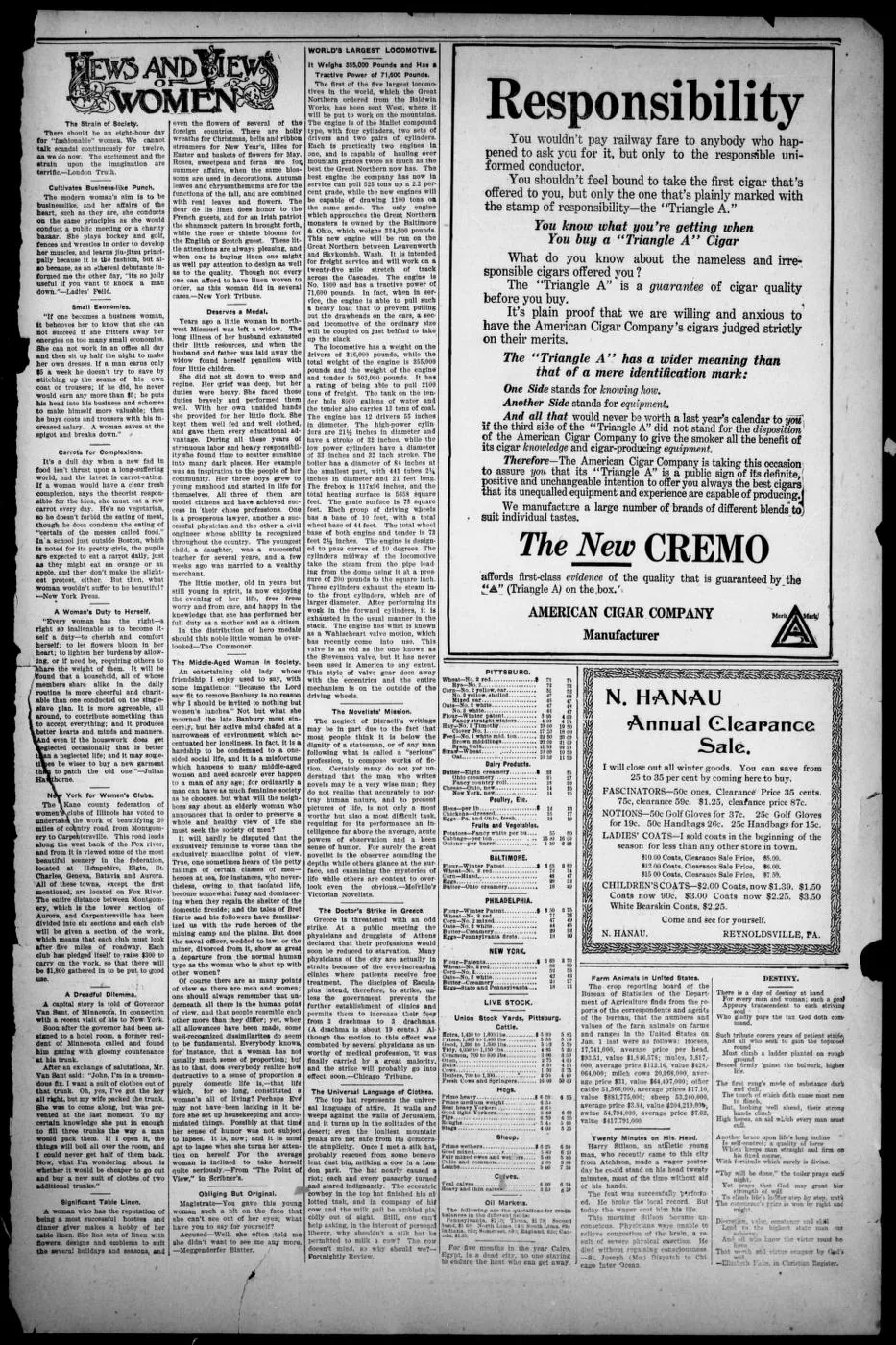
1907 Kane County Womens Clubs Road Beautification
In 1907, the Kane County Federation of Women's Clubs voted to undertake an ambitious civic improvement project: the beautification of approximately thirty miles of country road running along the west bank of the Fox River, from Montgomery in the south to Carpentersville in the north. The project represented one of the more organized Progressive Era civic efforts in the Fox River valley, dividing responsibility for the road among the federation's member clubs, each assigned its own section of the corridor. (Source: the_star_reynoldsville_pa_1907-04-03_image7)
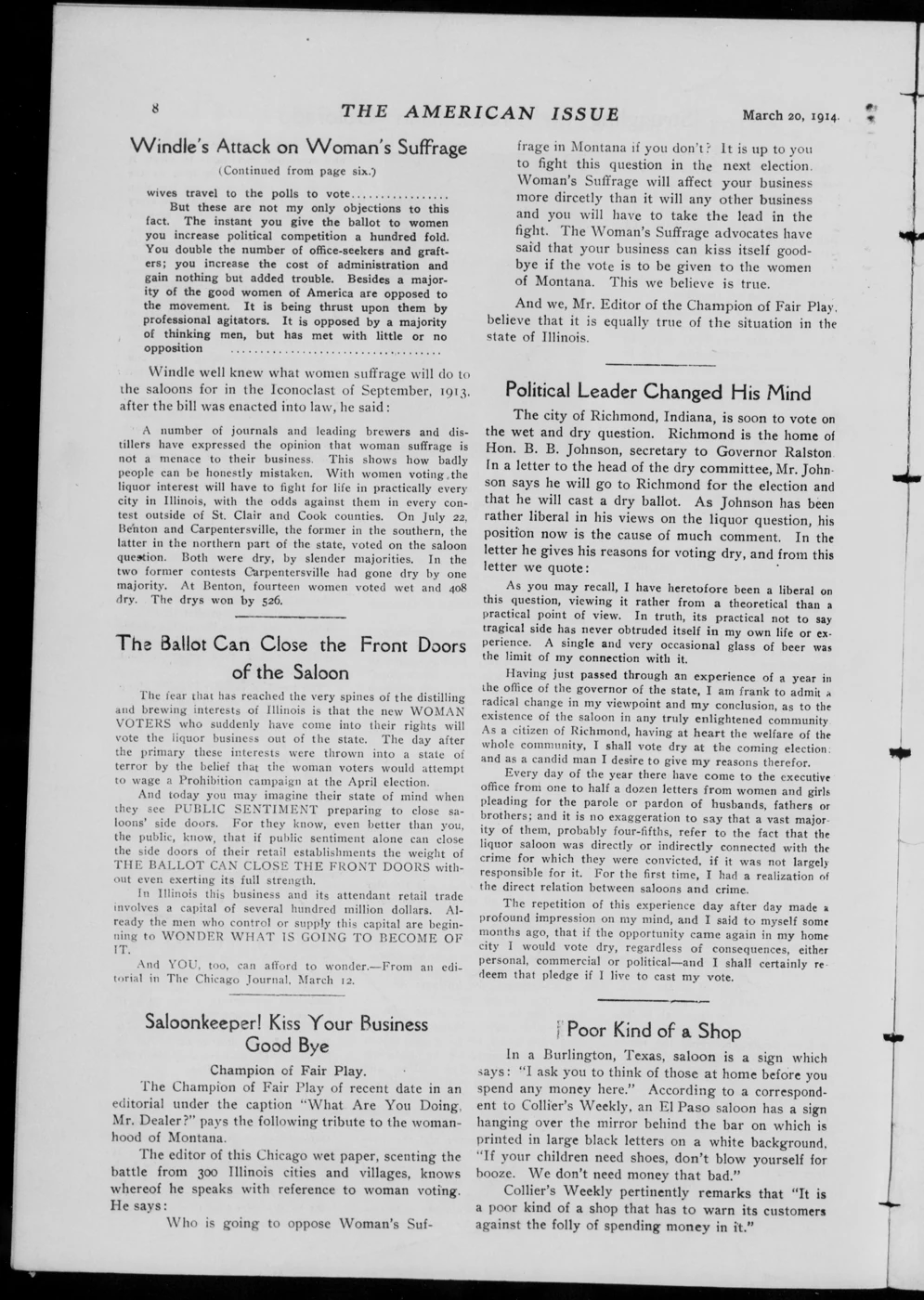
1913 Carpentersville Local Option Election
On Tuesday, July 22, 1913, the village of Carpentersville, Illinois — situated approximately six miles north of Elgin — held a local option election on the question of prohibition. The "dry" (prohibitionist) faction prevailed by a vote of 172 to 155, marking the most decisive victory for temperance advocates across four local option contests held in the village. The election drew particular note for the significant participation of women voters, who reportedly turned out in numbers sufficient to influence the outcome. (Source: east-st-louis-daily-journal-1913-07-23)
1914 Carpentersville Grain Accident
On December 23, 1914, a grain-related industrial accident at the Carpentersville plant of the Els. Iron Bolt Co. killed at least one worker and caused an estimated $50,000 in property damage. The incident was reported in the Chicago evening tabloid *The Day Book* in its last edition of that date, appearing among regional news briefs. It stands as one of the more consequential industrial accidents recorded in the Carpentersville area during the WWI Era.
1914 West Dundee Fire
On June 30, 1914, a major fire threatened to destroy the entire village of West Dundee, Illinois, causing an estimated $300,000 in total damage. Among the most significant losses was the C. F. Hall Company department store, which sustained damages reportedly valued at $100,000. The event stands as one of the most destructive fires in the recorded history of the Dundee area.
1915 Foot And Mouth Disease Outbreak
The 1915 foot and mouth disease outbreak created significant anxiety among dairy farmers in the Dundee, Illinois area. At least one local farmer, Theodore Wagner, reportedly suffered a severe mental breakdown as a result of fear that his dairy herd would become infected. The incident reflects the broader agricultural crisis posed by the disease across the Midwest during the Progressive Era.
1917 Shorthorn Cattle Sale
In January 1917, James Brown of Dundee, Illinois consigned twenty head of Shorthorn cattle to a major livestock sale held in Chicago on January 30–31, 1917. The consignment — comprising young bulls and females descended from the champion sire King Secret — drew regional attention and was noted alongside a notable herd dispersal by W. J. Hill of Northcote, Minnesota. The sale represents one of the earliest documented references to organized livestock commerce connected to the Dundee area in the historical record.
1928 Billy Ranieri Kidnapping
In September 1928, ten-year-old Billy Ranieri was kidnapped and held for ransom for approximately thirteen days before being returned safely to his family. The case drew significant attention to the Fox River Valley region near Dundee and Carpentersville, Illinois, as police conducted an extensive search for the rural farm where the boy had reportedly been held captive. Two suspects, Juliano Romano and Salvatore LaRocco, were identified, and state's attorneys indicated they would seek the death penalty in the case.
Battle Of Chickamauga
The Battle of Chickamauga, fought in September 1863 in northwestern Georgia, was one of the bloodiest engagements of the Civil War. Among those who fought and were wounded there was Captain Joseph Hudson, a resident of Elgin, Illinois and son of William Hudson, one of the early settlers of the Dundee area of Kane County.
Corporation of East Dundee Financial Ledger, 1888–1895
This volume — begun **September 10, 1888** — is the village's own financial accounting book, tracking departmental appropriations and expenditures across at least three fiscal years (1893, 1894, 1895 are clearly cross-referenced). The book is organized in two interlocking systems: an **alphabetical name index** at the front (with A–Z tabs cut into the right margin) pointing to account pages, and **departmental financial accounts** in the body of the book.
D Hill Nursery Catalogue 1895
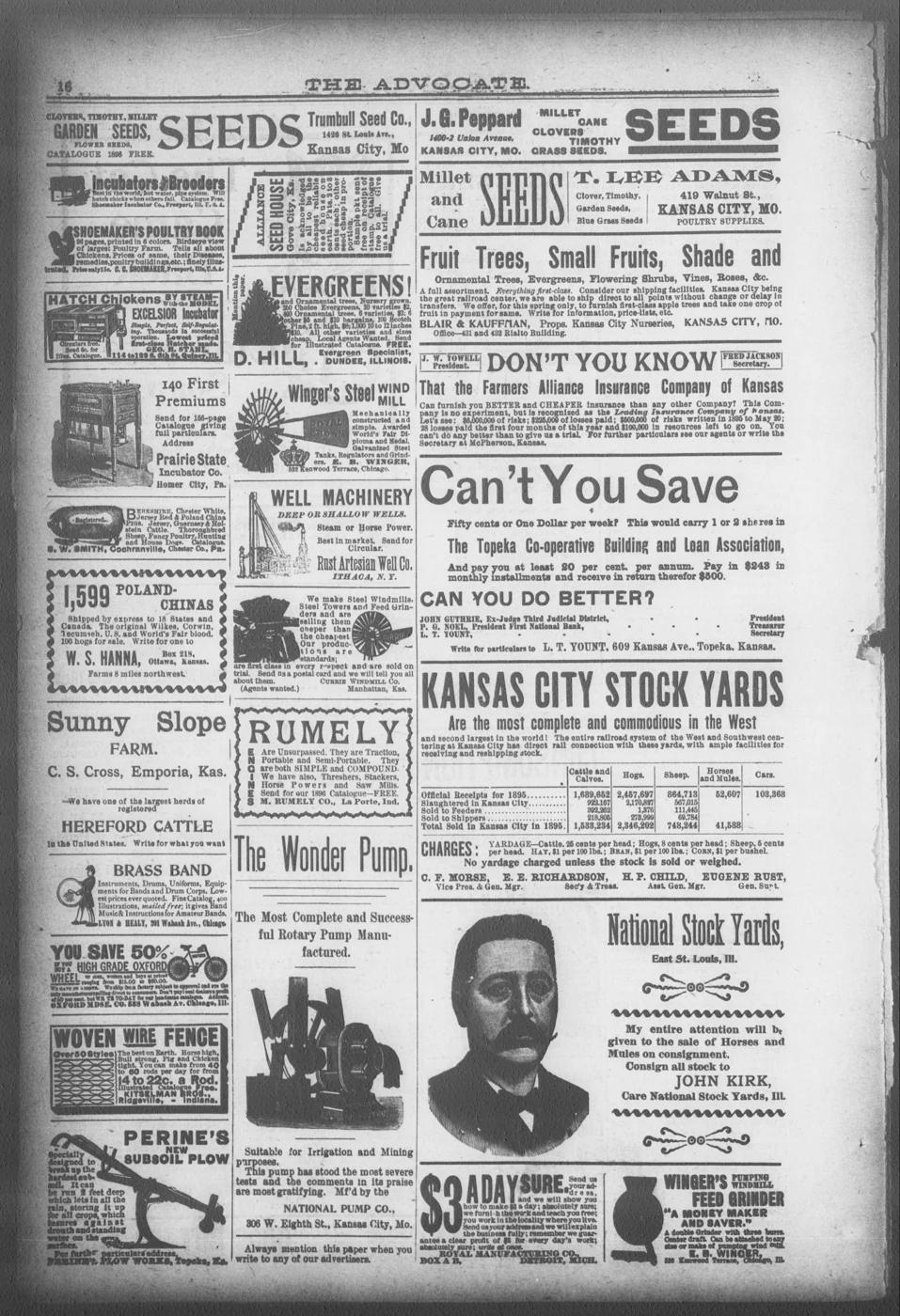
In 1895, D. Hill Nursery of Dundee, Illinois published a catalogue offering evergreen and deciduous tree seeds for commercial sale. The document provides one of the earliest surviving records of the nursery's operations and illustrates the scope of its trade during the Gilded Age, drawing seeds from regions as distant as Scotland, Japan, Siberia, and the Pacific Coast. By March 1896, the nursery was actively advertising in publications as far afield as Kansas, confirming its reach as a nationally marketing enterprise within a year of the catalogue's publication.
Death of David Harvey, 1881
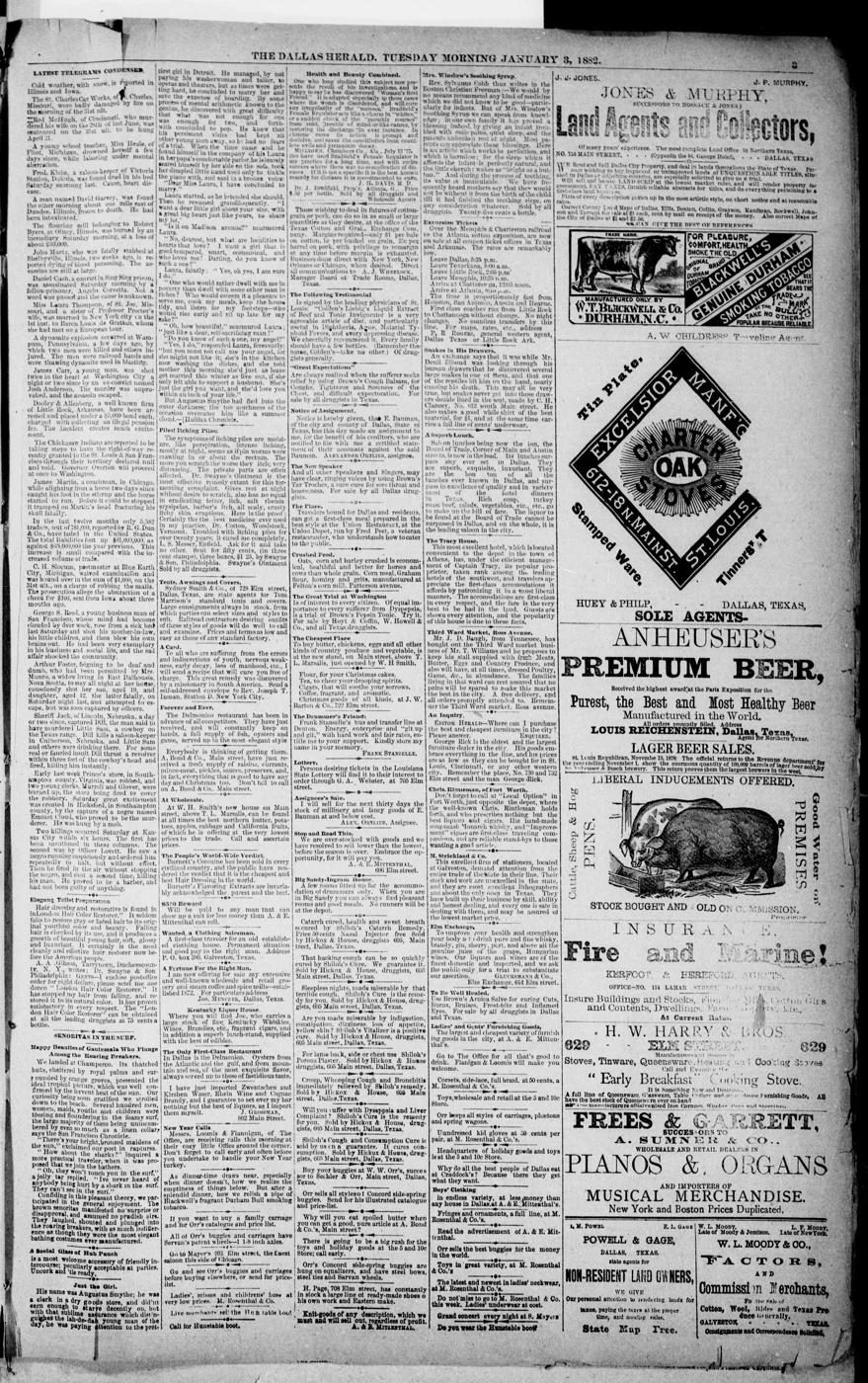
In late December 1881, a man named David Harvey was found frozen to death approximately one mile east of Dundee, Illinois. According to a brief news item reprinted in a national digest, Harvey had been intoxicated at the time of his death. The incident was reported in the January 3, 1882 edition of *The Dallas Daily Herald*, suggesting the story circulated beyond the immediate region, as was common for brief sensational notices in the wire-digest press of the era.
Dundee Electric Light Franchise, 1892
In April 1892, the Village Board of East Dundee, Illinois voted to grant an exclusive franchise to the **Dundee Electric Light Company** to supply electric street lighting to the village — the moment electricity arrived in East Dundee.
Dundee Post Office Establishment
On September 3, 1841, a post office was established in Dundee, Kane County, Illinois, with George W. Hoit appointed as its first postmaster. The establishment of a post office marked a significant milestone in the formalization of Dundee as a recognized community during the early settlement era of northeastern Illinois.
E C Fisher Rock Island Appointment 1914
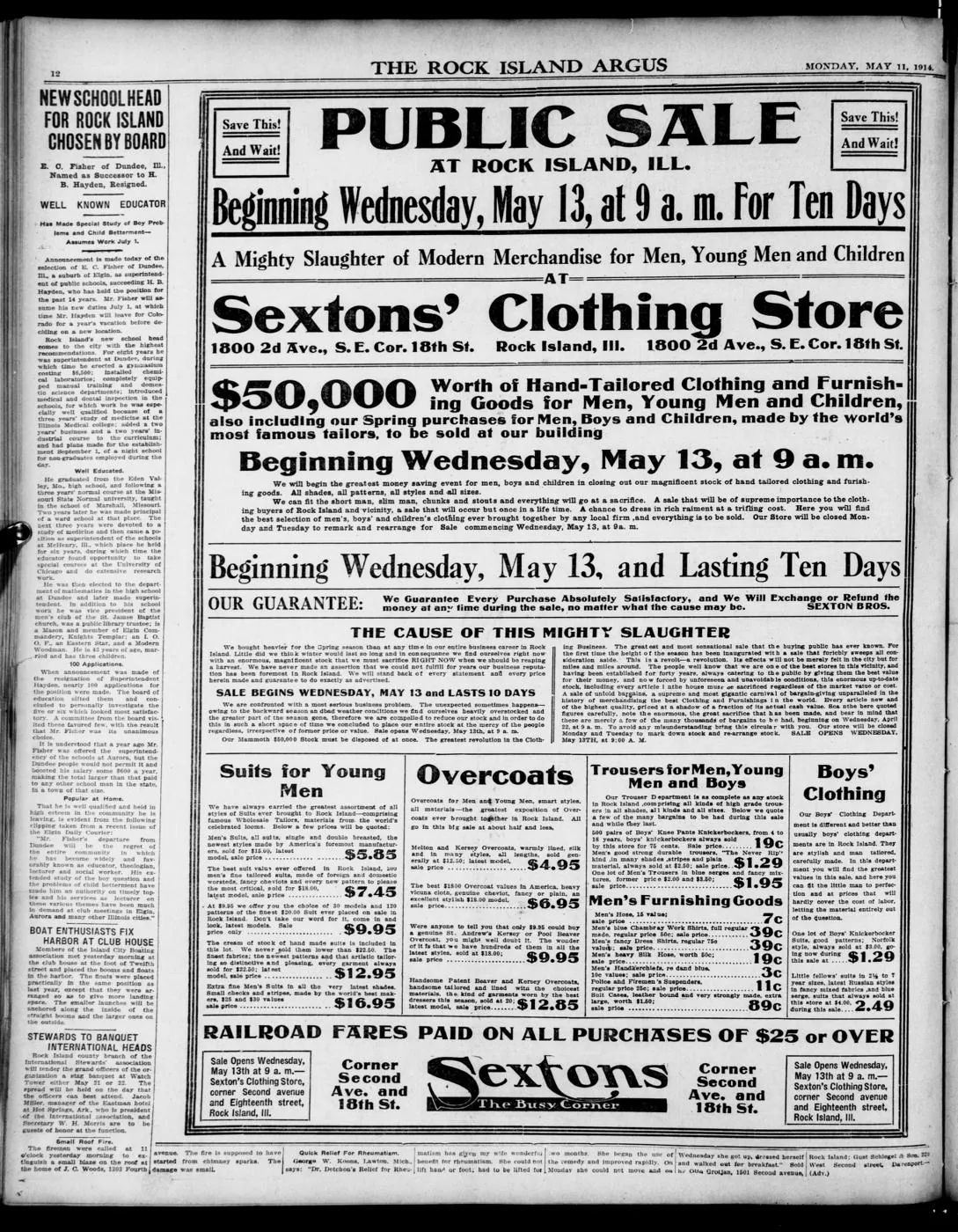
In May 1914, E. C. Fisher — who had served as superintendent of public schools in Dundee, IL for eight years — was selected to lead the Rock Island, Illinois public school system, succeeding H. B. Hayden following a competitive review of nearly one hundred applicants. The appointment marked the close of a particularly productive chapter in Dundee's educational history and drew regional attention to the accomplishments Fisher had achieved during his tenure. He was set to assume his new duties on July 1, 1914. (Source: rock-island-argus-1914-05-11-image12)
Early 1900s Horse Theft Crime Wave
In the early 1900s, Kane County experienced a notable wave of horse theft that prompted both criminal prosecutions and a formal county-level policy response. Multiple individuals were convicted and sentenced to imprisonment, and the county commissioners took the unusual step of establishing a bounty to encourage the apprehension of horse thieves throughout the region, including communities along the Fox River such as East Dundee and Carpentersville.
Early Mill Enterprises Kane County
In the pioneer settlement period of Kane County, Illinois, the establishment of sawmills and grain mills along the Fox River was among the earliest and most essential commercial undertakings. According to the *Historical Encyclopedia of Illinois and History of Kane County* (1904), mill enterprises took root at nearly every significant river crossing in the county, including Aurora, Elgin, North Aurora, Mill Creek, Batavia, Geneva, St. Charles, Dundee, and Carpentersville. These ventures provided the lumber and ground grain upon which frontier communities depended for their survival and growth.
East Dundee Village Governance, 1890–1893
The second phase of East Dundee, Illinois's recorded municipal history covers a period of rapid civic expansion: the village organized a formal fire department, contracted for electric street lighting, survived a major property-boundary controversy, and extended the Police Department's reach into Sunday liquor enforcement. The record book covers these years in continuous handwritten minutes, running from page 128 through the book's final entries near page 367.
East Dundee Village Governance, 1893–1895
This period covers the contents of the second East Dundee village record book — a handwritten minute book that picks up where 1890-1893-east-dundee-village-governance left off, approximately in late 1893. The book documents the transition to new presidential leadership, a major cross-river infrastructure project, and the routine work of an increasingly established municipal government.
Elgin Congregational Association Annual Meeting 1910
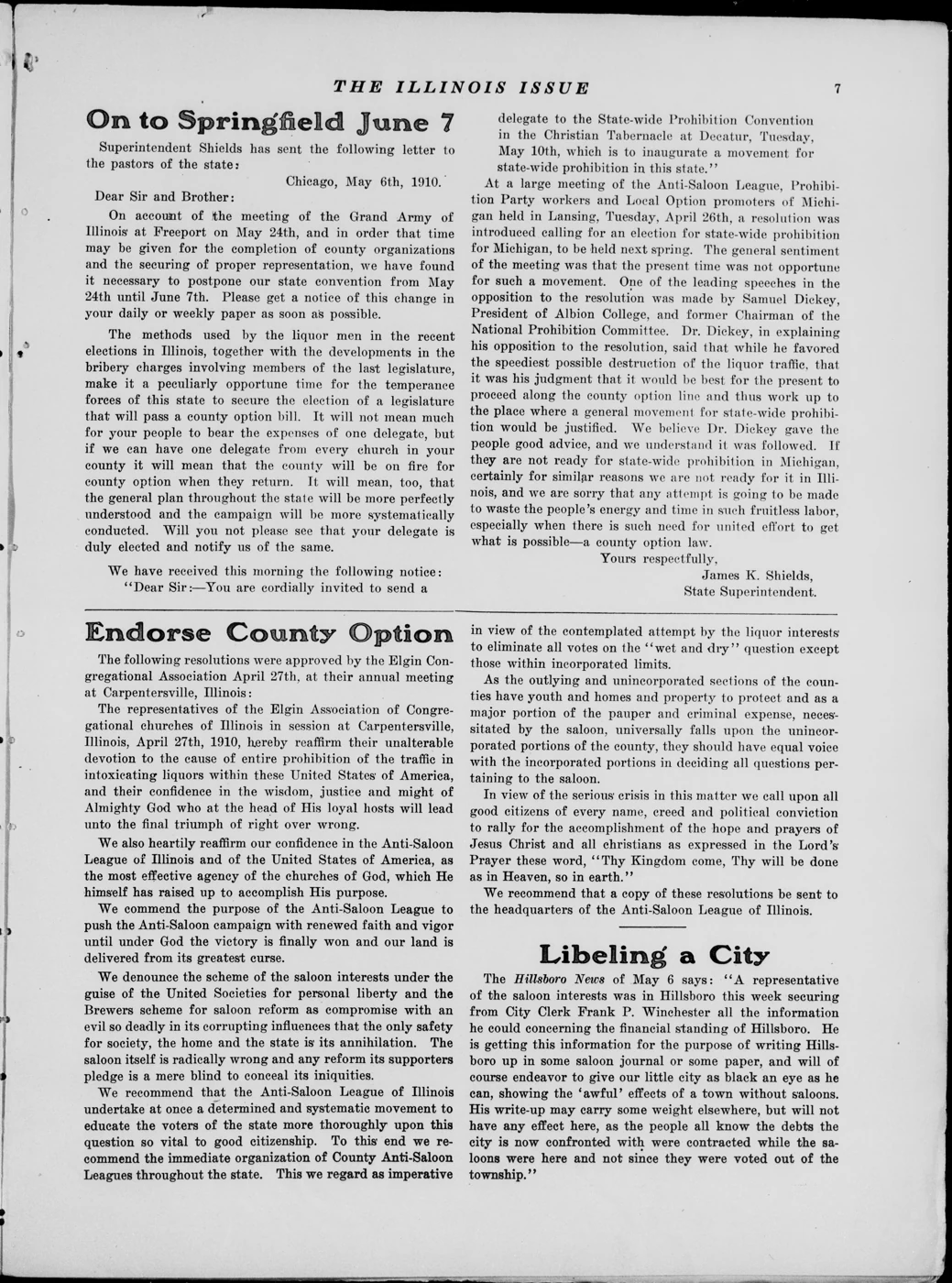
The Elgin Congregational Association held its annual meeting on April 27, 1910, at Carpentersville, Illinois, where members passed temperance resolutions reaffirming the association's commitment to the prohibition of intoxicating liquors traffic throughout the United States. The meeting took place against a backdrop of active debate within Illinois temperance circles over the relative merits of county option legislation versus state-wide prohibition. (Source: the-illinois-1910-05-13-image-7)
Establishment Of Carpentersville Condensed Milk Plant
In 1888, the New York Condensed Milk Company established a branch plant at Carpentersville, Illinois, in Kane County. The facility was placed under the superintendency of Charles E. Lewis, a Connecticut native with prior experience in the condensed milk industry, and it represented a notable industrial investment in the Fox River valley during the Gilded Age.
Fifty-Second Infantry Regiment Service
Several residents of Dundee served in the Fifty-Second Illinois Volunteer Infantry Regiment during the Civil War, with Jerome D. Davis of Dundee ultimately rising to command the regiment as colonel before its mustering out in 1865. The regiment saw service in Georgia and the Carolinas campaign and participated in the Grand Review at Washington before disbanding at Camp Douglas, Chicago.
German Immigration Wave 1836
Beginning with a single family in 1836, German immigration into the Northwest territories of Illinois grew steadily into what one contemporary account described as an "irruption" — a sustained westward movement that would transform the landscape and political character of Kane County within a generation. Dundee emerged as one of the most visible centers of this settlement, with its eastern portion becoming almost wholly occupied by German families by the time the 1878 county history was compiled.
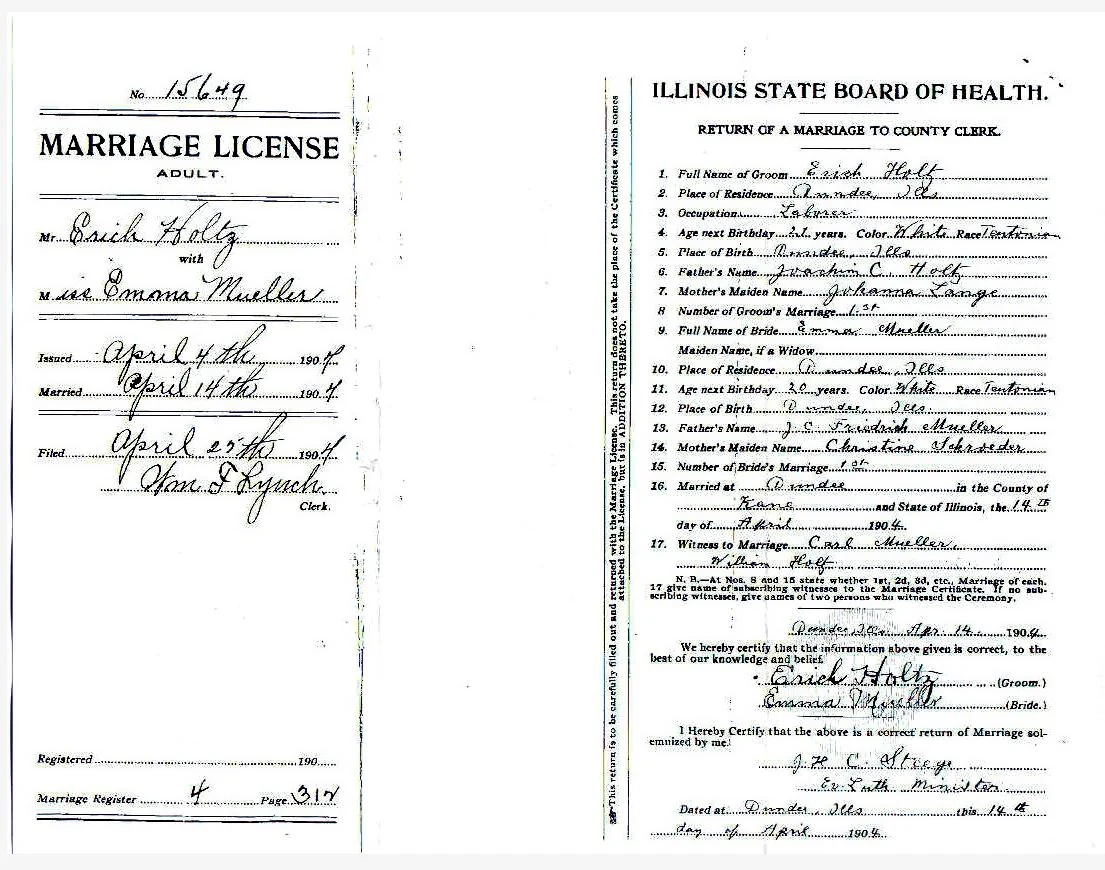
Holtz–Mueller Marriage, Dundee, 1904
Erich Holtz married Emma Mueller at Dundee, Kane County, Illinois, on April 14, 1904, per the Illinois State Board of Health's official marriage return and the underlying marriage license (Kane County License No. 15649).
Illinois Constitutional Convention
The Illinois Constitutional Convention refers to several assemblies convened during the nineteenth century to draft or revise the governing document of the State of Illinois. Two conventions are of particular note in Kane County historical records: the convention of June 1847, assembled at Springfield to prepare the first amended Constitution of the State, and the convention of 1870, in which Kane County sent representation. Dundee figures marginally in the broader record of Kane County's political participation during this era, through individuals who served in state offices connected to the constitutional and legislative order that followed.
Kane County Sunday School Union Annual Meeting
The Kane County Sunday School Union held its annual meeting in November 1903 at St. Charles, Illinois, gathering to assess the condition of Protestant Sunday schools throughout the county. Statistics compiled for the meeting and published the following year offered a rare snapshot of organized religious education across Kane County's townships, including Dundee, during the early Progressive Era.
McDonald Will Case Trial, 1893
In February 1893, trial proceedings in the contested estate of the late Senator McDonald were held at Noblesville, Indiana. Among the witnesses called was **George A. Hutchins**, a resident of Carpentersville, Illinois, whose testimony connected the Fox River valley community to this high-profile Gilded Age legal dispute. Hutchins testified regarding events that had taken place at his Carpentersville home in December 1891, lending the case an unexpected local dimension.
Pioneer Era Claim Jumping Disputes
During the early settlement of Dundee township and the broader Kane County region, disputes over land claims were, according to one contemporary account, a "universal and extensive evil." New arrivals frequently found the most desirable tracts of timber and prairie already spoken for — sometimes through the use of proxies — and conflicts over competing claims occasionally turned violent. One documented altercation in Dundee township ended with settler James C. Hanks being knocked down with a stone by Thomas Deweese. Settler committees were appointed to adjudicate the worst cases, though their authority was informal and their decisions not always accepted peacefully.
Pioneer Settlement Kane County 1834
The organized settlement of Kane County began in earnest around 1834, when the first permanent Euro-American settlers arrived to find, according to later accounts, "no inhabitants except primitive Indians" — a phrase that erased an active Potawatomi presence rather than an empty landscape; see Native American Era (pre-1830s). Within a generation, the county had developed roads, mills, bridges, and eventually railroads and manufacturing plants, emerging by the early twentieth century as one of Illinois's most prosperous counties. Dundee served as an early anchor in this development, with pioneer infrastructure reportedly constructed along the corridor between Dundee and Aurora during the county's founding years.
Pioneer Settlement of Dundee Township, 1830s
The pioneer settlement of Dundee Township in Kane County, Illinois took place primarily during the 1830s, with the earliest arrivals establishing homesteads in what would become one of the more well-documented early communities of northeastern Illinois. According to the *History of Kane County* (Joslyn, 1908), the founding settlers were predominantly of Scotch-Irish-English descent, many of whom had moved northward and westward from Virginia and Kentucky before arriving on the Illinois frontier.
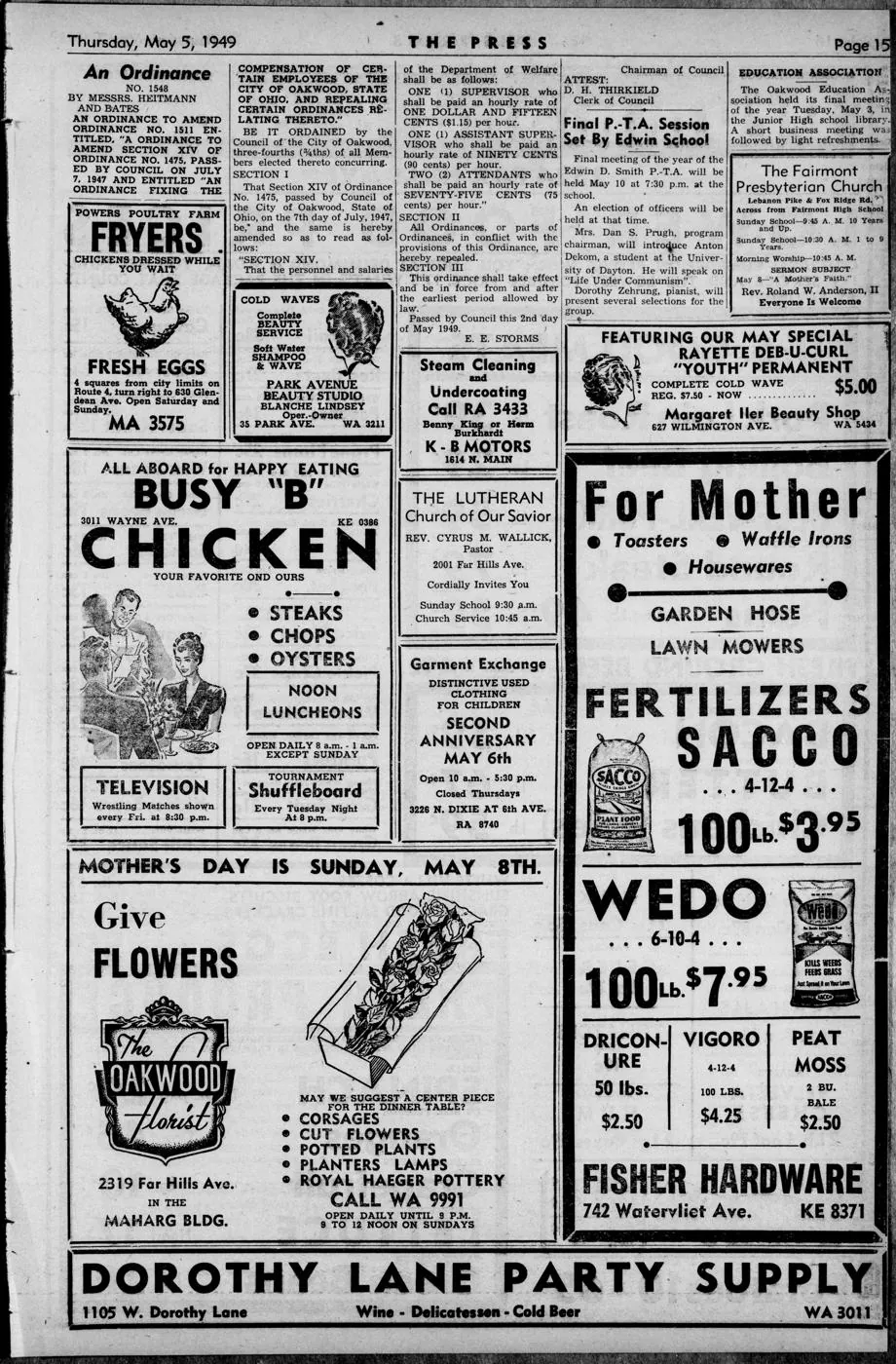
Royal Haeger Pottery Distribution 1949
By May 1949, Haeger Pottery Company of East Dundee, Illinois had established distribution of its Royal Haeger Pottery line well beyond the Chicago metropolitan area. An advertisement appearing in *The Oakwood Press* of Oakwood, Ohio on May 5, 1949 documents the product line being carried by a retail florist in the Dayton, Ohio market — offering a glimpse into the postwar commercial reach of one of East Dundee's most significant manufacturers.
Treaty of Chicago (1833)
In September 1833, representatives of the Potawatomi, Ottawa, and Ojibwe (Chippewa) nations — collectively the Council of Three Fires — gathered in Chicago and signed a treaty ceding their remaining land in northern Illinois and southeastern Wisconsin to the United States, including the Fox River Valley land that became Dundee Township and the site of Chief Nickaway's village at Dundee, Illinois. (Source: HistoryOnTheFox.com: Fox Valley Native Villages, c. 1830)
World's Fair Evergreen Exhibit
Dr. Hill, proprietor of D. Hill Nursery in Dundee, Illinois, exhibited evergreens at the World's Fair — the 1893 Columbian Exposition in Chicago, also known as the White City — to considerable public acclaim. The exhibit was noted for its landscape arrangement and artistic display, and according to Hill's own 1895 catalogue, it generated nearly 1,000 letters of compliment from patrons across the United States, Canada, England, and France. (Source: *Catalogue of Evergreens* (D. Hill Nursery Co., Dundee, Ill., 1895))