Date & Context
- Date of election: Tuesday, July 22, 1913
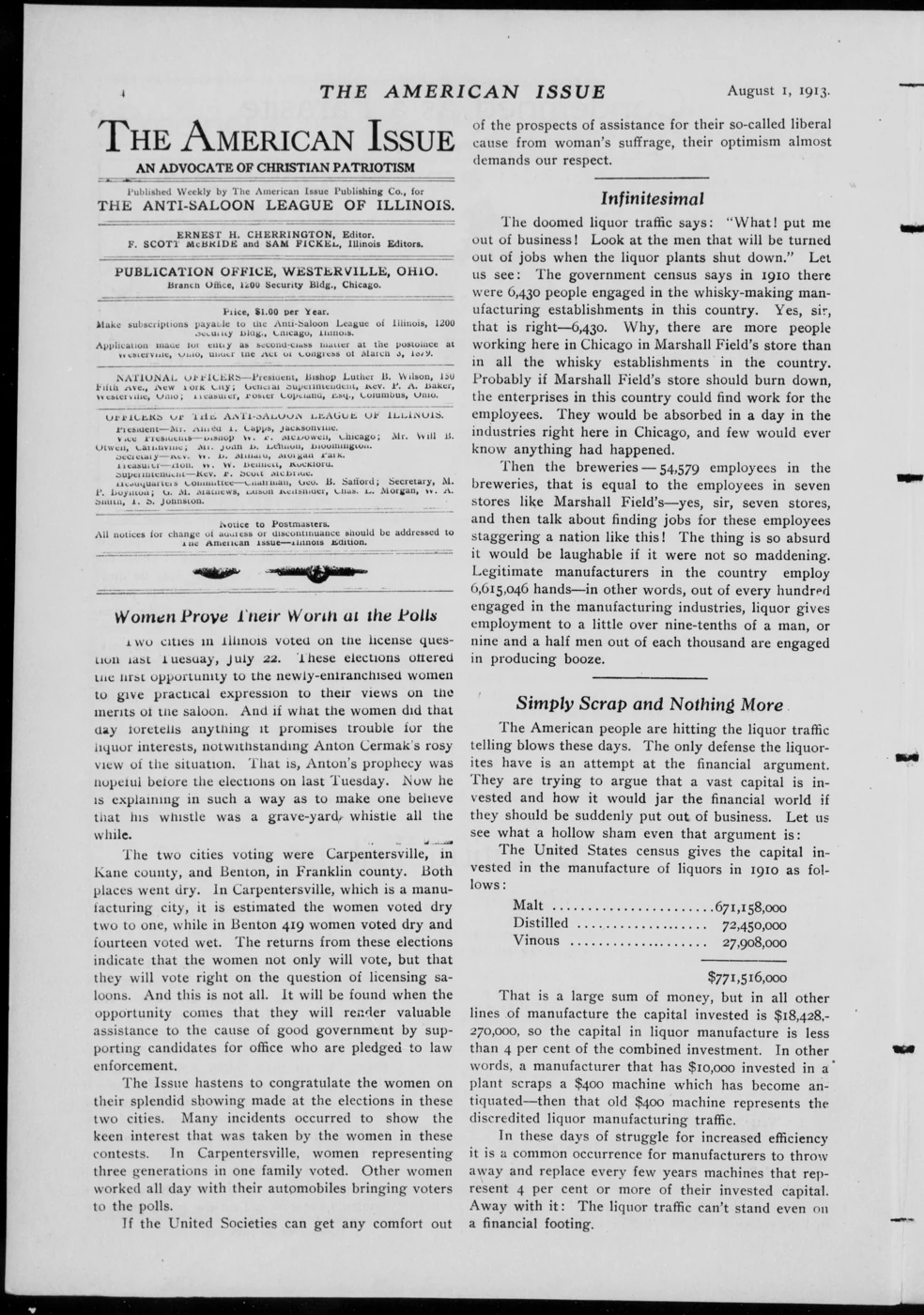
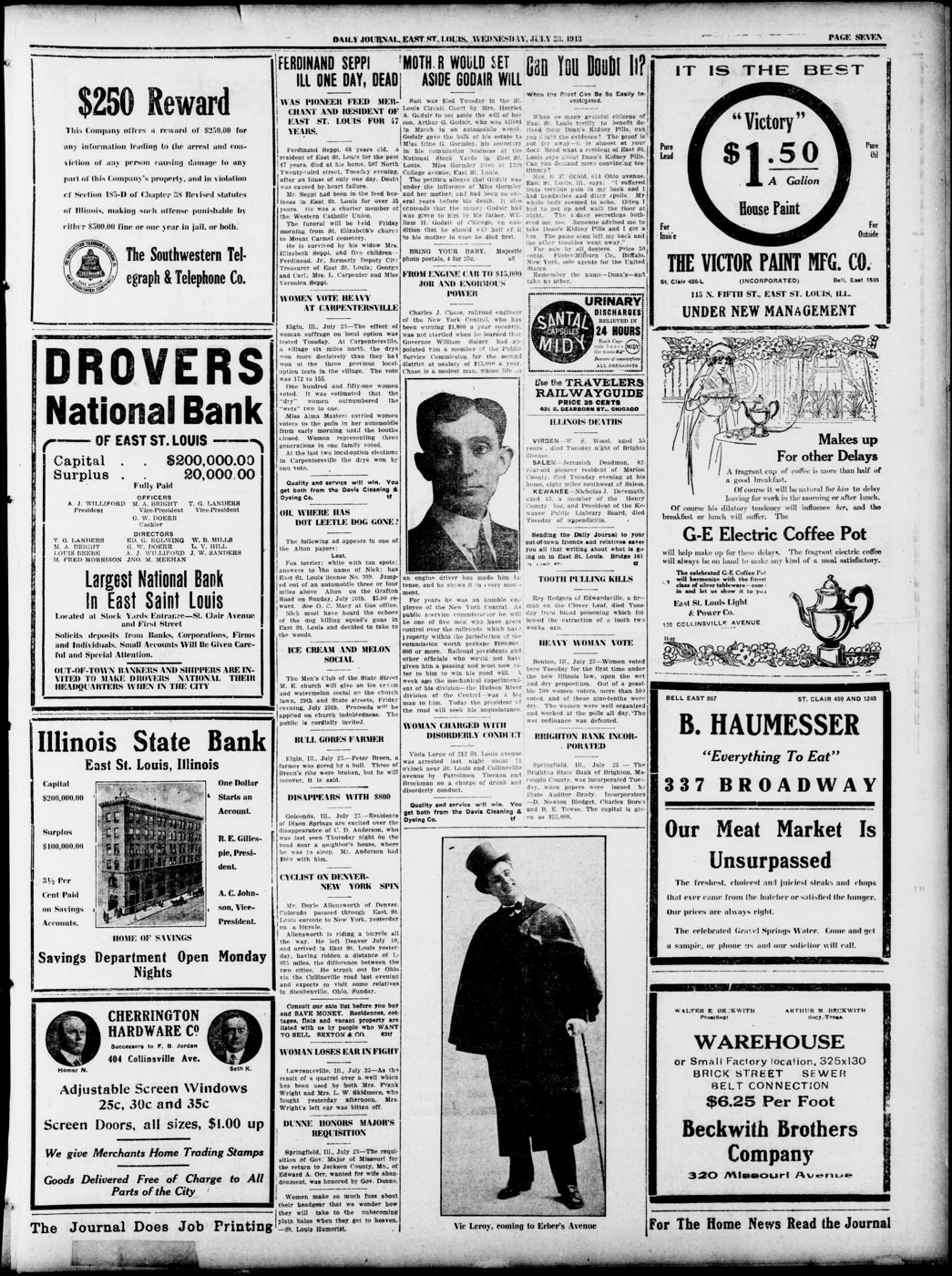
- Location: Carpentersville, Illinois (manufacturing city in Kane County, approximately six miles north of Elgin) (Source: american-issue-1913-08-01)
- Question at issue: Local option on the sale of alcohol (prohibition vs. licensed sale)
- Final vote: Dry 172, Wet 155
The election took place during the Progressive Era, a period across Illinois and the broader Midwest characterized by temperance activism, civic reform movements, and expanding political participation by women — including, in some jurisdictions, the right to vote in certain local elections. The American Issue, a national temperance newspaper edited by Ernest H. Cherrington and published out of Westerville, Ohio, covered the Carpentersville vote in its August 1, 1913 issue alongside other Illinois local option results, indicating the election was of interest beyond the immediate region. The Illinois edition of that paper was co-edited by F. Scott McBride and Sam Fickle. (Source: american-issue-1913-08-01)
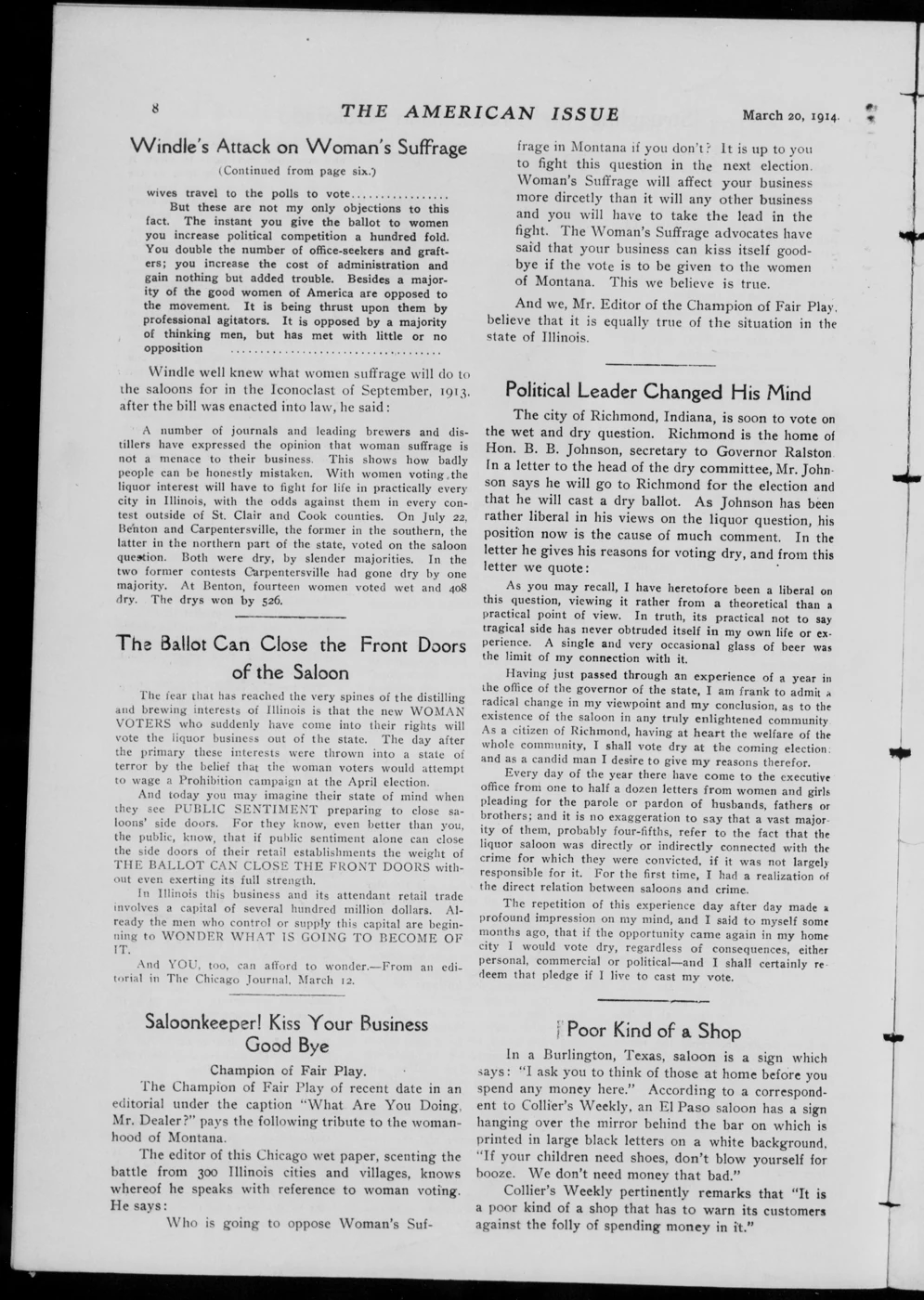
The same day — July 22, 1913 — the city of Benton in Franklin County, Illinois, also held a vote on the saloon license question. The American Issue reported that in Benton, 419 women voted dry and only 14 voted wet, offering a striking regional parallel to the women's voting patterns observed in Carpentersville. Both elections were among the first opportunities for newly-enfranchised women in their respective communities to vote on the saloon question. (Source: american-issue-1913-08-01) The March 1914 issue of The American Issue revisited the Benton results in similar terms, noting that dry voters prevailed there by a margin of 526 votes, with 408 women voting dry and only 14 voting wet — figures broadly consistent with earlier reporting, though the precise totals vary slightly between the two issues. (Source: american-issue-1914-03-20)
Woman suffrage had been enacted into law in Illinois by September 1913, providing the legal framework within which women's participation in these local option elections took place. The liquor interests in Illinois, according to the March 1914 American Issue, had significant financial stakes in the outcome of such elections — the liquor business in the state reportedly involved several hundred million dollars in capital — and the article discussed fears among those interests that women voters would vote to prohibit saloons. A writer identified only as "Windle," who had published views critical of woman suffrage in The Iconoclast in September 1913, was cited in that same issue in connection with this broader debate. (Source: american-issue-1914-03-20)
Participants
Women Voters
One of the most remarked-upon features of the election was the scale