Date & Context
- Date: June 30, 1914
- Location: West Dundee, Illinois
- Era: Gilded Age & Progressive Era (1870–1917)
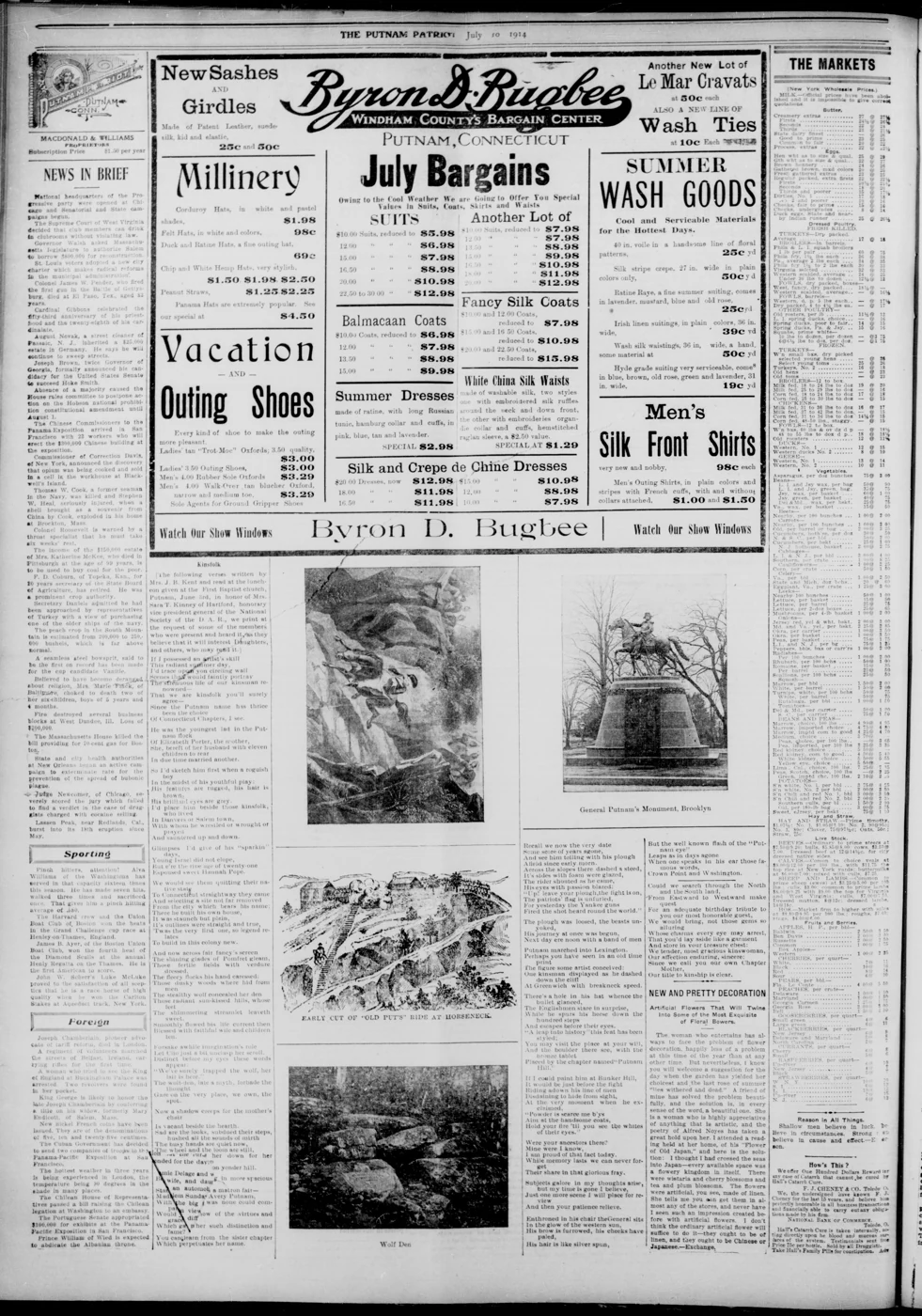
The Putnam Patriot (Putnam, Conn.), reporting on the fire in its July 10, 1914 edition, described the fire as having destroyed several business blocks at West Dundee, with a property loss estimated at $250,000. (Source: Putnam Patriot (Putnam, Conn.), July 10, 1914 (Chronicling America))
⚠️ CONTRADICTION: The Day Book (Chicago), reporting on June 30, 1914, estimated total damages at $300,000, while the Putnam Patriot (Putnam, Conn.), reporting on July 10, 1914, placed the property loss at $250,000. The discrepancy may reflect differing estimates at different points in time, different methodologies, or imprecision in either report. Both figures are retained here pending further corroboration.
Participants
Property Owners and Businesses Affected
- C. F. Hall — Owner of the C. F. Hall Company, a department store in West Dundee. His business was destroyed in the fire, with losses reportedly totaling $100,000. (Source: The Day Book (Chicago), June 30, 1914 (Chronicling America))
- Elgin Jewelry Store — A West Dundee business destroyed in the fire. (Source: The Day Book (Chicago), June 30, 1914 (Chronicling America))
Residents
- Mrs. William Jaffles — A resident who lived above the Elgin Jewelry store. She was reportedly carried out of the building along with her young baby during the fire. (Source: The Day Book (Chicago), June 30, 1914 (Chronicling America))
Note: The source describes Mrs. Jaffles as being carried out with her "old baby." The precise meaning of this phrasing is unclear; it may reflect period vernacular or a typographical artifact in the original publication.
Significance
The 1914 West Dundee Fire represents one of the most serious single disaster events documented in the village's early twentieth-century history. With total estimated damages ranging from $250,000 to $300,000 depending on the source — a substantial sum for a small Illinois village in 1914 — the fire would have had lasting economic consequences for affected property owners and the broader community. The destruction of several business blocks, including the C. F. Hall Company department store and the Elgin Jewelry store, points to sweeping losses within the commercial district.
The human dimension of the event is illustrated by the rescue of Mrs. William Jaffles and her child from above the jewelry store, suggesting the fire moved quickly enough to endanger residents living above commercial premises.
The fact that the fire was reported as far away as Putnam, Connecticut — in the July 10, 1914 edition of the Putnam Patriot — suggests the scale of destruction was considered newsworthy beyond the immediate region. (Source: Putnam Patriot (Putnam, Conn.), July 10, 1914 (Chronicling America))
Further research into local municipal records, insurance filings, and subsequent issues of area newspapers may clarify the fire's origin, the response of local and mutual-aid fire brigades, and the long-term rebuilding efforts that followed.
Sources
- The Day Book (Chicago, Ill.), June 30, 1914, Last Edition, Image 32. Chronicling America, Library of Congress. https://www.loc.gov/resource/sn83045487/1914-06-30/ed-2/?sp=32
- Putnam Patriot (Putnam, Conn.), July 10, 1914, Image 2. Chronicling