June 20, 1887
Special Meeting, June 20, 1887
Vol. 1, p. 3
June 13, 1887 – September 1893
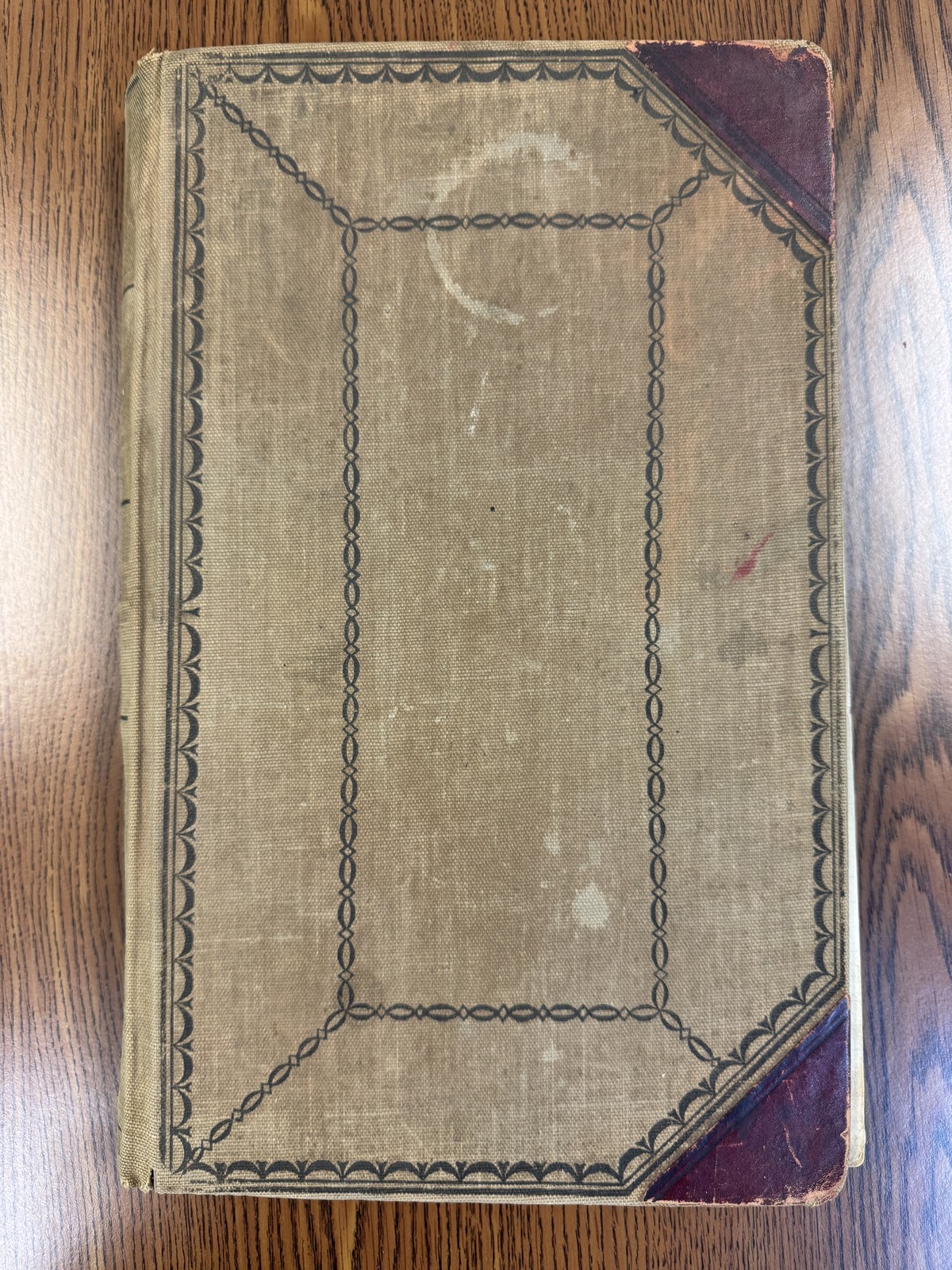
June 20, 1887
Vol. 1, p. 3
June 27, 1887
first appearance of Henry Guldan on the record — the Board buying him a "navy blue Police suit" three weeks before the village even had a police budget line, suggesting he was already functioning as village police before formal appointment.
Vol. 1, p. 4
July 5, 1887
Henry Guldan's first paid Police wage on record ($45.00), same meeting as the $10 uniform allowance from page 4. This predates the stories log's earlier estimate of his ~$57-58/month rate — his pay evidently started lower and rose over time. Many vendor names here (John Klauge, Chas. Hintz, J. Heidman, C. Hagen, Fred Riedesel, H. Lang, Herman Arndt, Louis Rabe, J. Borden, Thomas Connelly, Henry Rover, J. Rigby, Wendland & Morse, John Norris & Co.) do not yet have wiki pages.
Vol. 1, p. 5
July 5, 1887
The Oatman Brothers whey/buttermilk pollution complaint is a new find — an 1887 environmental nuisance case, not previously in the wiki. New names: John Emde, Chas. Schmidt(?), the Oatman Brothers, H. Reed, Fred Hedrow, Chas. Oberst, Fred Zimmerman.
Vol. 1, p. 6–7
This is the full verbatim text of the ordinance the stories log paraphrased as "the blacklist mechanism" and "dual bond requirement" — the actual bond amounts ($500/$3,000) don't appear in these particular sections and may be in a separate bond-form page not yet reached. Section 6 (the "wife's affidavit" mechanism) is the formal version of what became the Ruth and Kelly family blacklist cases in September 1887.
Vol. 1, p. 8–11
Vol. 1, p. 12
Vol. 1, p. 13
The Black List ordinance's actual mechanism (Board places a name on the list at its own discretion, not only via the wife's-affidavit process in the liquor ordinance's Section 6) is broader than the stories log described — there were apparently two separate paths onto the blacklist.
Vol. 1, p. 14–15
Vol. 1, p. 16–17
The "navy blue suit with brass buttons" requirement in Section 10, paid for by the officer himself, is the origin of the uniform allowance the Board voted Henry Guldan on June 27 (page 4) — the ordinance came second, formalizing what the Board had already started doing informally.
Vol. 1, p. 18–19
Section 4 (cheese factory / brewery nuisance) is the exact provision the Oatman Brothers complaint (pages 6–7 above) was made under — this ordinance was adopted the same day as that complaint's underlying legal framework, and it names Hardin Oatman as one of the family behind it.
Vol. 1, p. 20–21
Section 6 explicitly names Fox River as a protected waterway against dumping — direct legal ancestor of the millrace/river-as-infrastructure theme already flagged as a cross-cutting theme.
Vol. 1, p. 22
Vol. 1, p. 23
This ordinance is a rich, colorful window into 1887 East Dundee social order — the enumerated offenses (crying false "fire" or "watch" alarms, public bathing/nudity, animal cruelty, disrupting church services) haven't appeared anywhere in the wiki yet and are good Field Note material for a piece on daily life/social control in the founding year.
Vol. 1, p. 24–25
Vol. 1, p. 26–27
This closes out the Vagrancy ordinance on the same page it begins — one of the shorter of the nine July 5 ordinances. Section 1's list of suspect locations ("gambling houses," "Railroad depots," "houses of bad repute") is a small but vivid window into what East Dundee's founders considered the town's rougher edges in 1887.
Vol. 1, p. 28–29
This is the founding public-health framework for East Dundee — mandatory physician reporting of cholera/scarlet fever/smallpox, quarantine-notice postings, and police search powers for sanitary enforcement. No wiki page currently covers village public health policy; this is strong material for one, and ties into the Oatman Brothers nuisance case as the regulatory backdrop.
Vol. 1, p. 30–31
Vol. 1, p. 32–33
Vol. 1, p. 34–35
Vol. 1, p. 36–37
Vol. 1, p. 38–39
August 1, 1887
John F. Fierke was paid $38.30 for "preparing and writing 16 Ordinances," which confirms in the village's own financial record that the founding ordinance slate (pages 1–39 above) numbered exactly sixteen. This also formally authorizes legal action against the Oatman Bros. over the river nuisance — the complaint from pages 6–7 is now escalating.
Vol. 1, p. 40
This Railroad Ordinance — speed limits, the five-minute crossing rule, mandatory bell-ringing, and a required flagman at Main Street — is the direct regulatory backdrop to the 1887 railroad collision that killed members of the Müller family on October 16, 1887. Whether that collision happened at one of the crossings named here, and whether the flagman requirement was actually being enforced by then, is worth a closer look — this ordinance passed barely two and a half months before the crash.
Vol. 1, p. 41–43
August 31, 1887
"Mrs. C.H. Kelly" (not just "Mrs. C. Kelly") petitioning to remove her son "F.B. Kelly" from the Blacklist, granted September 6, 1887 — matches the stories log's account exactly and adds her full initials. Also confirms the village was already a working fire department with "15 Firemen" by September 1887, and was actively negotiating to buy the Engine house lots from Henry Edwards.
Vol. 1, p. 44–45
September 21, 1887
This is the first appearance of a named millrace owner, Charles Nolte, decades before the 1913 Board of Local Improvements millrace reference (Chris Patsche's property). It also introduces Albert Ruemling, a new resident who filed a formal nuisance complaint. This confirms the Oatman Bros.' waste discharge — already documented as flowing into "the River" — specifically fed into Nolte's mill race, tying the Fox River / millrace infrastructure theme directly to the Oatman case for the first time. Also confirms Wm. Ruth's blacklist removal verbatim, matching the stories log's account exactly, initiated by "Mrs. H. Ruth."
Vol. 1, p. 46–47
October 10, 1887
This resolves the millrace case — two separate abatement notices issued October 10, 1887, one to Charles Nolte (the mill race owner) and one to the Oatman Bros. (the polluter). Strong candidate for a Field Note tying together the Fox River, Nolte's mill (a new Place-page candidate), the Oatman cheese/butter factory, and the later 1913 Patsche millrace reference.
Vol. 1, p. 48–49
October 15, 1887
Charles Nolte is formally sued and fined — the mill race case escalates from notice to prosecution. Chas. H. Kelly (mason by trade, paid for work on p.51) and F.B. Kelly — the same Kelly blacklisted and removed in September — reappear here over a fence encroaching on the River Road, giving the Kelly family a second documented interaction with the village government within two months.
Vol. 1, p. 50–51
November 14, 1887
This is the first fire-mutual-aid arrangement on record — a decade before the 1893 East/West Dundee mutual aid agreement that followed it. Also notable: Henry Peters — who becomes Village President by 1890 — appears here in 1887 as an ordinary citizen filing a nuisance complaint about illegal slaughtering, years before his presidency. New name: Edward Lovell of Elgin, the village's contact for pushing the N.W. Railroad on the still-unfulfilled flagman requirement.
Vol. 1, p. 52–53
December 31, 1887
This page names the five licensees clearly: August Herrman, Julius Kolb, Joachim Lorentz, Henry Plinke, and Chas. Koehl. This second round of licenses, at $100 each, covers a shorter roughly four-month term running to the ordinance's mandatory April expiration. The same page closes out two cases start to finish: both the Nolte mill-race complaint and the Arndt/Volsh illegal-slaughtering case reached the Police Magistrate and produced fines of $3.00 and $5.00.
Vol. 1, p. 54–55
February 7, 1888
First appearance of Chas. J. Bethke — who wins the Village Presidency at the April 17, 1888 election — here two months earlier, simply as an insurance vendor billing the village $12. E.C. Lovell may be the same Edward Lovell of Elgin engaged over the railroad flagman matter in December, now doing paid work for the village.
Vol. 1, p. 56–57
April 17, 1888
This is the original notice slip for the tie-vote/drawn-matches election of April 17, 1888, physically pasted into the ledger rather than copied by hand — a rare surviving piece of the village's actual printed/handwritten ephemera rather than the clerk's transcription of it. Also: North Main Street and River Street grading/graveling work is authorized, with a new stone bridge over the creek on River Street.
Vol. 1, p. 58–59
April 2, 1888
First: David Haeger contracted with the village to fill a gravel order at 215 cents per load, April 2, 1888 — this predates the previously-earliest-known Haeger/governance link (D.H. Haeger on the Finance Committee, ~1889-93, from the Treasurer's Account Book) by over a year, and shows the connection started as a commercial contractor relationship rather than a committee appointment. Second: John F. Fierke — the trustee who drafted and read essentially the entire founding ordinance code and was paid for it (see p.40) — abruptly left the Board by moving out of the voting precinct just two weeks before the April 17, 1888 election, which explains why he does not appear as a candidate in that election despite being the board's most active member throughout 1887.
Vol. 1, p. 60–61
April 17, 1888
This is the primary-source verbatim text behind East Dundee's First Annual Election, April 1888. It confirms the vote totals (114 total votes, Bethke's 108) and adds substantially more detail: the full slate of losing candidates for President, Trustee, and Police Magistrate, including J.B. Kelly running for both Trustee (12 votes) and Police Magistrate (3 votes) and losing both — the same Kelly family blacklisted, then reinstated, then in a fence dispute with the village, now twice rejected at the ballot box within a single year. Also confirms David Haeger's gravel contract was extended past the election, continuing his role as a village contractor.
Vol. 1, p. 62–63
April 24, 1888
David Haeger's gravel work totaled $417.25 for this billing period alone — a substantial contract for 1888. The Board also accepted a land plat from Mrs. Mary Carpenter, a property-subdivision record.
Vol. 1, p. 64–65
April 23, 1888
Vol. 1, p. 66–67
A second "drawing of matches" game of chance decided staggered trustee terms (some for one year, some for two) — the same match-drawing mechanism already documented for the Roehl/Bruhn tie in April 1888 was apparently East Dundee's standard tool for any electoral tie or allocation problem, not a one-off novelty. This roster also gives a full licensee/bondsman list for the 1888-89 saloon year: Henry Preuss, August Herrman, Henry Plinke, Wm. Lorentz, Joe Lorentz, and Chas. Lay, each with two named bondsmen.
Vol. 1, p. 68–69
April 30, 1888
Henry Guldan's compensation as Corporation Police is formally fixed at $50.00 per month by board motion, April 30, 1888 — a precise, dated figure for the wiki's existing (approximate, "$57-58/month") salary estimate. This appears to be the actual official rate rather than an average derived from ledger entries.
Vol. 1, p. 70–71
May 7, 1888
First, the Blacklist was formally suspended ("there is no blacklist until further notice") just three weeks after the new board took office — a striking reversal given how central the Blacklist ordinance and its enforcement (Kelly, Ruth cases) were to 1887's record. Second, Fred Teichler replaces the trustee-clerk arrangement as a paid, dedicated Corporation Clerk ($20/year) — professionalizing a role Charles Duncker had filled as a trustee-officer since the founding. Also: the mill race saga continues into a third phase — beyond Nolte's individual prosecution, a citizen petition now prompts a dedicated special meeting.
Vol. 1, p. 72–73
May 14, 1888
D.H. Haeger appears here by name (June 1888) doing gravel work for the village — almost certainly the same person as "David Haeger," the contractor first billed in April 1888 (pp.61-65). This moves the documented start of the Haeger family's civic/contracting relationship with East Dundee to spring 1888, over a year earlier than the previously-known Finance Committee reference (~1889-93).
Vol. 1, p. 74–75
This is the actual full text of the cease-and-desist letter sent to Charles Nolte, the mill-race owner, dated June 8, 1888 — a second, more serious round of enforcement following his October 1887 fine, with an explicit 20-day compliance deadline and threat of formal ordinance proceedings. Also: the Sidewalk Ordinance effort begins here, and Fred Roehl (the losing candidate from the April tie-vote drawing) reappears offering village land for a sidewalk — his fourth documented interaction with the Board in under a year.
Vol. 1, p. 76–77
The sidewalk ordinance passed on a genuine 3–3 tie among trustees, broken by President Bethke's tiebreaking vote, and named the specific streets and blocks of the "Edwards addition." The Blacklist was formally reinstated on July 16, 1888 after its May suspension, with three new names attached immediately: Jno. [Hanska?], H. Steinwart, and E. Cawby. Most strikingly, the John Thorn case — a complaint of drunkenness and cruelty to his own children — was debated for the Blacklist, but Albert/Geo. Ruemeling talked the Board out of blacklisting him, arguing it would only push him to mortgage his house and buy liquor elsewhere. The Board chose not to apply the punitive tool automatically.
Vol. 1, p. 78–83
August 6, 1888
The child-support/contempt-of-court path chosen for the Thorn/Ehorn case (spelled inconsistently by the clerk both ways — likely the same man) is a substantive alternative to blacklisting, following through on Ruemeling's objection at the July 16 meeting. The Parker case is a boundary/road dispute rooted in an 1842 survey predating the village's 1887 founding by 45 years — a good candidate for a Place-page or Field Note on how pre-incorporation land surveys constrained the new village's street planning. Mrs. Richardson's threatened suit and the still-unresolved Nolte prosecution (a full year after his first fine) round out a Board dealing with real friction, not just routine administration.
Vol. 1, p. 84–85
August 13, 1888
Three saloon licensees — Carl Lay, H. Plinke, and Wm. Lorenz — face police complaints for exactly the violations the 1887 Liquor License ordinance targeted (Sunday sales, illegal sales, after-hours operation), showing the ordinance being actively enforced a year in. Also: D.H. Haeger's property is now geographically located — east of H. Wendt's along the same street being surveyed for sidewalks — the first concrete placement clue for a future Haeger-family Place page. The Roehl/Parker/Botsford land-dispute thread (rooted in the still-unresolved 1842 survey) continues.
Vol. 1, p. 86–87
August 27, 1888
The Nolte mill-race saga finally resolves after roughly 14 months (first complaint Aug. 1887, cleanup begins Aug. 1888) — and Nolte's counter-request reveals the village itself had been contributing to the mill race's condition via its own street culverts, a nuance the earlier one-sided framing of the case didn't capture.
Vol. 1, p. 88–89
September 3, 1888
This September 1888 entry documents a $500 appropriation and a joint committee for building "a foot bridge between Dundee and Carpentersville," roughly five years before the East/West Dundee footbridge project already documented on the wiki. H. Plinke, Wm. Lorenz, and Carl Lay were each fined $10 by the Police Magistrate, following the August saloon-violation complaints, and the Corporation formally stepped back from the mill race's upkeep just after Nolte began cleaning it himself.
Note: the destination is written here as "Carpentersville" rather than "West Dundee" — worth confirming against the photo before treating it as a separate, earlier bridge effort.
Vol. 1, p. 90–91
October 1, 1888
The mill race saga formally closes — "in good shape at present" — over a year after the first Oatman/Nolte complaint. Mrs. Richardson's sidewalk injury claim gets a real number attached ($1,000) and the board declines to settle, betting she won't sue (matching the earlier committee's "be on the lookout" caution). The John Master blacklist case — the same "habitual drunkard" complaint from August 1888 — resolves within two months via a family petition, following the same Kelly/Ruth pattern of family members securing removal.
Vol. 1, p. 92–93
December 3, 1888
The $500 foot-bridge appropriation from September (p.90) is now being financed by an actual loan — confirming this was a real, funded project, not just a discussion. Wm. Stead becomes the latest blacklist case via a wife's complaint (the same mechanism as the Ruth case), continuing the pattern of family members — mostly wives — using the Blacklist ordinance as a tool against husbands' drinking.
Vol. 1, p. 94–95
January 7, 1889
A new, complete Cruelty to Animals Ordinance, adopted January 1889 — the first ordinance addition since the original founding slate that isn't a licensing/revenue measure, suggesting genuine civic concern about animal welfare (working animals, abandonment, unnecessary cruelty) rather than just administrative housekeeping. The foot bridge is confirmed under physical construction (being painted) by January 1889, and Dr. J.E. Bunsted's house-call bill for Mrs. Richardson is itself evidence for her injury claim.
Vol. 1, p. 96–97
February 4, 1889
Rather than continuing to regulate Charles Nolte's mill race through nuisance ordinances, the village now considers buying the entire mill race outright for $1,000, split between a village appropriation and a subscription from the property owners along it. This is a significant escalation from regulation to acquisition, and worth tracking forward to see whether the purchase went through — it would put the village itself in a direct ownership relationship with the same millrace infrastructure that resurfaces in the 1913 Board of Local Improvements records (Chris Patsche's property).
Vol. 1, p. 98–99
March 12, 1889
Confirms the Engine House as the standing polling place for village elections in this period, and that the annual election cycle (President, Clerk, four Trustees including any vacancy fill) was fixed by this point.
Vol. 1, p. 100
The name transcribed here as "D.H.Haeger" was tentatively misread on first pass as "D.A. Hagen" — the clearer, repeated spelling "D.H. Haeger" on pages 102 and 104 (large $441.00 gravel bill) confirms Haeger as the correct reading. This continues to build out David/D.H. Haeger's documented civic/commercial ties to the village well before the pottery's height. Also note two backdated 1886 orders being settled in 1889 — slow bill-paying appears routine, not exceptional.
Vol. 1, p. 101
A competitive-bid gravel contract split between two suppliers (Haeger and Bolt & Co.) rather than awarded outright — an early example of the village managing competing local business interests evenhandedly.
Vol. 1, p. 102
April 16, 1889
A full, clean election-results page — first time the ledger records vote counts for both winners and also-rans. C.J.Bethke re-elected President with a wide margin (109 of 163); F.Teichler re-elected Clerk nearly unanimously (161 of 163). New trustee slate brings in Fred Kiehl, F.J.Mueller, Chris Priess, and Albert Ruemelin (vacancy seat) — Bruhn, Klemm, Kroening, Quicker, Steinwart, Wendt all absent from this slate, suggesting a substantial board turnover even though several had been actively serving as recently as page 102.
Vol. 1, p. 103
April 19, 1889
D.H.Haeger's $441.00 gravel bill is by far the largest single line item transcribed in this book so far — confirms the gravel-supply contract from page 102 was substantial in scale, not a token arrangement. Board members are now shown drawing modest per-meeting service pay ($5–6 each), a detail not previously visible this clearly.
Vol. 1, p. 104
A pending criminal commitment order (a Mittimus) was left for the incoming board to act on rather than being resolved by the outgoing one. The named defendant is recorded as "Chas Holtz."
Vol. 1, p. 105
April 19, 1889
A cleanly documented transition of power — the new board sworn in, committees assigned, and several standing-policy motions passed same-day (10pm meeting curfew, 10-day notice before discharging the Police officer, liquor license set at $500/year). Fred Roehl, F.J.Mueller, Chris Priess, and Albert Ruemelin appear here for the first time as sworn officeholders.
Vol. 1, p. 106
April 30, 1889
This is the fullest surviving list yet of East Dundee's licensed liquor dealers and their bondsmen at one point in time (spring 1889): Jos. Lorenz, Carl Lay, Henry Priess, Henry Plinke, and Aug. Hormann/Herrmann — largely overlapping with the December 1887 licensee list (Herrman, Kolb, Lorentz, Plinke, Koehl), suggesting continuity of the same small group of tavern keepers across at least two years.
Vol. 1, p. 107
First explicit mention of E.C.Hawley's Bank as the village's depository, and Chas Quicker's appointment as Treasurer at $25/year — a modest sum reflecting the position's largely custodial nature at this stage. The $260 per-license figure (vs. the $250/$150/$100 assessment schedule noted on p.107) suggests each dealer paid the year's fee in a lump plus a small surcharge, or that the $500 annual fee was being split differently than first recorded — worth reconciling against later license records if the arithmetic doesn't resolve.
Vol. 1, p. 108
May 4, 1889
Chas Holtz — the name flagged as a tentative reading on page 105 in connection with a pending Mittimus — reappears here clearly as a paid Judge of Election, suggesting he was a respectable, active local figure rather than (or in addition to) a criminal defendant; worth re-examining whether the p.105 reading is correct once later pages clarify the Mittimus case's outcome. Also notable: the Police officer's pay is now set at $35/month — a clear, specific figure to anchor Henry Guldan's (or his successor's) pay progression from the $45 lump sum recorded on page 5 back in July 1887.
Vol. 1, p. 109
— photographic gap, pages 110–111 —
May 2, 1889
The Richardson case resurfaces here — Johnson Richardson's encroachment on Corporation property, first raised on page 101 — with the village now actively litigating it before Judge Botsford and considering an appeal, a real escalation from the original complaint.
Vol. 1, p. 112
June 3, 1889
Confirms the Richardson case is still active and costing the village legal/clerical time (Teichler's bill explicitly itemizes "Attending Richardson"). New civic infrastructure detail: a fenced Corporation-property enclosure (likely around the Engine House/village yard) built to precise dimensions, and a Railroad Street platform the village wants the railroad to remove.
Vol. 1, p. 113
July 1, 1889
Another Richardson-case legal expense (Fred Roehl billed for "Attending Richardson Case"), confirming the matter dragged on for at least two more months past the May appeal decision. The village's tile purchases here ($239.60 + $80.00, plus hauling) are a substantial infrastructure spend, presumably drainage/culvert tile tied to the street and sidewalk work discussed in recent meetings.
Vol. 1, p. 114
July 8, 1889
"Mr. E.Bell" (or "C.Bell") the concrete-walk contractor appears here for the first time by name, and again on page 117 with a much larger $592.18 bill — evidently the same contractor handling multiple sidewalk jobs discussed in recent meetings (the Roehl/Water Street walk, the Edwards Addition walk).
Vol. 1, p. 115
August 5, 1889
First explicit tax appropriation ordinance recorded in this volume — $600 raised by taxation specifically for sidewalks, formalizing what had until now been handled meeting-by-meeting through ad hoc contractor payments (Roehl, Bell, the tile purchases). Also the first appearance of a "special police" appointment power distinct from the regular Police/Marshal role.
Vol. 1, p. 116
September 2, 1889
Edward Bell's concrete-walk final payment of $592.18 (on top of the $500 already advanced in July) was the village's largest single infrastructure contract to date. This page also shows the Liquor Ordinance's wife's-affidavit blacklist mechanism (Section 6) in actual use for the first time: Mrs. T.B. Kelly petitions to blacklist her own husband, and Henry Smith petitions to blacklist a "Mrs. Stead" — the first case in this volume where the person blacklisted, rather than the petitioner, is a woman.
Vol. 1, p. 117
September 2, 1889
Another D.Haeger civic-infrastructure entry (fence built per village order), and the first Main Street/Edwards Addition rail-crossing safety request (flagman) — connects to the earlier Chicago R.R. flagman request from page 7 (1887), suggesting recurring rail-safety friction at this crossing across multiple years.
Vol. 1, p. 118
October 7, 1889
"Mrs. Patsche" was ordered to clean her millrace and pond within 30 days — the same Patsche family whose millrace resurfaces in the 1913 Board of Local Improvements records, shown here as a maintenance concern more than two decades earlier and distinct from the earlier Nolte millrace disputes. Attorneys Botsford & Wayne billed $65 around the same period. Wm Wanke is the first person in this volume removed from the Blacklist after being placed on it, though the record of his original placement doesn't survive in the pages photographed.
Vol. 1, p. 119
November 4, 1889
The village proactively refunded overpaying property owners after re-reading its own sidewalk ordinance. The calaboose (village jail) needed a stove — still active enough to require heating.
Vol. 1, p. 120
November 7, 1889
Water Street's exact boundaries/regulation prompted the village to seek outside legal advice — a short but distinct entry worth following up if a resolution appears in later pages.
Vol. 1, p. 121
December 2, 1889
The November refund policy is reversed within a month — a rare visible instance of the board second-guessing its own recent decision on the sidewalk ordinance; the exact reasoning for the repeal isn't given. The Water Street question from p.121 is still unresolved and now tied to correspondence over an official town map.
Vol. 1, p. 122
January 6, 1890
This is the first entry clearly dated 1890, confirming the volume's chronology is on track relative to its ~369-page/1887–93 span. Note the village routinely borrowing short-term operating cash from a private individual (Carl Lay, one of the licensed liquor dealers from p.107) at interest — a recurring cash-flow pattern worth watching across the rest of the book.
Vol. 1, p. 123
January 6, 1890
The Clark blacklist petition is the second wife/family-initiated blacklist request in this volume (after Mrs. T.B.Kelly, p.117) — but here the board pauses to seek legal clarity on its own blacklisting authority before acting, a more cautious posture than the earlier Kelly/Stead/Wanke cases.
Vol. 1, p. 124
February 3, 1890
The Health Committee is tasked with investigating "the millrace" — almost certainly the same Patsche millrace flagged on p.119 (Mrs. Patsche notified in Oct. 1889 to clean it), now escalating to a formal committee investigation. Chas Dane (property-damage-by-horses question) and Jacob Carmel (peddler-license question) are both tabled without resolution — worth checking later pages.
Vol. 1, p. 125
March 3, 1890
This confirms both a "Mrs. C.Patsche" and "Chris Patsche" are associated with the same millrace property (likely husband and wife, or the notice's salutation was corrected mid-draft) and that the October 1889 notice (p.119) was not complied with, forcing a second, more strongly worded notice five months later. Also, the $55.00 payment to James Shaw for a "Transcript of testimony in the Richardson case" confirms that case reached at least a formal hearing/trial stage with recorded testimony — a significant legal expense tied to the case.
Vol. 1, p. 126
March 3, 1890
A rare instance of the board explicitly recommending leniency ("take the lowest fine") for two named defendants (Fred Heidtman, John Hoffman) even while directing prosecution — both men appear elsewhere in the ledger as paid teamsters/laborers for the village, suggesting the board may have gone easy on known, otherwise-reliable contractors. The boys-jumping-on-cars petition is a vivid, small slice of daily hazard near the rail line.
Vol. 1, p. 127
March 20, 1890
This finally clarifies that the millrace served both a Pump Factory and a mill, and that water rights were shared between Chris Patsche and Daniel Waterman — explaining why cleanup orders had bounced between different names (Nolte in 1888–89, Mrs./Mr. Patsche in Oct. 1889 and Mar. 1890, now jointly with Waterman). This is the clearest documentation yet of East Dundee's mill-race infrastructure as a shared, multi-party utility rather than a single owner's private ditch — strong material for a Field Note on the millrace's role in the village's early industry.
Vol. 1, p. 128
April 7, 1890
Confirms the $200 Carl Lay loan (motion from p.121) closed the borrowing cycle set up in November 1889. T.B.Kelly — whose wife had him placed on the Black List in Sept. 1889 (p.117) — is now removed at his own or the board's initiative roughly seven months later, suggesting these blacklist placements were often temporary/corrective rather than permanent.
Vol. 1, p. 129
April 12, 1890
A coordinated land-acquisition effort to widen the road along the railroad, involving four separate property owners (Plinke, Rabe, Wulff, Fuelschow) each selling a uniform 30x120-ft strip on nearly identical terms — a rare, clean example of the village negotiating a right-of-way expansion project across multiple adjoining parcels at once.
Vol. 1, p. 130
April 12, 1890
F.Wascher/Wasscher's $200 sale closes out the road-widening land package alongside Plinke, Rabe, Wulff, and Fuelschow — five separate landowners, all settled in a single special meeting. Good material for a Field Note on how the village physically expanded its street grid in 1890.
Vol. 1, p. 131
April 15, 1890
C.J.Bethke wins a third consecutive term as President. Ernest Luther replaces F.Teichler as Clerk with a strong 160-vote showing — this is Teichler's last recorded act signing as Clerk in this volume; Luther takes over starting the next entry. The new trustee slate (Henry Rover, Jos.Steffen, John Miller) is an entirely fresh set of names not seen serving together before, while long-serving trustees Klemm, Bruening, Mueller, Roehl, Priess, and Ruemelin are notably not on this ballot's winning side (Bruening in fact appears among the defeated candidates with only 3 votes) — a striking board turnover.
Vol. 1, p. 132
April 18, 1890
Star Hose Co. was billed for "attending fire" here, though the fire itself isn't otherwise described in the record.
Vol. 1, p. 133
April 18, 1890
Ernest C.Luther formally takes over as Village Clerk — this is a clean transition point in the ledger's handwriting and record-keeping style going forward. The poll tax is fully repealed this term (not merely deferred, as briefly discussed in late 1889) — a genuine policy shift. New committee assignments show none of the outgoing trustees (Klemm, Bruening, Mueller [F.J. remains], Ruemelin) retained except Fred J.Mueller, confirming the sweeping board turnover flagged on p.132.
Vol. 1, p. 134
April 22, 1890
The road-widening land deals from pages 130–131 (Plinke, Rabe, Wulff/Wolf, Fuelschow, Wascher) are now moving into the surveying phase — the village is formally laying out the new road through these purchased strips, confirming the project was real and proceeding under the new board.
Vol. 1, p. 135
April 29, 1890
This is by far the fullest liquor-license bonding record in the volume — six separate dram shop bonds at $3,000 each (a large jump from the ordinance's original $500–3,000 range envisioned in 1887), naming both licensees and their individual sureties: Hitzeman & Volle, August Hormann, Carl Lay, Henry E.Priess, Wilhelm Lorenz, and Joachim Lorenz. Confirms the same core group of tavern keepers (Lorenz, Hormann, Lay, Priess) persisting from 1887–1890. New pool/billiard restriction (saloon-only) also proposed here, extending the 1887 Billiard Ordinance.
Vol. 1, p. 136
May 5, 1890
This formally completes the repeal of the Poll Tax and Street Labor requirements already voted informally on April 18, now enacted as a proper ordinance repealing both the 1887 Street Labor Ordinance and the poll-tax duty in the Police/Superintendent of Streets ordinance. A large D.H. Haeger gravel-drawing payment ($211.35) again shows his ongoing role as the village's principal gravel contractor. The Rabe and Wascher land-deal payments ($100 and $200) confirm the road-widening purchases were finalized and paid.
Vol. 1, p. 137
This appropriation ordinance breaks village spending into discrete departments for the first time: Streets ($300), Bridges ($100), Sidewalks ($600 — matching the earlier 1889 tax levy), Health ($25), Fire ($200), Police ($725, by far the largest line), Salaries ($100), Elections ($10), Street Lighting ($200), and Court/Legal ($200). Police at $725 easily eclipses every other department, underscoring how much of the village budget subsidized the single Police officer's wage/uniform/equipment costs documented throughout this book.
Vol. 1, p. 138
This directly enacts the ordinance requested by C.A.Horie's petition on page 127 ("prohibit boys jumping on and off cars") — the board followed through via Judge Botsford's drafting as promised, and the resulting ordinance is broader than the original petition, covering both boarding and alighting, moving or stationary equipment, and any part of the track within corporation limits.
Vol. 1, p. 139
May 5, 1890
"Maggie Kelley" writes to the board directly and her communication is tabled without detail on its contents — worth tracking if she resurfaces (possibly connected to the T.B.Kelly blacklist case from 1889, though the surname spelling differs slightly). The $10,000 Treasurer's bond (Wm.Mueller) is a substantial jump from Chas Quicker's earlier $1,000 bond, suggesting either inflation of village funds handled or simply a stricter bonding standard adopted under the new board.
Vol. 1, p. 140
May 9, 1890
This is the formal founding of East Dundee's organized volunteer fire company as an ordinance-backed body — until now, firefighting appears to have been handled ad hoc (the Star Hose Co. bill from April 18 for "attending fire," the "fire marshal" mentioned informally as early as page 13/1889). This gives the company a real pay structure (marshal, foreman, firemen, teamster) and monthly-meeting discipline, and ties directly to the $200 Fire Department line in the FY1890–91 budget on page 138 — strong Field Note material on the founding of East Dundee's fire service.
Vol. 1, p. 141
May 19, 1890
After nearly a year of litigation (first mentioned as a bare encroachment complaint on p.101, escalating through appeal considerations on p.112, ongoing legal bills through 1889–90, and a $55 testimony transcript on p.126), the village finally authorizes a settlement capped at $300 plus costs, payable in $100 installments — a pragmatic end to what had become a recurring drain on the village's legal budget. Notably this reverses the earlier instinct to appeal (p.112) in favor of cutting losses.
Vol. 1, p. 142
May 23, 1890
Trustee Fred Roehl is himself platting a new residential/commercial addition to the village ("Fred Roehl's Addition to East Dundee") — a notable instance of a sitting board member developing his own land subdivision while actively serving, though nothing in the record suggests impropriety; the board's conditional acceptance (road must be passable) shows some due diligence. "Pease" is hired as the village's surveyor, connecting to the earlier need for a surveyor to lay out the road through the Wolf/Fuelschow/Rabe/Plinke/Wascher properties (p.135).
Vol. 1, p. 143
June 2, 1890
D.H.Haeger's bill for "Brick" ($15.40) is a notable small shift from his usual gravel supply — possibly an early hint of Haeger's expanding involvement in building-material trades that would later define the pottery works, though this is too small a sum to draw a firm conclusion from alone.
Vol. 1, p. 144
Rather than removing individuals one at a time as had been done throughout 1889–90 (Wanke, T.B.Kelly), the new board wipes the entire Black List clean by ordinance in one motion — a genuine reset of the village's liquor-control enforcement, coinciding with the Fire Department's formal creation the same day. This also finally resolves the Richardson case financially: the $150 payment to Botsford is the first $100-installment (plus $50 apparently) of the $300 settlement authorized May 19.
Vol. 1, p. 145
This Fire Department ordinance is an elaborate, comprehensive piece of village legislation — more detailed even than the original 1887 founding ordinance slate. It gives the fire marshal sweeping powers (including demolishing or dynamiting buildings to stop a fire's spread, Section 15) and establishes real accountability mechanisms (building safety inspections triggered by citizen complaint, injury compensation, formal annual reporting). This is excellent, self-contained Field Note material on the founding and structure of East Dundee's fire service, pairing well with the pay-scale ordinance from page 141.
Vol. 1, p. 146–149
The Fire Department ordinance's full 35 sections conclude with the department's inaugural officer roster: Chas.Quicker (already Treasurer as of 1889 — now also Fire Marshal, a notable dual role), Fred Trickler as assistant, August Nolte as pipeman, and seven named firemen. Section 15's demolition/dynamiting power (p.147) is balanced here by real compensation and even a rudimentary workers'-comp-style injury benefit (Section 22, p.149) — a genuinely sophisticated piece of 1890 municipal governance.
Vol. 1, p. 150–152
July 7, 1890
Clerk Ernest C.Luther is now billing for "Legal work" ($18.00) in addition to his usual clerk salary — a sign he had some legal training or was handling the Richardson case correspondence himself, easing reliance on outside counsel (Botsford).
Vol. 1, p. 152
This appears to be a re-confirmation/ratification of the fire department appointments made two meetings earlier (p.150–152), possibly to correct the roster (Joseph Klemm replaces August Nolte as pipeman; "Frank Roehl" here vs. "Frank Roehlemeier" earlier — likely the same person, clarifying the surname reading).
Vol. 1, p. 153
July 10, 1890
Several originally-appointed firemen "would not serve" and had to be replaced — a small but human detail showing that volunteer fire duty wasn't universally welcomed even as an honor, and the board had to actively recruit replacements (John Lee, Fred Runier, Emil Bohen, Chris Wendt) to fill out the roster.
Vol. 1, p. 154
August 4, 1890
This is the first mention in this volume of a distinct Railroads Ordinance passed August 1, 1887 (not among the nine ordinances read into the record on July 5, 1887 — meaning at least one more ordinance was adopted that summer beyond the ones transcribed on pp.5–37). The amendment here — requiring railroad companies to station flagmen at grade crossings including "Main Street in Edwards Addition" — directly answers the recurring flagman requests from pp.7, 118, and elsewhere; the village is now writing a permanent legal requirement rather than making one-off requests to the railroad.
Vol. 1, p. 155
A "John [T.] Richardson" is paid $2.00 for carpenter work here — a common surname, and the record doesn't establish whether this is the same Richardson the village had recently settled a lawsuit against.
Vol. 1, p. 156
September 1, 1890
This is a large, busy bill list — trustee per-meeting service pay has now climbed to $9–11 each (from the $5–7 range seen in 1889–90), suggesting either inflation, more frequent meetings, or a policy increase.
Vol. 1, p. 157
The Village's first dedicated safe purchase ($125 budget) suggests growing cash/document volume worth securing — likely tied to the larger bond amounts and tax levies now being handled. The uniform 30¢/load gravel rate standardizes what had earlier been negotiated per-contractor (Haeger vs. Bolt & Co.'s competing bids on p.102).
Vol. 1, p. 158
September 29, 1890
August Schuman is a newly licensed dram shop keeper (license ordered on p.158, bonds approved here) — another addition to the roster of East Dundee's liquor dealers alongside the Lorenzes, Hormann, Lay, and Priess.
Vol. 1, p. 159
October 6, 1890
This final $150.00 payment to Botsford completes the $300 settlement authorized back on May 19, 1890 (the first $150 was paid then) — the case that began as a bare encroachment complaint on p.101 (spring 1889) is now fully resolved after roughly 18 months and at least $205+ in cumulative legal costs (Teichler's attendance fees, the $55 testimony transcript, Botsford's fees, and the $300 settlement itself).
Vol. 1, p. 160
This confirms a horse-drawn, four-wheel-carriage conversion for the fire engine/truck was ordered by the Board before Quicker took office but never executed — and Quicker is now proposing a more ambitious alternative: trading in the current engine toward a new double-cylinder engine with hook-and-ladder attachment. This is rich, specific Field Note material on the mechanics of East Dundee's early firefighting equipment.
Vol. 1, p. 161
Fire Marshal Quicker corresponded directly with equipment manufacturers (the Fire Extinguisher Mf'g Co., referencing a Mr. Mitchell familiar with East Dundee) and received a hook-and-ladder truck quote of $550–$750 depending on equipment — concrete pricing detail for the village's fire equipment upgrade proposal.
Vol. 1, p. 162
The manufacturer offers a $2,000–$2,250 combined chemical engine/hook-and-ladder unit and a free factory visit for a village delegation — Mueller, Rover, and Quicker are dispatched to Chicago to inspect it firsthand, showing the board took the upgrade proposal seriously enough to send three men out of town.
Vol. 1, p. 163
The Chicago & North Western Railroad is now being formally compelled to comply with the flagman/crossing ordinance amended on page 155 — the village escalating from ordinance-writing to active enforcement against the railroad company itself.
Vol. 1, p. 164
October 17, 1890
This is presumably related to the Oatman Brothers nuisance complaint from 1887 (pages 6–7, cheese factory/whey pollution) — if so, that dispute persisted or recurred over three years later, a significant longevity worth tracking. Also notable: the village is now planning a dedicated calaboose (jail) and courthouse building, a step up from the ad hoc arrangements referenced earlier (heating the calaboose stove, etc.), and continuing to invest in fire equipment (hose, street lamps) even while the Chicago engine-purchase decision remains pending.
Vol. 1, p. 165
November 3, 1890
The Oatman case is formally shelved indefinitely ("tabled down") — after resurfacing in October, the board apparently decided not to pursue it further, closing out (or at least freezing) a nuisance dispute with roots as far back as 1887. The courthouse building specs — 30x40 ft., stone basement, brick first floor — are laid out in unusual detail for a building never actually built by the village.
Vol. 1, p. 166
This confirms a much bigger civic decision was on the table than previously visible in this ledger: a proposed town hall costing $3,000–$5,000 versus a new double-cylinder fire engine at $1,700 (with the old engine traded in) — this ties directly to the Chicago manufacturer correspondence on pp.162–163. Roughly three dozen named citizens sign in favor of prioritizing the fire engine, including former Clerk Fred Teichler, Fire Marshal Chas.Quicker himself, and several liquor licensees (Carl Lay, Henry Priess, Joe Lorenz). This is a rare instance in this volume of organized public petitioning influencing a specific budget decision, and strong Field Note material.
Vol. 1, p. 167
December 1, 1890
The town-hall-vs-fire-engine debate is still unresolved — now a new option surfaces: raising/expanding the existing engine house (adding a stone-and-brick foundation story) and possibly buying "the O'Connell building" (likely connected to Police Magistrate James O'Connell) as an alternative to new construction. Two new ordinances are commissioned: one on gutter drainage, one restricting inflammable-material storage — the latter presumably fire-safety-motivated given the ongoing fire equipment debate.
Vol. 1, p. 168
January 5, 1891
D.H.Haeger's bill jumps to $102.80 here — his largest yet aside from the earlier $441 gravel bill — continuing his role as a major village contractor. A new cross-village connection surfaces: East Dundee's fire committee is conferring with H.C.Sawyer about a bill rendered to Carpentersville, suggesting some kind of mutual-aid or shared-resource arrangement between the two neighboring villages' fire services — worth investigating further if it recurs.
Vol. 1, p. 169
A remarkably technical, modern-sounding fire-safety code (specific fire-test temperature standard of 150°F, referencing the era's standard Tagliabue fire-test method) — striking evidence of how seriously the fire-safety push (petition, engine debate, this ordinance) was being taken by early 1891.
Vol. 1, p. 170
January 19, 1891
The board directs mass prosecution of saloon keepers for ordinance violations (unspecified which ordinance) and simultaneously moves forward on the town hall plan — the fire-engine-vs-town-hall debate from p.167 appears to be resolving toward at least drawing up town hall plans, with a three-member committee (Roehl, Rover, F.J.Mueller) empowered.
Vol. 1, p. 171
February 2, 1891
Trustee per-meeting pay is now standardized at $8.00 across the board (up from the $9–11 range seen briefly in Sept. 1890, and much higher than the original $1/meeting set by the 1887 Trustees Ordinance) — steady inflation of board compensation over the volume's span.
Vol. 1, p. 172
After being commissioned only two weeks earlier (p.171), the specific plans and specifications are rejected in a split 3-2 board vote (Steffen, Rover, Miller against Mueller and Roehl) — evidently a genuine disagreement over the building's design or scope. The same meeting orders an inspection of the jail's physical condition, suggesting building conditions generally (not just the fire-engine question) were under scrutiny.
Vol. 1, p. 173
February 17, 1891
The Board reversed its own rejection and moved forward with a combined town hall, jail, and engine house building, advertising for bids in two named local papers, the "Dundee Hawkeye" and "Dundee Courier." The jail inspection's blunt finding — "bad and not a fit place to confine prisoners" — evidently tipped the vote.
Vol. 1, p. 174
March 2, 1891
This resolution recaps and consolidates the entire Railroads/flagman ordinance history (original Aug.1887 ordinance, the Aug.1890 amendment) as prelude to specific enforcement action against the Chicago and North Western Railroad — the same railroad Botsford was instructed to notify back on p.164. The village appears to be building a formal legal record before further compelling compliance.
Vol. 1, p. 175
After years of requesting a flagman (1887, 1889, 1890) and passing/amending an ordinance requiring one, the village formally resolves to sue the Chicago and North Western Railway Company in Kane County Circuit Court — a major escalation. Meanwhile, the town hall/jail/engine house project receives real construction bids: Markhoff Bro. at $1,706.00 significantly undercuts Chas.H.Kelley's $2,150.00 bid.
Vol. 1, p. 176
April 6, 1891
Total receipts of $4,837.96 against expenditures of $3,368.29, leaving $1,166.67 on hand — this is a rare, clean top-level financial snapshot that can anchor any future analysis of the village's early fiscal health, and lines up closely with the FY1890-91 appropriation ordinance itemized on page 138.
Vol. 1, p. 177
March 29, 1891
Trustee George Bruening — who lost his seat in the April 1890 election with only 3 votes (p.132) — now appears as a private citizen petitioner for a sidewalk, a small but human detail of civic life continuing after leaving office. "Edwin Walker's addition" is a newly named subdivision not previously mentioned in this volume, alongside the established "Edwards Addition."
Vol. 1, p. 178
Comparing the two: Streets funding actually dropped ($420 total across sub-items vs. $300 flat in 1890), Sidewalks rose sharply to ~$770 (vs. $600), the Fire Department's line drops to ~$125 (vs. $200, though this may only reflect payroll and excludes any new-engine capital purchase, which would be budgeted separately), and Police remains the largest single department at ~$700 — consistent with the pattern already observed of policing dominating village spending.
Vol. 1, p. 179
This budget line closes the town-hall saga that ran from the fire-engine-vs-town-hall petition (p.167) through the plans being rejected and reconsidered (pp.173–174) to bids being opened (p.176) — construction is now funded. Also notable: the Richardson case, though settled in October 1890, still appears as a $161.25 budget line here for FY1891-92 — likely reflecting remaining costs (the case's court costs distinct from the $300 settlement itself) still being paid off.
Vol. 1, p. 180
A second, separate railroad right-of-way question surfaces — this time about opening Second Avenue across the Chicago and North Western's tracks on the Mary E.Carpenter's addition, straddling both East Dundee and Carpentersville — the same railroad the village is now suing over the flagman issue, adding another point of friction between the village and the railroad. The Police Magistrate is now a formally elected office (added to the annual ballot) rather than an appointed one, a notable governance change from earlier in the volume when James O'Connell held that role without an election specified.
Vol. 1, p. 181
April 25, 1891
Standard $500 annual liquor license fee is reaffirmed for another year — unchanged since first appearing in 1889 (p.106), suggesting a stable rate over multiple years despite general inflation elsewhere in village fees/wages.
Vol. 1, p. 182
April 25, 1891
New tavern keeper names Helmuth Schumacher and August Dornan join the established roster; the sureties again show a small, recurring pool of villagers (Chas.Rathke, Fred Wollert) backing multiple bonds across different licensees — informal social/financial networks among the German-American business community are visibly dense here.
Vol. 1, p. 183
This is a comprehensive full annual re-licensing of nearly every dram shop keeper documented in this volume — Schuman, Helmuth Schumacher, August Dornan, Joseph Lorenz, August Nolte, and Henry E.Priess — each posting parallel $500 (village) and $3,000 (state) bonds, confirming the two-tier bonding structure from the original 1887 ordinance was still fully in force and enforced meeting by meeting four years later.
Vol. 1, p. 184
April 29, 1891
The full liquor-bond renewal cycle wraps up with William Lorenz and August Nolte's remaining bonds — this gives a complete, systematic picture of exactly who held liquor licenses in East Dundee at one point in time (spring 1891): Schuman, Helmuth Schumacher, August Dornan, Joseph Lorenz, August Nolte, Henry E.Priess, and William Lorenz — seven licensed dram shops in a village of roughly 160–200 registered voters, a striking ratio worth noting for a Field Note on the town's tavern culture.
Vol. 1, p. 185
May 4, 1891
(the highest of any candidate on the ballot) — a notable political comeback after stepping down as Clerk in April 1890. C.J.Bethke wins yet another term as President (his fourth consecutive), though this time facing his closest recorded challenge (91 votes for Henry/Fred Rath against his 100).
Vol. 1, p. 186
George Harvey — who lost the Presidency to Bethke in April 1890 with 46 votes (p.132) — wins the newly-created elected office of Police Magistrate this cycle. Fred Teichler, Fred Roehl, and Fred J.Mueller are the trustee slate retained/elected. This is a complete officer-installation record, confirming the full 1891-92 slate: Bethke (President), Harvey (Police Magistrate), Teichler/Roehl/Mueller (Trustees, holdovers from the existing board plus Teichler's return), and Luther (Clerk, re-elected).
Vol. 1, p. 187
— photographic gap, pages 188–189 —
Markhoff Brothers' winning $1,706.00 bid is now bound by a formal contract with a performance bond up to $3,000.00, and a dedicated three-member "Building Committee" (a first for this volume — no earlier construction project received this level of oversight structure) is empowered to supervise the build directly rather than leaving it to routine board meetings.
Vol. 1, p. 190
The Chicago & North Western offers a horse-trade: gates at the 2nd Avenue crossing (the Carpentersville-area crossing from p.181) in exchange for the village dropping its flagman enforcement push at the Main Street/Edwards Addition and Railroad Street crossings — the very dispute that triggered the lawsuit resolution on p.176. The board unanimously rejects the trade and doubles down on enforcement, a clear sign the flagman issue was considered non-negotiable. Also notable: the Town Hall vote (p.190–191) passed only 4-2, with Henry Rover and Fred Teichler dissenting and Rover immediately filing notice to seek reconsideration — a genuine, ongoing internal board dispute over the building project.
Vol. 1, p. 191
May 15, 1891
D.H.Haeger is conspicuously absent from this year's gravel-hauling bid list (Fred Wolf wins instead) — after being the dominant gravel supplier for years (pp.102, 104, 137, 158), this may mark a shift away from Haeger family involvement in that particular contract line, worth watching for further Haeger family developments in later pages as their pottery business grows.
Vol. 1, p. 192
Clerk Ernest Luther conducts real statutory legal research for the board, citing specific paragraph numbers of the Illinois "Cities, Villages and Towns" act — substantive legal analysis for a village officer to be doing on his own, prompted by the Treasurer's-office-tenure question raised on p.191. This shows Luther genuinely earning his earlier "Legal work" billing line (p.152) rather than that being a nominal charge.
Vol. 1, p. 193
Clerk Luther concludes that East Dundee's Village Treasurer position, which has existed informally since at least 1889 (Chas Quicker's appointment, p.106; Wm.Mueller's appointment, p.140) was never properly created by ordinance, meaning every appointment to it — and arguably every action the treasurer took — was legally void. This is a striking discovery: the office had been treated as routine for years, but the board's own clerk now formally determines it had no valid statutory basis, which likely explains why an ordinance defining the treasurer's office is commissioned immediately afterward.
Vol. 1, p. 194
Luther's memo doubles as sound legal guidance and resolves both the Treasurer question and the barns-on-streets ordinance question in one document, citing the specific statutory source (Starr & Curtis Revised Statutes, Vol.3) — genuinely rigorous work for a village clerk. The board immediately acts on his advice, setting the new Treasurer's bond at $1,000 and commissioning both ordinances he recommended.
Vol. 1, p. 195
June 1, 1891
The millrace saga takes a new turn: the village is now investigating closing the race entirely, rather than merely compelling Patsche and Waterman to clean it, as had been the pattern since 1889. This is a significant potential resolution — if the race were closed rather than maintained, it would end the recurring cleanup-notice cycle documented since page 119. Note the 4-2 split vote on routine bills (Teichler and Rover dissenting) hints at some ongoing friction on the board, consistent with their earlier dissent on the Town Hall vote (p.191).
Vol. 1, p. 196
The office of Village Treasurer is finally properly created by ordinance, directly implementing Clerk Luther's legal opinion from pages 193–195. This retroactively legitimizes the position going forward (though presumably not the prior appointments Luther found void). New Wm.Hunderchild-family nuisance dispute also opens (Mrs.Hunderchild vs. Fire Marshal Chas.Quicker's property) — a name not previously seen in this volume.
Vol. 1, p. 197
This 15-section Treasurer ordinance is a careful, comprehensive financial-controls document — separate fund accounting, monthly reporting, dual-signature warrants (president + clerk), an explicit embezzlement-prevention clause (Section 9) with automatic removal power, and a formal appeals process for accounting disputes (Section 8). William J.Mueller is confirmed as the first Treasurer under this properly-created office.
Vol. 1, p. 198–200
June 5, 1891
Brief continuation session, mostly routine bill-paying, before the barn/structures ordinance (referred to committee on p.200) returns fully drafted the same evening (see p.201).
Vol. 1, p. 200
The barn-setback ordinance (30-foot minimum from public streets) directly implements Clerk Luther's legal opinion from page 195, which specifically suggested "30 feet" as a reasonable, defensible standard — the board adopted his recommended figure exactly. Fred Roehl's committee also reports back (verbally, not detailed in the minutes) on the millrace title investigation from page 196 — the outcome of that investigation isn't yet recorded and should be watched for in subsequent pages.
Vol. 1, p. 201
June 19, 1891
After all the wrangling over plans, bids, and a formal Building Committee (pp.173–174, 176, 190–191), Markhoff Bros. are apparently unable to fulfill the contract, and the board reassigns it to John Hank of Elgin under identical terms — a significant setback for a project that had already consumed most of a year of board attention. Also notable: the millrace closure investigation (from p.196) yields a "verbal report" from Fred Teichler rather than a written resolution — the outcome remains unclear, and Sherman Bros. are now separately cited for obstructing the race, adding yet another party to the millrace's tangled ownership history (Nolte, Patsche, Waterman, now Sherman Bros.).
Vol. 1, p. 202
July 6, 1891
Treasurer Wm.J.Mueller's bond is set at $10,000 — matching the earlier precedent set for Wm.Mueller (p.140) rather than the $1,000 minimum from the new Treasurer ordinance (p.195), showing the board opted for the higher, more protective bond amount available to it.
Vol. 1, p. 203
"Sherman mill" being leased by the village for $5/2 months adds yet another layer to the mill/millrace complex — the village apparently has some direct use for or interest in the Sherman mill property itself, separate from the ongoing race-obstruction dispute with Sherman Bros. on p.202. The purchase of "Annotated Justice" and current revised statutes shows the board continuing to invest in legal reference material, likely spurred by Luther's rigorous legal work on the Treasurer and barn ordinances.
Vol. 1, p. 204
August 3, 1891
A $1,000 payment to "John Frank, on contract" appears here — likely the same contractor named "John Hank" of Elgin who took over the Town Hall/jail/engine house project after Markhoff Bros. defaulted, though the record spells the name differently in each place. Markhoff Bros. were still paid $8.00 for "plans & specifications" despite losing the main construction contract, likely a settlement for their preliminary design work.
Vol. 1, p. 205
— photographic gap, pages 206–207 —
This detailed Police Magistrate ordinance establishes daily court sessions at 9 A.M. and a real bail-bond system with a $75 minimum and householder residency requirement for sureties — significant procedural infrastructure for what began, back in 1887, as a single sentence appointing a Police Magistrate with almost no specified process. This ordinance likely responds to the newly-elected (rather than appointed) Police Magistrate office created on p.181, formalizing the position now that George Harvey holds it by election rather than appointment.
Vol. 1, p. 208–209
The concrete sidewalk ordinance is a technically detailed public-works ordinance — specific grade tolerances, iron edging, and a named width (4½ ft) — and the first explicit reference to a right-of-way purchase from the C&NW Railway (tying back to the recurring flagman/railroad disputes, see pp.176/191). The jail-inspection committee (sent to Elgin, Batavia, and Aurora to study other municipal jails) directly connects to the Town Hall/jail saga at pp.171–176/190–191/202/205 — this is the village doing due diligence before finishing its own jail interior.
Vol. 1, p. 210–211
August 10, 1891
The Rohe case is the volume's first documented dispute over wholesale-vs-retail liquor licensing — a legal gray area (does selling by the bottle/keg rather than by the drink still require a village dram-shop license?) that Luther works through by citing the state "Cities, Villages and Towns" act directly, continuing his role (see pp.193–195, the Treasurer-office memo) as the board's de facto legal counsel. This ties directly to the spring 1891 licensed-dealer roster at pp.182–185 — Rohe is not on that list, suggesting he may have been operating as a wholesaler under the assumption that wholesale trade fell outside the village's retail dram-shop licensing power.
Vol. 1, p. 212–213
Luther's opinion walks the board through the full statutory chain — state charter powers, the Dram Shop Act's minimum fees ($500/yr general, $150/yr malt-only), and the village's own 1887 ordinance as amended Feb. 2, 1891 — before (on the missing following pages) presumably rendering his conclusion on Rohe. The $150/yr malt-only license rate matches the licensed-dealer bonds seen at pp.182–185, confirming those were malt (beer) licenses rather than full spirituous-liquor licenses.
Vol. 1, p. 214–215
— photographic gap, pages 216–219 —
The bill-paying list confirms J.H. Haeger (likely the same D.H./J.H. Haeger of the tile/gravel-supply business seen throughout, see pp.104/192) supplying drain tile at $107.95 — the largest single line item, and a reminder Haeger's business relationship with the village persisted in materials even as his gravel-hauling contracts dried up in 1891 (p.192). Henry Serdan's $68.50 "police services" line is by far the largest recurring personnel cost this cycle, consistent with police being the largest department line item in both the FY1890-91 and FY1891-92 budgets (pp.138/179-180). The Rohe matter appears resolved here — he was granted a malt liquor license (not a full spirituous license), suggesting Luther's now-missing opinion (pp.216-219) concluded in Rohe's favor at the lower malt rate, consistent with him primarily selling bottled/kegged beer.
Vol. 1, p. 220–221
The Village Hall project is now moving into finishing work — concrete floor and walks, painted ceiling, brass lamps, an oak desk, and a debate over stoves vs. a furnace — while the John Hank building contract ($777.00, tied to the Town Hall/jail saga at pp.171–176/190–191/202/205) is tabled rather than paid outright, suggesting a dispute over the final amount owed to the contractor who took over after Markhoff Bros. defaulted.
Vol. 1, p. 222–223
September 22, 1891
A jail/fire-alarm bid from "E.T. Barnum" ($647.00, likely a fire-bell or alarm-gong system given Barnum's known trade as a bell/cage/fixture manufacturer of the era) appears alongside the ongoing jail matter. The village formally retains surveyor Edwin Mann to lay out corner stones for village subdivisions — this is the actual survey ordered back on p.213 ("secure a surveyor and have the Village of East Dundee surveyed"), now underway roughly six weeks later. The Fire Department discipline notice (Wm. Rohe suspended for being "disabled") and the Carpentersville mutual-aid fire response (11 East Dundee firefighters paid $2.50 each) both flesh out the department founded via the 35-section ordinance at pp.145–151.
Vol. 1, p. 224–225
John Hank's contract claim of $777.00 is finally paid in full here (after being tabled Sept. 15), closing out the loop from the Town Hall contractor-default saga — though a separate, smaller "John Hann on $99.33" claim is tabled, possibly a different/related individual or a disputed sub-item. Far more consequential: two of Village Clerk Ernest C. Luther's bondsmen — H. C. Powers and H. C. Wardt — formally withdraw as his sureties on Oct. 1, 1891, and a second bondsman's letter describes Luther as having "been accused of various things" and himself being "pestered by gossip and ill-advised persons" about potential liability, though this second man states he personally believes the accusations are unfounded and that he has incurred no liability. This is a significant, previously undocumented episode: East Dundee's most legally sophisticated civil servant (see his opinions at pp.193–195 and pp.213–215) apparently became the subject of some kind of public accusation or scandal by fall 1891, serious enough to prompt bondsmen to distance themselves. The nature of the accusations is not yet stated in the text — flagged as a thread to watch closely on subsequent pages.
Vol. 1, p. 226–227
November 2, 1891
The Luther bondsman controversy resolves here in a way that's more mundane than it first appeared: H. C. Wendt (one of the two withdrawing sureties, spelled "H.C. Wardt" on p.227 in what now reads as a transcription/handwriting variant of the same name) explains plainly that his resignation is about his own poor health and not any actual wrongdoing by Luther — he explicitly says he "regards the course taken by the clerk as proper and timely" and endorses it, and that Luther knew of and consented to the request. This reframes the episode: not a corruption scandal, but a sick man extracting himself from a personal financial liability, with Luther's reputation seemingly intact (see p.230, where new sureties are approved without further incident). Separately, the $977.50 payment to Chas. Quicker (the Fire Marshal-turned-Treasurer seen at p.145) and the very large $600.80 Champion Iron Co. bill about to appear on p.233 both suggest a period of heavier-than-usual capital spending going into winter 1891-92, likely tied to the Village Hall/jail finishing work (pp.222-227) and fire equipment.
Vol. 1, p. 228–229
December 7, 1891
The Luther bond episode resolves cleanly: new sureties (Chas. H. Fisher and J. T. Mann — the latter likely surveyor Edwin [J.T.?] Mann from p.225) are approved without any further board discussion or censure of Luther, confirming the earlier read that this was about a sick bondsman's personal liability concerns rather than misconduct. Separately, a real public-health event appears for the first time in the volume — a diphtheria case in Henry C. Wendt's own family (the same Wendt who just resigned as Luther's surety citing poor health, suggesting the illness affecting his household may be connected to his own declining condition), triggering a quarantine referred to the health committee. The village borrowing $2,000 "for [several] months" in December 1891 is the first documented short-term municipal loan in the volume, likely bridging the gap between the Village Hall/jail capital spending and the next tax collection cycle.
Vol. 1, p. 230–231
January 7, 1892
The village plat and survey project, with surveyor Edwin Mann retained to carry it out, concluded with a partial payment of $100 toward his $184.50 bill, and the board sought formal legal advice before accepting the new plat — the village's first professionally surveyed, legally vetted official plat since its informal 1887–88 founding. A $600.80 payment to Champion Iron Co. for "car wheels" is unusually large, possibly related to fire equipment or rail-adjacent infrastructure.
Vol. 1, p. 232–233
February 1, 1892
The village plat saga (surveyor Edwin Mann retained p.225, partial payment p.232) concludes here — Mann's bill of $184.50 is now paid in full ($100 earlier + $84.50 here) — but acceptance of the plat itself still requires a signed petition, suggesting either a legal-technicality requirement or genuine public buy-in was needed before the survey became the official village plat of record. D. A. Haeger appears again, now supplying "work and material on hose [reel]" rather than gravel or tile — a further sign of his business diversifying into whatever the village needed rather than staying purely a materials supplier.
Vol. 1, p. 234–235
February 8, 1892
This is the FY1892 appropriation ordinance, directly comparable to FY1890-91 (p.138) and FY1891-92 (pp.179-180). Two changes stand out: the Fire Department's budget now itemizes 11 named firemen individually paid per meeting (formalizing the volunteer roster established by the founding ordinance at pp.145–151) and a dedicated $150 line for a "water tank" — likely a response to the department's own November 1891 request for lanterns and equipment (p.232). The Police Department line has grown to a single salaried policeman at $58/month ($696/year) plus contingent expenses, still the largest per-person personnel cost in the budget alongside the Clerk's $75. The $625 "money borrowed and interest" line directly reflects the $2,000 short-term loan authorized Dec. 7, 1891 (p.230) and the further $200 borrowed Feb. 1, 1892 (p.234) — the village is now carrying real short-term debt to smooth its capital spending on the Village Hall/jail project.
Vol. 1, p. 236–237
March 7, 1892
This Public Health Ordinance is the first comprehensive sanitary code in the volume — food/meat inspection standards (no meat from animals under four weeks old, no diseased carcasses), a quarantine/permit system for contagious disease, and liability for negligent exposure — almost certainly a direct response to the diphtheria case in Henry C. Wendt's family reported just three months earlier (p.230). The village is visibly building out municipal infrastructure across several fronts simultaneously in early 1892: sanitary code, electric lighting exploration, and the ongoing plat/survey formalization.
Vol. 1, p. 238–239
The Fiscal Year Ordinance formalizes April 1–March 31 as the village's budget year — matching the pattern already visible in the FY1890-91 (p.138), FY1891-92 (pp.179-180), and FY1892 (pp.236-237) appropriation ordinances, but now codified rather than just customary. The village plat petition drive (Fred Teichler now leading signature collection, following the committee's legal-advice work at pp.232-234) is clearly taking longer than expected — this is at least the third distinct action on formally adopting the new plat since the survey was commissioned back in September 1891.
Vol. 1, p. 240–241
March 21, 1892
This meeting sets the 1892 election for April 19th and, more significantly, formally launches the electric light project — three trustees (Fred Roehl, Chas. J. Bethke, Fred J. Mueller) are named to an Electric Light Committee, the first concrete step toward the franchise proposal that appears just two weeks later (p.245). The Carpentersville corporation-line conference is the volume's first documented boundary negotiation between East Dundee and its western/southern neighbor, worth tracking alongside the ongoing village plat/survey project. The judge-of-election voting sequence here is confusingly recorded — Jacob Westerman is nominated, reconsidered (because Teichler flagged he might be a candidate, a conflict-of-interest concern), and then the renomination is recorded as "lost" — before Chas. Bricker is nominated instead, suggesting the clerk's minutes compress a somewhat chaotic floor debate.
Vol. 1, p. 242–243
April 4, 1892
Jacob Westerman — whose judge-of-election nomination was contentiously reconsidered and "lost" at the March 21 special meeting because he might be a candidate — is nonetheless appointed a judge of election here on April 4, suggesting either the earlier objection was resolved (perhaps he decided not to run) or the board simply reversed course. The exclusive electric-light franchise ordinance for the "Dundee Electric Light Co." is formally submitted here and laid over for the April 11 meeting; note the company is called "Dundee" (not "East Dundee") Electric Light Co. — likely a joint or regional utility serving both Dundee villages, tying into the Carpentersville boundary-line conference from the prior meeting. F. J. Mueller's $612.84 "money loaned" repayment is the largest single claim paid in the volume so far outside of major contractor payments, reflecting the village's ongoing short-term borrowing pattern (see the $2,000 loan at p.230 and $200 at p.234).
Vol. 1, p. 244–245
This is the first time the ledger physically incorporates a printed source rather than the clerk copying text longhand — a genuine newspaper clipping (likely from the Elgin or Dundee paper) of the published franchise ordinance, pasted directly onto p.246. Curiously, the clipping's boilerplate text reads "Corporation of West Dundee" throughout rather than "East Dundee" — almost certainly because the "Dundee Electric Light Company" used the same printed ordinance template for both Dundee villages (consistent with the "Dundee" rather than "East Dundee" company name flagged at p.245), and East Dundee's board simply adopted the same franchise on the same terms, with the printer not bothering to typeset a separate East Dundee version, or this being a copy of West Dundee's version kept for reference alongside East Dundee's own (near-identical) adoption. The 20-year franchise term, specific lighting rates (9 mills/hour for 16-candle-power incandescent lamps, $6-8/month for arc lamps), and free lighting for the village hall and fire department are now fixed for two decades — a major and permanent change to East Dundee's built environment, arriving almost exactly five years after incorporation. The subsequent Rules of Order ordinance is the board's first formal parliamentary procedure code — regular meetings on the first Monday of each month at 7:30 PM, a defined order of business, and formal special-meeting notice procedures served by the village police — suggesting the board felt a need for more structure as its workload (Village Hall, electric light, plat/survey, sanitary code) had grown significantly through 1891-92.
Vol. 1, p. 246–247
The Rules of Order ordinance's standing-committee list (finance, police, fire and water, streets/alleys/bridges, claims, street lighting, public grounds and buildings, licenses, judiciary, health, printing — eleven committees in all) gives the clearest picture yet of how East Dundee's municipal government had specialized by 1892, up from the informal, undifferentiated board that ran the village in 1887. The itemized annual expenditure report (numbered items 1-31, evidently keyed to line items in successive appropriation ordinances) includes a $1,706.00 line (item 19) that matches almost exactly the Markhoff Bros. town hall/jail construction bid of $1,706 from p.176 — strong confirmation that the Town Hall project's costs are still working their way through the books years after the contract was let.
Vol. 1, p. 248–249
This FY1892-93 budget is a granular appropriation ordinance that offers a clean year-over-year comparison against FY1891-92 (pp.179-180) and the interim FY1892 committee-of-the-whole report (pp.236-237). Notably, Street Lighting drops from a itemized $470 (gasoline + lamp orders + contingent) to a flat $500 "for lighting streets" — almost certainly reflecting the new electric-light franchise (p.246-247) replacing gasoline street lamps, since a flat sum for electric service replaces itemized gasoline/lamp-order costs. The Fire Department's "Water Tank" line jumps to $300 (from $150 the prior year) confirming the tank project (first raised p.241, still under discussion as of this same meeting) was a major anticipated FY1892-93 expense. The $612.84 "money borrowed and interest" line matches the F.J. Mueller repayment recorded at p.244, showing the village's short-term debt cycle continuing to show up directly in the budget. Total appropriations of $4,918.84 compare to a treasury balance of just $997.25 and total income of $6,744.05 for the prior year — the village is budgeting close to its full annual income, leaving little margin, which likely explains the recurring short-term borrowing.
Vol. 1, p. 250–251
April 19, 1892
Allowing liquor license fees to be paid in $250 installments rather than the full $500–$600 lump sum up front was a real accommodation to the village's licensed dealers. The gravel-hauling rate also differed by location — 94¢ per yard north of Barrington Avenue versus 20¢ per yard south of it — possibly reflecting a difference in gravel source or quality between haulers.
Vol. 1, p. 252–253
April 21, 1892
This is the fullest liquor-license roster in the volume yet — eight dealers total (seven full spirituous licenses plus Louis C. Rohe's malt-only license, resolving his August 1891 case at pp.212-215/220), directly comparable to the seven-dealer 1891 roster at pp.182-185. Cross-referencing names: "August Norman" here is very likely the "August Dornan" of 1891 (a clerk's spelling variant), and a new name — Henry Rohe — appears as a full liquor licensee, distinct from Louis C. Rohe the malt dealer (likely a relation, given the shared surname), and not present in the 1891 list at all — a new entrant to the trade in just one year. Cross-referencing sureties: Philip Freiler, Fred Wollert, William Dettmer/Wm. J. Mueller and Fred Winnecke/Fred Schroeder appear repeatedly as sureties across multiple unrelated dealers' bonds, suggesting a small circle of propertied townsmen routinely vouching for the licensed trade — a pattern worth surfacing in a future Field Note on East Dundee's tavern culture (seven-to-eight dram shops in a village of roughly 160-200 voters is a remarkably high concentration, as flagged already at p.185).
Vol. 1, p. 254–257
Ernest C. Luther's "in full" clerk-services payment of $78.50 for May 1891-May 1892 quietly closes out the sureties/bond episode from fall 1891 (pp.226-230) with no further incident — he serves the full year without apparent issue. D. Haeger's two separate teaming payments ($87.35 for streets, $7.87 for public grounds) show his business continuing to serve the village on the materials/hauling side even as competitors like Fred Wolf also appear regularly. The Cattle and Other Animals Ordinance directly follows the sanitary-code push begun with the Public Health Ordinance (pp.238-241) — capping village livestock at 3 head per premises without a health-department permit is a meaningful step toward regulating what had likely been a fairly rural, barnyard-heavy village character even as it modernizes (electric light, sidewalks, sanitary code) in the same year.
Vol. 1, p. 258–259
The Cattle Ordinance's ban on public "stand[ing] or stopping place" for livestock sales and its remarkably specific Section 5 (prohibiting public breeding of studs/bulls/jacks) both point to a still very agrarian village character as of 1892, even as the electric-light franchise and sanitary code push toward modernization elsewhere in the same year. The Fire Marshal's report — reprising his March 1891 call for a "new double cylinder fire engine" that apparently still hasn't been acted upon — shows the fire-engine question first raised at pp.162-167 (the petition prioritizing the engine over the town hall) remaining unresolved more than a year later, even as smaller equipment (lanterns, water tank appropriations) gets funded piecemeal.
Vol. 1, p. 260–261
May 2, 1892
The Fire Marshal's own report finally puts a concrete cause on record for the Nov. 10, 1891 fire at the "Old Taylor Mill property" — a vacant manufacturing building — explicitly stating his conclusion that it was "of incendiary origin," i.e., arson, though he could not identify a suspect. This is the first documented arson finding in the volume and a notable local-history thread: an idle manufacturing building deliberately burned in late 1891, worth cross-referencing against any wiki material on the "Old Taylor Mill" or the broader mill/millrace saga already tracked (Patsche/Waterman/Sherman Bros., pp.128/196/202/204). The April 19, 1892 election drew just 30 ballots — a strikingly small and apparently uncontested turnout (Bethke's 27 votes and Luther's/Rorer's/Miller's 25 votes each suggest a slate running essentially unopposed), consistent with the low-turnout pattern seen in prior East Dundee elections.
Vol. 1, p. 262–263
Only one seat turns over in the 1892 election — Fred Rath replaces the retiring Joseph Steffen as trustee — while Bethke, Luther, Rorer and Miller are all returned to office, confirming the small, stable, largely unopposed nature of East Dundee village governance at this stage. This is also the first time the eleven standing committees created by the March 1892 Rules of Order ordinance (p.248) are actually populated with named trustees, marking the formal start of committee-based village government in East Dundee — a structural shift from the ad hoc "committee of two" or "committee of three" appointments used for nearly every task through 1891.
Vol. 1, p. 264–265
June 6, 1892
The claims committee's rejection of the firemen's bill "for removing engine" (while allowing the smaller cleaning bill) suggests some dispute over whether moving the fire engine was properly billable village work — a small but telling data point on how tightly the new committee structure now scrutinizes routine expenses compared to the more permissive rubber-stamp approvals typical of 1887-1890.
Vol. 1, p. 266–267
The water tank saga — first raised as a "necessary" appropriation back at p.241, budgeted at $300 for FY1892-93 (p.250), stalled for lack of bids because the board hadn't settled on a plan (p.260), and repeatedly deferred through the spring — finally concludes here: the board awards the contract to J. B. Engel at $807.00, notably not the cheapest of the three bids (Joseph Kleman's $385.00 was far lower, and N. T. Plummer's $765.00 also undercut Engel), suggesting Engel's design or terms were judged superior on the merits rather than price alone, similar to the earlier Markhoff Bros./John Hank pattern where the lowest bidder wasn't automatically awarded the town hall contract. The comprehensive 1892 sidewalk plan (Henry & William St., Rover St., Jackson St., River road, Second St., Main St., the graveyard road/bridge, and Railroad St., totaling roughly $1,250 in projected work) shows East Dundee undertaking an ambitious single-year sidewalk building program, consistent with the concrete-sidewalk ordinance passed a year earlier (p.210). The West Dundee inter-village conferences on bridge protection and mutual fire aid are the first formal steps toward coordinated regional infrastructure between the two Dundees, building on the March 1892 Carpentersville boundary-line conference (p.242) and suggesting East Dundee was actively working out its relationships with all its immediate municipal neighbors in this period.
Vol. 1, p. 268–269
June 20, 1892
Unlike the earlier franchise ordinance (which merely granted the right to operate), this is East Dundee's actual streetlight service contract — 60 electric streetlights at 32 candle power, due by October 1, 1892, replacing the gasoline street lamps referenced in the FY1891-92 budget. The vote itself is notably split (4-2, with committee chairman Fred Roehl's own recommendation opposed by Fred Teichler and Fred J. Mueller) — the first non-unanimous ordinance vote recorded since the March 1891 Building Committee vote on the Town Hall contract (p.190-191), suggesting genuine disagreement over the electric lighting contract's terms or cost, not just process.
Vol. 1, p. 270–271
July 4, 1892
This second, more detailed concrete-sidewalk ordinance — specifically naming King William Street/Walker's Addition and Main Street/original plat of Dundee lots — establishes a genuine special-assessment financing mechanism (property owners pay one-third via a special property tax, the village pays two-thirds from a dedicated sidewalk fund), a considerably more sophisticated fiscal tool than the flat village-funded sidewalks described in the shorter 1891 ordinance (p.210). The reference to lots "in block No. eight (8), original plat of Dundee" for the Main Street segment is a valuable data point for anyone researching specific historic lots/buildings on Main Street, since it ties directly to the original townsite plat rather than the newer 1892 survey (pp.225/232/234). Notably, this July 4, 1892 meeting — East Dundee's one documented Independence Day board session in the volume — drew only a bare quorum of three trustees and adjourned almost immediately for lack of business, a small human detail suggesting the holiday was respected even by a village government that otherwise met on a strict schedule.
Vol. 1, p. 272–273
July 6, 1892
The Sleamon pool complaint tested the Public Health Ordinance passed just four months earlier — the health committee cited it almost immediately, dispatching Fred Roehl personally "to Chicago to enforce it," suggesting either a legal filing was needed at a Cook County office or that Chicago-based authority was required to act against the property.
Vol. 1, p. 274–275
August 1, 1892
The $25.00 payment to Fred Roehl "re: Chicago" plus a separate $20.00 "legal services" payment to Botsford & Wayne confirms the Sleamon nuisance case did indeed require formal legal action pursued through a Chicago-based law firm — a notably significant, out-of-town legal expense for what began as a routine health-committee complaint, suggesting Sleamon contested the abatement order rather than complying. William J. Mueller's reappointment as Treasurer (an annual appointive rather than elected office, unlike President/Clerk/Trustees) shows the office continuing in the same hands from at least 1892's annual report (p.248-250) onward.
Vol. 1, p. 276–277
August 2, 1892
After nearly a year of surveying, platting, legal consultation, and petition-gathering, the village formally adopted the new plat via a 167-signature petition — Charles Bethke and 166 others, a remarkably large share of the village given only 30 ballots were cast in the April election — citing "erroneous survey" and lot-line encroachments that had obstructed streets. The original 1887-era village boundaries had surveying errors serious enough to require a full re-plat and the removal of fences and obstructions.
Vol. 1, p. 278–279
August 8, 1892
Joseph Klemm's request to withdraw from the 167-signature plat petition is a small but telling wrinkle — not every signer was fully committed, and the board honored the request rather than treating signatures as binding, suggesting the petition functioned more as a show of public support than a legally binding instrument. The string of thinly-attended meetings in August 1892 (several sessions with only 4 of 7 members present, and one convened by the clerk in the President's absence) shows East Dundee's summer board schedule slowing to a lighter cadence, consistent with the harvest season and likely reduced availability of trustees who were also working farmers or tradesmen.
Vol. 1, p. 280–281
— photographic gap, pages 282–283 —
September 5, 1892
This third pasted concrete-sidewalk clipping reuses the exact same printed boilerplate ordinance text as the King William St./Main St. version at pp.272-273 — strongly suggesting the village printer kept the general ordinance form on file and simply typeset (or the clerk hand-filled) a new street/lot description each time a new sidewalk segment needed one, an efficient practice worth noting for understanding how routine infrastructure ordinances were produced. This specific segment — Main Street from River Street to River Road, Lots 6-10, Block 10, original plat of Dundee — is a useful, precisely-located data point for anyone researching which specific downtown storefronts/lots got their sidewalks built in 1892 versus later.
Vol. 1, p. 284–285
October 3, 1892
The formal adoption of Edwin Mann's new village plat closes out a saga that began with retaining Mann as surveyor in September 1891 (p.225) and ran through the 167-signature petition of August 1892 (pp.278-279) — East Dundee now has a legally sound, survey-corrected plat for the first time since its 1888 incorporation. The Vaccination Ordinance is East Dundee's first documented smallpox-specific public health measure, distinct from the general Public Health Ordinance (pp.238-241) — worth cross-referencing against any regional smallpox outbreak records from 1892 Kane County, since ordinances like this were typically reactive to a specific local health scare rather than purely precautionary.
Vol. 1, p. 286–287
November 7, 1892
Joseph Klemm — the same trustee-petitioner who withdrew his name from the new-plat petition back at p.280 — now surfaces again as the buyer of the "O'Connor property" on Main Street, raising a substantive grievance about sidewalk grade mismatched to the bridge, and explicitly threatening to contest paying his special-assessment share (per the sidewalk ordinance mechanism at pp.272-273/284-285) if the grade issue isn't fixed first. Notably, this letter is submitted "by Ernest C. Luther, his attorney" — confirming Village Clerk Luther also maintained a private legal practice on the side, representing individual citizens in matters before the very board he serves as clerk to, a dual role worth keeping in mind when assessing his earlier legal opinions on Village matters (pp.193-195, 213-215). The planned "local jail and workhouse" ordinance is a new and more substantial criminal-justice infrastructure project beyond the existing jail cells discussed since 1888 — likely tied to the volume of Police Magistrate cases now moving through the system.
Vol. 1, p. 288–289
November 7, 1892
This is one of the volume's most human moments: a formal, warmly worded committee report honoring fireman [Otis?] Wendt for being "thrown under the chemical engine" and "terribly mangled" while responding to the "Osborne fire." The board voted to compensate his medical costs (Dr. C. W. Hinman's $31.25 bill attached) and had the President personally convey its thanks for his "gallant conduct." This is the first named structure fire in the volume since the Fire Marshal's 1891–92 "Report of Fires."
Vol. 1, p. 290–291
November 9, 1892
Carl Bartel's liquor-license application initially fails 2-4, is reconsidered on Fred J. Mueller's motion, and then passes only by the President's tie-breaking vote (3-3) — a genuinely contested license decision, unlike the largely rubber-stamped renewals seen in the regular spring licensing cycles (pp.182-185, 254-257). This raises East Dundee's licensed-dealer count yet again, alongside the same-meeting transfer of August Schuman's license to William Lorenz (who already held his own separate license, per the April 1892 roster — meaning Lorenz appears to be either expanding or consolidating operations by taking over Schuman's location). J. B. Engel's water tank claim, tabled Nov. 7, is finally paid in full ($337.00, evidently a remaining balance beyond the original $807.00 contract price, p.268) — closing out the water tank saga that ran from spring through fall 1892.
Vol. 1, p. 292–293
December 5, 1892
"David Wendt, disability fee — $20.00" is almost certainly the fireman injured in the Osborne fire whose case the Fire Committee championed on p.290-291 — confirming the board followed through on its promised compensation within a month of the report, and giving a first name (David) to the injured man where the earlier committee report's handwriting was ambiguous. Edward Bell's $675.99 concrete-sidewalk payment is by far the largest single infrastructure payment recorded since the Town Hall contractor payments of 1891 (pp.226/230), reflecting the ambitious 1892 sidewalk construction program (King William St., Main St. segments, the September Main St./River Road segment, pp.272-273/284-285) reaching completion and full payment by year's end.
Vol. 1, p. 294–295
December 19, 1892
The 3–3 tie vote on Wm. Wunderholz's plat, broken by the President's nay, shows the board's committee structure producing genuinely contested outcomes rather than unanimous approval — a marked shift from the informal 1887–1889 board. The Carl Bartel-to-John Bartlett liquor license transfer follows closely on Bartel's own contentious tie-vote licensing in November, suggesting Bartel may have sold or transferred his saloon business to Bartlett within weeks of securing his license.
Vol. 1, p. 296–297
John Bartlett — very likely a relation to Carl Bartel, whose own license was granted just weeks earlier by the President's tie-breaking vote (p.292) — takes over Bartel's saloon and license entirely by Dec. 19, a remarkably fast turnover suggesting either Bartel's venture failed quickly or this was a planned handoff within the family from the start (compare the earlier Louis C. Rohe/Henry Rohe pattern of related dealers, p.254-257). Henry E. Priess reappears here for the first time since the original 1891 licensed-dealer roster (p.182-185) — confirming he continued in the trade at least through the 1892-93 license year, now with Louis C. Rabe (his own separately-licensed malt dealer, granted Nov. 29, p.294) serving as one of his bondsmen, illustrating how tightly interconnected East Dundee's small circle of licensed liquor dealers was — they vouched for each other's bonds as well as competing for customers.
Vol. 1, p. 298–299
January 2, 1893
This is a full, verbatim example of the formal petition-and-release mechanism East Dundee's liquor dealers used to exit surety obligations — legally significant since dram shop and liquor license bonds ($3,000 and $500 respectively) represented real personal financial liability, and a surety needed the licensee's own written acknowledgment plus a board resolution to be released cleanly. Christ Kircher stepping in as Priess's sole new surety on both bonds (replacing Rabe) is a name not previously seen among East Dundee's small circle of recurring liquor-bond sureties (Philip Freiler, Fred Wollert, William Dettmer, etc.), suggesting either a new entrant to that circle or someone previously active only in other capacities.
Vol. 1, p. 300–301
January 2, 1893
This new Local Jail and Workhouse Ordinance, requested from Ernest C. Luther at an earlier meeting, formalized a forced-labor system for unpaid ordinance fines — public street or highway labor credited at 50¢ per day, capped at eight hours daily and six months total confinement — a substantial escalation from the earlier Police Magistrate ordinance's simple bail-bond system. "Wm. Warnicke" was placed "on the black list" around the same time, an enforcement action the record doesn't explain.
Vol. 1, p. 302–303
January 19, 1893
The joint East Dundee/West Dundee/Carpentersville meeting at "Hawley's Hall" (likely tied to Ed Hawley, President of the Dundee Electric Light Co., pp.278-279 — suggesting the electric company president also had a hall/venue used for civic gatherings) to settle "what is best to be done about public bridges" is a substantial three-municipality coordination effort, going beyond the earlier bilateral Carpentersville boundary-line (p.242) and West Dundee bridge-protection (p.269) conferences. The reference to a joint legal matter — "the win misdemeanor," possibly a mis-transcription of a specific case name — involving all three municipalities and Mr. Anderson's suggestion of shared vs. separate attorneys is a loose thread worth investigating further; it may connect to the mill-race/obstruction disputes tracked since 1888 (Patsche/Waterman/Sherman Bros., most recently referenced again this same session as "the mill-race nuisance," p.302) given that millraces and bridges both concern the shared waterways between the Dundees.
Vol. 1, p. 304–305
January 26, 1893
This is a genuinely significant discovery for the wiki: the millrace at the center of the recurring 1888-1892 saga (Patsche/Waterman cleanup notices, the Sherman Bros. obstruction citation, the proposal to close the race entirely — pp.128/196/202/204) is here explicitly identified as owned by D. H. Haeger — the same D. H./D. A. Haeger who has appeared throughout this volume as the village's recurring gravel, tile, hose, and general materials supplier (pp.104/192/220/258/266/276/284/302). This single sentence resolves a years-long ambiguity about who actually controlled the millrace and reframes the entire millrace thread: rather than an anonymous nuisance the village kept citing neighboring property owners over, it was Haeger's own private mill infrastructure, finally condemned outright as a public nuisance by unanimous board vote in January 1893 after springing a leak that flooded and iced over Van Buren Street. This is a strong candidate for a dedicated wiki Place page or Field Note tying together Haeger, the mill, and the millrace's slow decline into structural failure and formal condemnation.
Vol. 1, p. 306–307
February 6, 1893
The 1893 Dundee Electric Light Co. bill of $215.09 is by far the largest utility payment in the volume, giving a concrete sense of the real ongoing cost of the 60-lamp streetlight contract signed in 1892 (p.270-271) — roughly matching the $1.33⅓/light/month rate applied across 60+ lamps for a multi-month billing cycle. The legal opinion beginning here — a formal, extensively cited response to the joint East/West Dundee/Carpentersville bridge question raised at the January 1893 "Hawley's Hall" meeting (pp.304-305) — is a substantial piece of municipal law research, worth reading in full for anyone researching the legal status of the East Dundee/West Dundee Fox River bridge.
Vol. 1, p. 308–309
Attorney John A. Russell's opinion is a genuinely elegant piece of legal reasoning that hinges entirely on a single unresolved factual question: does the platted territory of East Dundee actually reach the east bank of Fox River at the bridge location, or is there a narrow strip of unplatted land between the village's legal boundary and the river? If unplatted, East Dundee owes nothing on the bridge; if platted to the water's edge, the village is fully on the hook for its half (to "the middle thread of said river"). Given that East Dundee's boundaries were only just formally re-surveyed and re-platted by Edwin Mann in 1892 (pp.278-279/286-287), this is a strikingly well-timed legal question — the new plat may in fact be the very document needed to resolve Russell's open factual question, making this opinion a natural next research thread once the 1892 Mann plat itself is located or digitized. This also elegantly answers the "why does East Dundee care about a strip of land along Fox River" question that lingers from the earlier boundary-line conferences with Carpentersville (p.242) and West Dundee (p.269) — bridge-maintenance liability, not merely street mapping, was the real stake.
Vol. 1, p. 310–311
March 6, 1893
The board's decision to shelve the East Dundee/West Dundee bridge-ownership question pending "a legal decision reached in the courts" suggests attorney John A. Russell's opinion (pp.308-311) didn't fully settle the matter — the unresolved factual question about the unplatted riverbank strip apparently needed to go before a judge rather than being resolvable by the board alone. The finance committee's frank internal audit finding — the Treasurer's own bookkeeping error, a wrong money-order amount, and books that "do not balance" — is a rare moment of visible fiscal scrutiny within the village's own ranks, resolved amicably (crediting the shortfall, providing a fresh ledger) rather than punitively. The push for state legislative action on "more equitable apportionment of taxes between cities, villages and towns" is the first documented instance of East Dundee lobbying Springfield directly, a notable escalation in the village's civic ambition.
Vol. 1, p. 312–313
April 3, 1893
A new "foot bridge" appears in this year's claims — distinct from the vehicular Fox River bridge under legal dispute — with West Dundee itself contributing $6.25 toward its cost, the first documented direct cost-sharing payment between the two villages for shared infrastructure. The 4-3 split vote to have the claims committee "investigate the claims incurred on foot bridge" (rather than simply pay them) suggests some board skepticism about the foot bridge's actual costs, worth watching in subsequent meetings. Joachim Wichert's street-opening petition against Andrew Wollert's obstruction, and Joe Lorenz's sidewalk-repair request the same day, both continue the pattern of individual citizens petitioning the board directly on infrastructure grievances (see Joseph Klemm's earlier sewer/sidewalk-grade letter, pp.288-289) — East Dundee residents by 1893 clearly understood the board as a responsive, petitionable body for local infrastructure complaints.
Vol. 1, p. 314–315
This is a significant new development for the wiki — the Dundee Rapid Transit Company, backed by Edgar C. Hawley (the same Hawley of the Dundee Electric Light Co., pp.278-279, and likely "Hawley's Hall" from the joint bridge meeting, p.304-305) and William Fay, petitions to build and operate an electric street railway through East Dundee, with a detailed route spanning Main Street, Van Buren Street, Water Street along the Fox River, and several rural highways in Section 20 of Dundee Township. With 61 property-owner petitions already gathered representing "more than one half of the frontage," this was clearly a well-organized, well-financed effort, and Hawley's involvement in both the electric light company and this transit venture suggests he was emerging as East Dundee's leading utility/infrastructure entrepreneur in the early 1890s — a strong candidate for a dedicated Person page. This petition is worth tracking closely in subsequent pages to see whether the franchise was granted and whether East Dundee ultimately got an electric streetcar line.
Vol. 1, p. 316–317
The bridge and sidewalk departments together again dwarf routine street maintenance — consistent with the village's sustained multi-year investment in concrete sidewalk construction documented in the ordinances on pp.298–317.
Vol. 1, p. 318
The Maiden Lane creek-crossing bridge investigation is a new infrastructure matter not previously documented in this volume. Fireman Ferdinand Fisher, serving here as clerk of election, also recurs in the Fire Department line items.
Vol. 1, p. 319
This is the first dedicated animal-control ordinance found in the volume. Tags were lettered "E.D." and rotated shape annually.
Vol. 1, p. 320–322
April 10, 1893
Vol. 1, p. 323
This is the fourth consecutive fiscal-year appropriation ordinance transcribed in this volume (following FY1891-92 and FY1892-93 on earlier pages), confirming the board's now-settled annual budgeting cadence: April Treasurer's report → April committee-on-finance appropriation ordinance, department by department. The Fire Department's "eleven firemen at 60¢ per meeting" line is the largest documented roster count for the department so far.
Vol. 1, p. 324–325
D.H. Haeger — the same Haeger identified as the millrace owner in the January 26, 1893 nuisance condemnation — personally volunteered labor and materials to resolve the Maiden Lane creek-crossing problem raised just one meeting earlier. Within two weeks of losing his millrace to condemnation, Haeger is shown cooperating constructively with the village on a separate infrastructure matter.
Vol. 1, p. 326
A "committee on Public Grounds and Buildings" is named here for the first time in the volume.
Vol. 1, p. 327
Major update to the Dundee Rapid Transit Company thread (petition filed p.316-317, referred to committee p.317) — the company's own counsel, Eugene Clifford, withdrew the street-railway franchise petition entirely at this April 24, 1893 meeting, barely three weeks after filing. No reason is given in the minutes. This resolves (negatively) the question raised on p.317 about whether East Dundee got an electric streetcar line — as of this withdrawal, it did not, at least not via this petition. Edgar C. Hawley's transit ambitions here apparently stalled; worth checking subsequent pages for any renewed franchise attempt.
Vol. 1, p. 328–329
— photographic gap, pages 330–331 —
Henry Peters is now Village President, replacing C.J. Bethke, following the April 1893 annual election — the first change in the village presidency documented anywhere in this volume. Louis C. Rabe, the trustee and liquor licensee tracked through the surety saga and the April 24 license approval, is now himself under board investigation for selling liquor on Sunday, just days after his own license was approved.
Vol. 1, p. 332
Vol. 1, p. 333
This full eleven-committee roster (Finance on p.333 plus the ten above) mirrors the Rules of Order committee structure established earlier in the volume (pp.~211-212), confirming the committee system persisted across the presidential transition from Bethke to Peters. Fred Conrad, William Bohn, and John Foelschow are new names on this board — likely the trustees elected in the April 1893 election lost to the pp.330-331 gap.
Vol. 1, p. 334
Two significant threads converge here. First, despite the Dundee Rapid Transit Company's petition being withdrawn just one week earlier (p.328-329), the board is already scheduling renewed consideration of a street-railway petition and appoints a fresh investigating committee (Rover, Conrad, Foelschow) — meaning Edgar C. Hawley's transit ambitions were not dead, just restarted, possibly via a new or amended petition. Second, Henry Wendt — the fireman whose injury and disability payment were documented earlier in this volume (pp.~295-296) — is here formally re-appointed as a fireman under the new board, confirming he continued serving after his injury rather than being sidelined by it.
Vol. 1, p. 335
The amendment narrows the leash/muzzle-free season from May 1–October 1 (original ordinance, p.320) to July 1–October 1 — a two-month reduction in the restricted period, likely a response to enforcement complaints in the first month of the new law.
Vol. 1, p. 336
May 5, 1893
Property owners on Second Avenue petitioned the board over a railroad crossing blocked by the Chicago & North Western Railway's right-of-way, cutting off street access — the first documented presence of the Chicago & North Western in this volume.
Vol. 1, p. 337
This is essentially a verbatim re-entry of the same petition text and route already summarized on pp.316-317 (same three directors, same sixty-one property-owner petitions, same twenty-year electric-railway ask along Main/Van Buren/Water Streets). Rather than a brand-new filing, this looks like the clerk recording the petition in full at the point the board formally took it back up — consistent with the May 8/15 "renewed consideration" scheduled on p.335, after the original April 24 withdrawal (p.328-329). The transit push was clearly still alive.
Vol. 1, p. 338–339
— photographic gap, pages 340–343 —
The franchise was granted. This is a remarkably detailed 19th-century streetcar franchise ordinance — one-mile-per-hour cornering speed limits, seven-day operation requirement, sunset headlights, a $10,000 performance bond, and a requirement that the company widen the Water Street bridge to 35 feet and pay one-third of its future maintenance (directly paralleling the East-West Dundee bridge liability resolution on p.339). Whether the company ever actually built and operated the line is now the open question for subsequent pages — East Dundee getting an electric streetcar in the 1890s would be a significant, and so far undocumented, chapter of local infrastructure history if it happened. Edgar C. Hawley's persistence (three attempts across pp.316-347: filed, withdrawn, refiled, granted) marks him as one of this volume's most consequential recurring figures.
Vol. 1, p. 344–347
Vol. 1, p. 348
Attorney John A. Russell — the same figure whose Feb. 3, 1893 legal opinion resolved the East-West Dundee bridge liability question (p.339) — is paid $70.00 here, one of the larger individual claims, consistent with ongoing legal counsel work for the village. The claims list is unusually long this meeting, reflecting a burst of street-labor and gravel work across Barrington Avenue and the hill.
Vol. 1, p. 349
The Barrington Avenue spring/water-tub petition is a nice small-scale counterpart to the Dundee Electric Light and Rapid Transit stories — ordinary residents (Waterman Bros., H.C. Wendt, and others already familiar from this volume) petitioning for a modest hillside water source and street-sprinkling pipe, granted with the village reserving fire-protection rights over any water conducted this way. The H.C. Wendt signature here likely connects to the Wendt firefighting family already tracked in this volume.
Vol. 1, p. 350–351
— photographic gap, pages 352 —
This is the first plank sidewalk ordinance found in this volume, distinct from the several concrete sidewalk ordinances already documented (pp.298-317, p.352-353) — the village apparently used plank construction for River Street and part of Barrington Avenue while using concrete elsewhere, likely reflecting terrain, cost, or drainage differences by location. Confirms the pattern already flagged: the clerk kept printed ordinance boilerplate on file for sidewalk construction generally and simply swapped in the material (concrete vs. plank) and location details by hand.
(Photos IMG_20260702_105706.HEIC, IMG_20260702_105708.HEIC, IMG_20260702_105714.HEIC, and IMG_20260702_105728.HEIC (partial) are close-up detail shots re-photographing the same plank-sidewalk ordinance clipping already transcribed on pp.354-355 above — no new content beyond what's already captured.)
Vol. 1, p. 354–355
The board's own Judiciary Committee is instructed to investigate the propriety of the street railway franchise it had just granted the Dundee Rapid Transit Company (pp.344-347) — a notable check on the board's own prior action, suggesting some question had arisen about the franchise process. Also, "the new plat" ordered recorded "at Geneva" (Kane County's seat, where the county recorder's office sits) is very likely the 1892 Edwin Mann village re-survey/re-plat documented earlier in this volume, only now being formally recorded a year or so after its 167-signature adoption petition.
Vol. 1, p. 356
The Judiciary Committee's report on the transit franchise investigation ordered on p.356 begins here — the outcome of that review (whether the franchise was found properly granted or challenged) is the key open question for the next page.
(Photos IMG_20260702_105757.HEIC and IMG_20260702_105735.HEIC are further close-up detail shots of the same plank-sidewalk ordinance clipping (Sections 5-7) already fully transcribed on pp.354-355 — no new content.)
Vol. 1, p. 357
— photographic gap, pages 358–359 —
The Dundee Rapid Transit Company's franchise acceptance and performance bond are now formally on file — the streetcar project has cleared its last procedural hurdle documented in this volume; whether track was ever actually laid remains for later pages or later records to confirm. Also notable: Joseph Klemm, the same individual whose liquor-license/legal matter Village Clerk Ernest Luther represented as private attorney earlier in this volume, is here appointed to a village fire department post (pipeman) — a small but concrete sign of his standing in the community despite the earlier legal matter.
Vol. 1, p. 360
July 17, 1893
Many claims amounts are faded or partially obscured by the gutter in this photo and are marked (?) accordingly — the totals should be treated as approximate pending a future higher-resolution pass if the physical volume is ever rescanned.
Vol. 1, p. 361
The board is now considering retaining a permanent village attorney rather than engaging counsel case-by-case (as with John A. Russell's per-matter fees) — a small but real sign of the village's growing administrative sophistication by late 1893. The tax levy ordinance ($1,000 of the $5,362.71 FY appropriation to be raised directly by property taxation) lays out the village's tax mechanics in unusually explicit detail.
Vol. 1, p. 362–363
Edward Bell's $749.00 sidewalk claim is by far the largest single claim recorded in this volume's late 1893 meetings — likely payment for a substantial concrete or plank sidewalk contract following one of the several sidewalk ordinances transcribed earlier. Adin Mann — the surveyor commissioned for the village re-plat — submits a claim here, tying his professional survey work directly to this volume's ongoing plat-adoption storyline.
Vol. 1, p. 364
After Judiciary Committee review (pp.356-362), the Adin Mann street-line survey and plat is formally adopted by ordinance, 5-1 (Fred Rath dissenting — the same trustee who had championed the earlier tax levy ordinance; his dissent here isn't explained). This is a fitting late-volume counterpart to the 1892 Edwin Mann re-survey documented earlier (note: "Adin Mann" here and "Edwin Mann" earlier may be the same surveyor with the clerk's handwriting varying, or two different individuals — worth checking against the original petition signatures once wiki-editing begins). The Village of East Dundee also formally adopts its first documented corporate seal in this same meeting — a fitting marker of institutional maturity as this volume nears its end.
Vol. 1, p. 365
— photographic gap, pages 366–367 —
The board follows through on its August discussion (p.363) of retaining permanent legal counsel — an "ordinance creating the office of corporation counsel and defining its duties" is passed here, the formal capstone of that thread.
Vol. 1, p. 368
Vol. 1, p. 369
Vol. 1, p. 370
This oath, dated April 18, 1890, is the earliest-dated document found near the end of the volume despite sitting on one of its last written pages — the ledger reserved back-matter pages for oaths of office, independent of the chronological meeting minutes that fill the bulk of the book. It also fixes the date Ernest C. Luther, Village Clerk throughout nearly the entire volume, first took office, meaning he served continuously through at least September 1893, the volume's final recorded meeting. Police Magistrate Jas. O'Connell, who administered the oath, doesn't otherwise appear in this transcription.
Vol. 1, p. 382–383
Vol. 1, p. 2