Founding
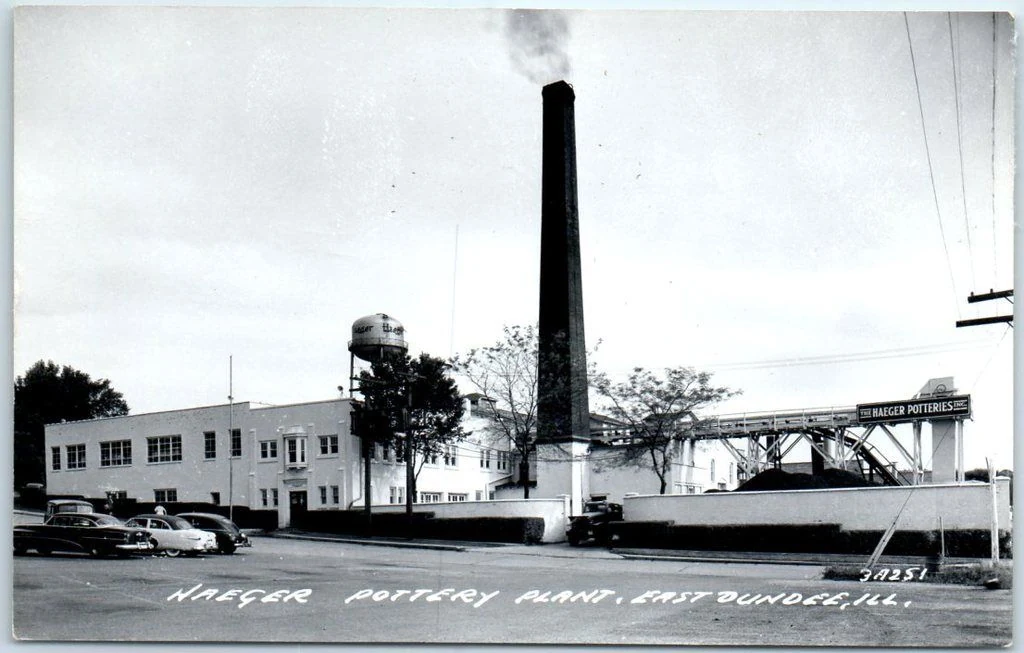
Per the Encyclopedia of Chicago, a brickyard began operating on this general site in 1852, using riverbank clay. D. H. Haeger became part owner in 1871 — the same year East Dundee incorporated — and was sole owner within a year, expanding the business into tile. After the 1871 Chicago Fire, the yard shipped bricks into the city to help rebuild. By the 1920s production had expanded to teaware, luncheonware, and Royal Hickman crystal and glassware. Haeger Potteries exhibited a full working plant at the 1934 Century of Progress Exposition in Chicago, making souvenir pottery on the spot for visitors. By 1985 the company, by then passed to Haeger's great-grandchildren, employed 200 workers, most of them women. (Source: Encyclopedia of Chicago, "East Dundee, IL," Marilyn Elizabeth Perry, 2004/2005 — see East Dundee, Illinois for the full entry)
History
The Haeger Potteries, Inc. operated out of Dundee, Illinois, a community in the Fox River Valley that developed a notable industrial character alongside its residential growth through the nineteenth and twentieth centuries. The pottery works became one of the more recognized manufacturers associated with the area, producing ceramics and decorative goods that circulated widely in American retail markets.
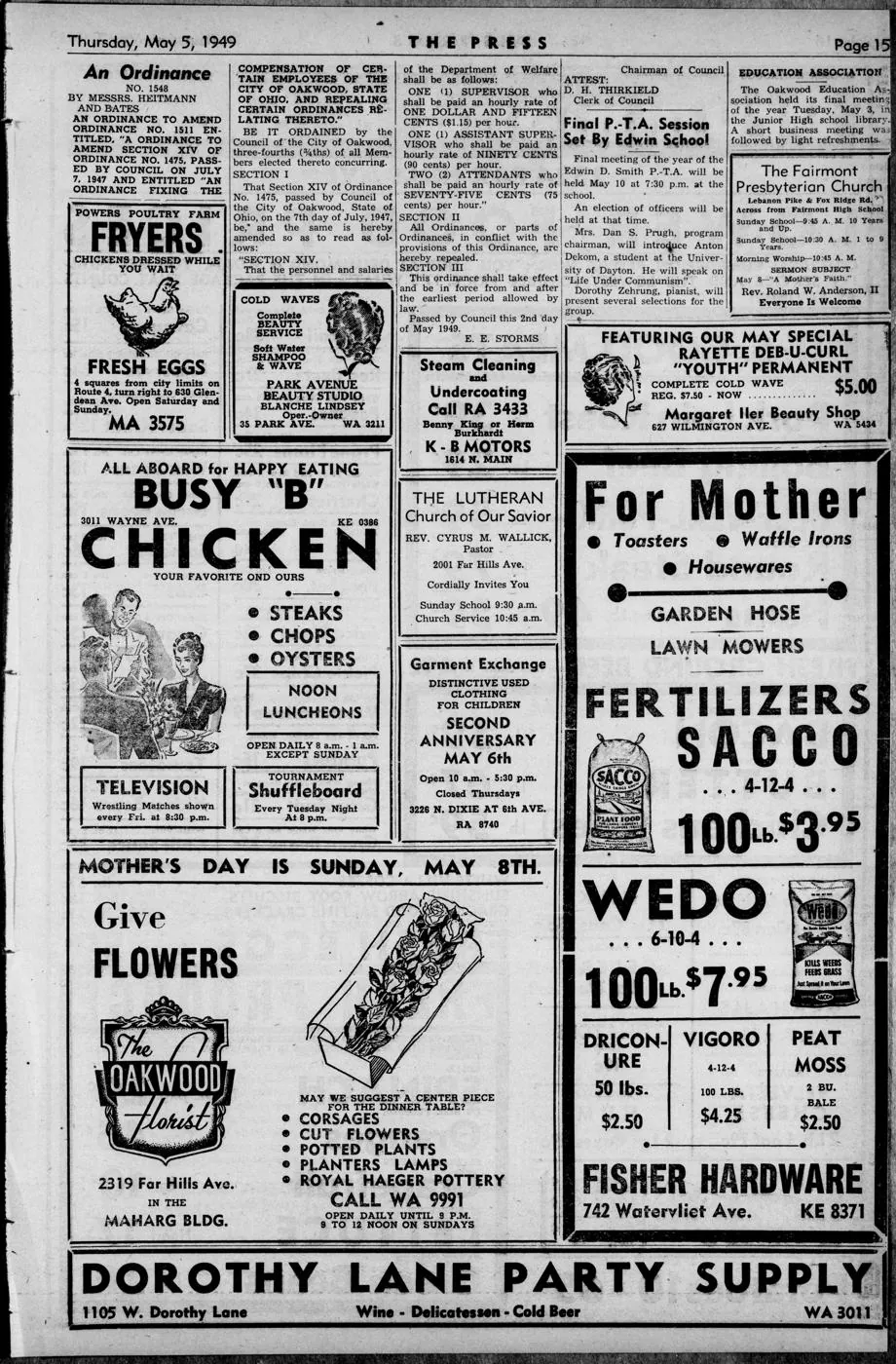
Evidence of the company's geographic distribution reach extends at least as far back as May 1949, when Royal Haeger Pottery was advertised for sale at Oakwood Flowers, a flower shop located at 2319 Far Hills Ave in the Maharg Building in Oakwood, Ohio. The Oakwood Flowers shop offered cut flowers, corsages, potted plants, planters, lamps, and Royal Haeger Pottery among its merchandise, indicating that Haeger's retail distribution network had penetrated Ohio markets well before the mid-1950s. (Source: oakwood_press_1949-05-05_image15)
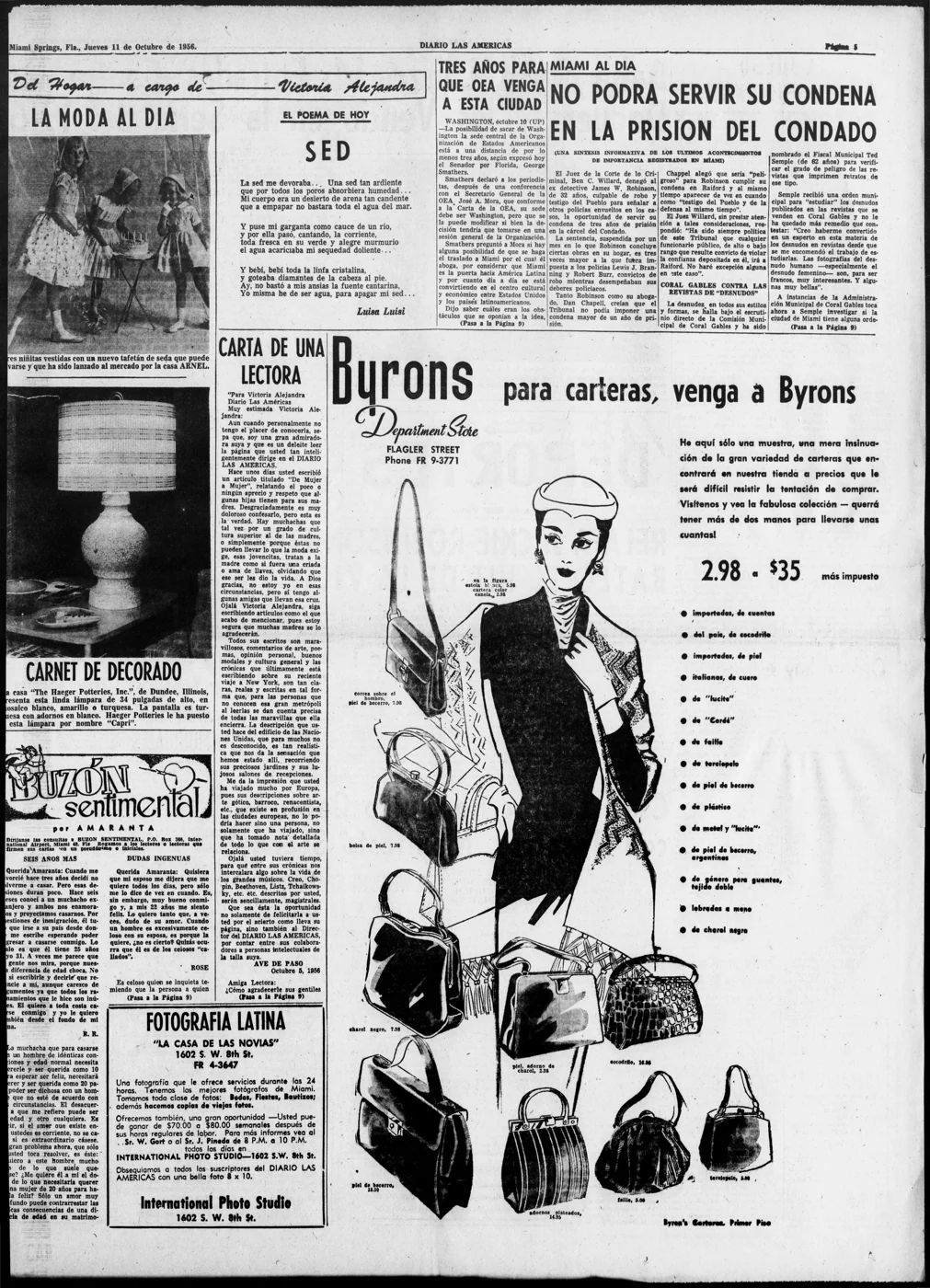
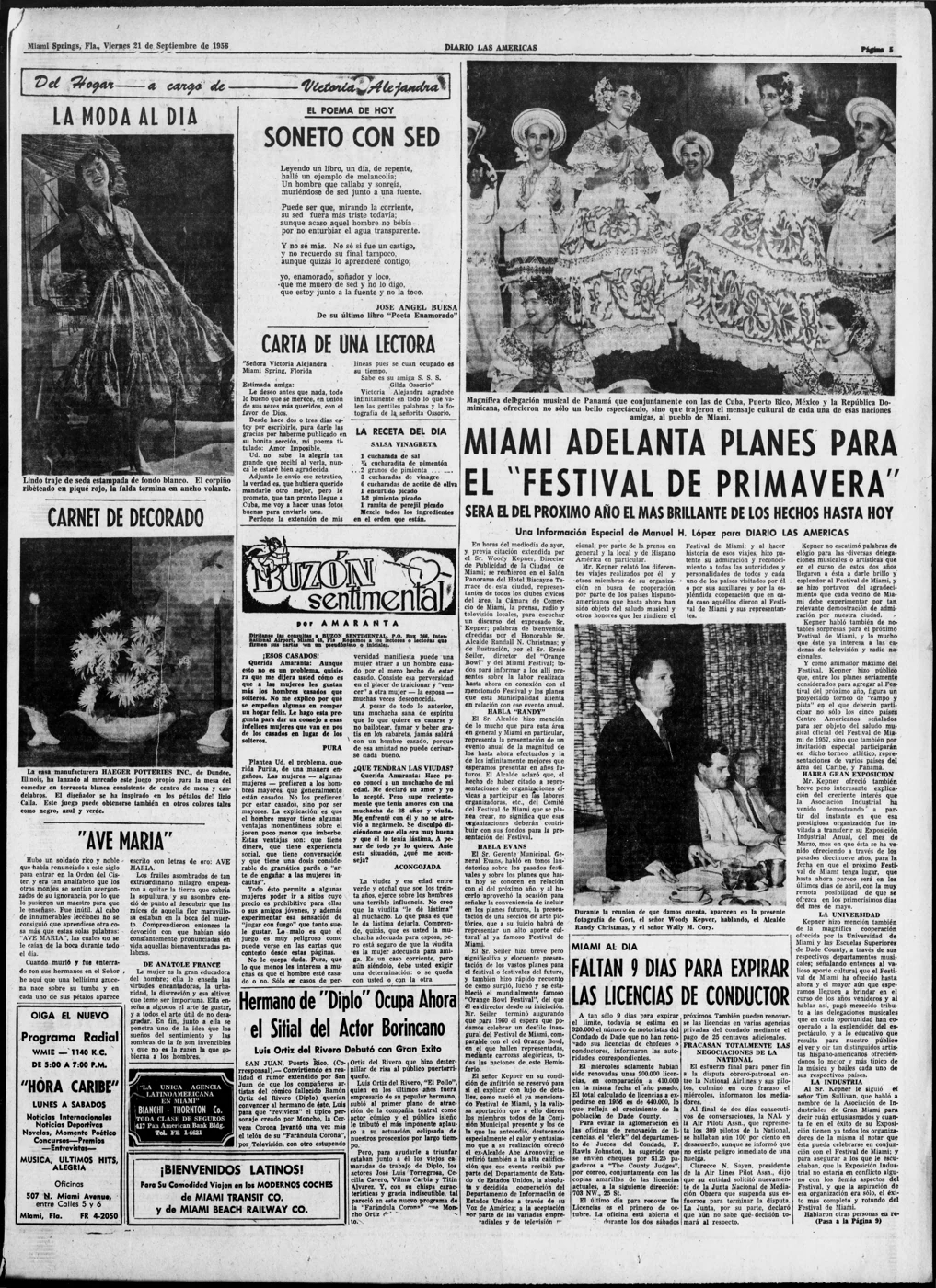
By the autumn of 1956, the company was advertising its wares in Diario las Américas, a Spanish-language newspaper published in the Miami, Florida area. Advertisements have been documented from at least two separate issues — September 21, 1956 and October 11, 1956 — suggesting a sustained advertising presence in that publication during this period. The appearance of Haeger advertisements in this publication suggests the company was actively marketing to a diverse, geographically dispersed consumer base during the mid-1950s.