The Fox River is a tributary of the Illinois River that flows through Kane County, Illinois, forming the geographic and economic foundation upon which both East Dundee and West Dundee were established. The river's combination of reliable water power and navigable character made the Dundee area an attractive site for early settlement and industrial development.
History
According to The History of Elgin, Kane County, Illinois, 1835 to 1875, the Fox River passes nearly straight north to south through eastern Kane County, lined by a narrow strip of woods. The river contained six mill-seats that served as nuclei for villages, spaced less than five miles apart on average along its length. (Source: History of Elgin, Kane County, Illinois, 1835–1875)
As of 1875, Dundee was described as the most northern Kane County village on the Fox River, with a population of approximately 800. The community was noted for its large Scottish population, as well as its churches and schools. At that time, Dundee lacked a railroad connection and, according to the same source, was not expected to receive one. Elgin, situated approximately five miles south of Dundee along the river, had a population of roughly 2,000 and was connected by railroad to Chicago. (Source: History of Elgin, Kane County, Illinois, 1835–1875)
By the time of the Historical Encyclopedia of Illinois and History of Kane County (1904), the Fox River at Dundee supported a working industrial economy centered on its water power. The river provided the motive force for flour mills and saw mills operating in the area, and its banks had become home to a variety of commercial enterprises including brick and tile works, an extensive nursery, and two large milk-condensing plants serving the dairy farming region surrounding the town. (Source: Historical Encyclopedia of Illinois and History of Kane County (1904))
The river also defines the boundary between East Dundee and West Dundee, two legally distinct municipal corporations that together comprised the community of Dundee. This division — one town on each bank — reflects a pattern common to Fox River settlements, where the river served simultaneously as a connective resource and a jurisdictional divide. (Source: Historical Encyclopedia of Illinois and History of Kane County (1904))
Photographs
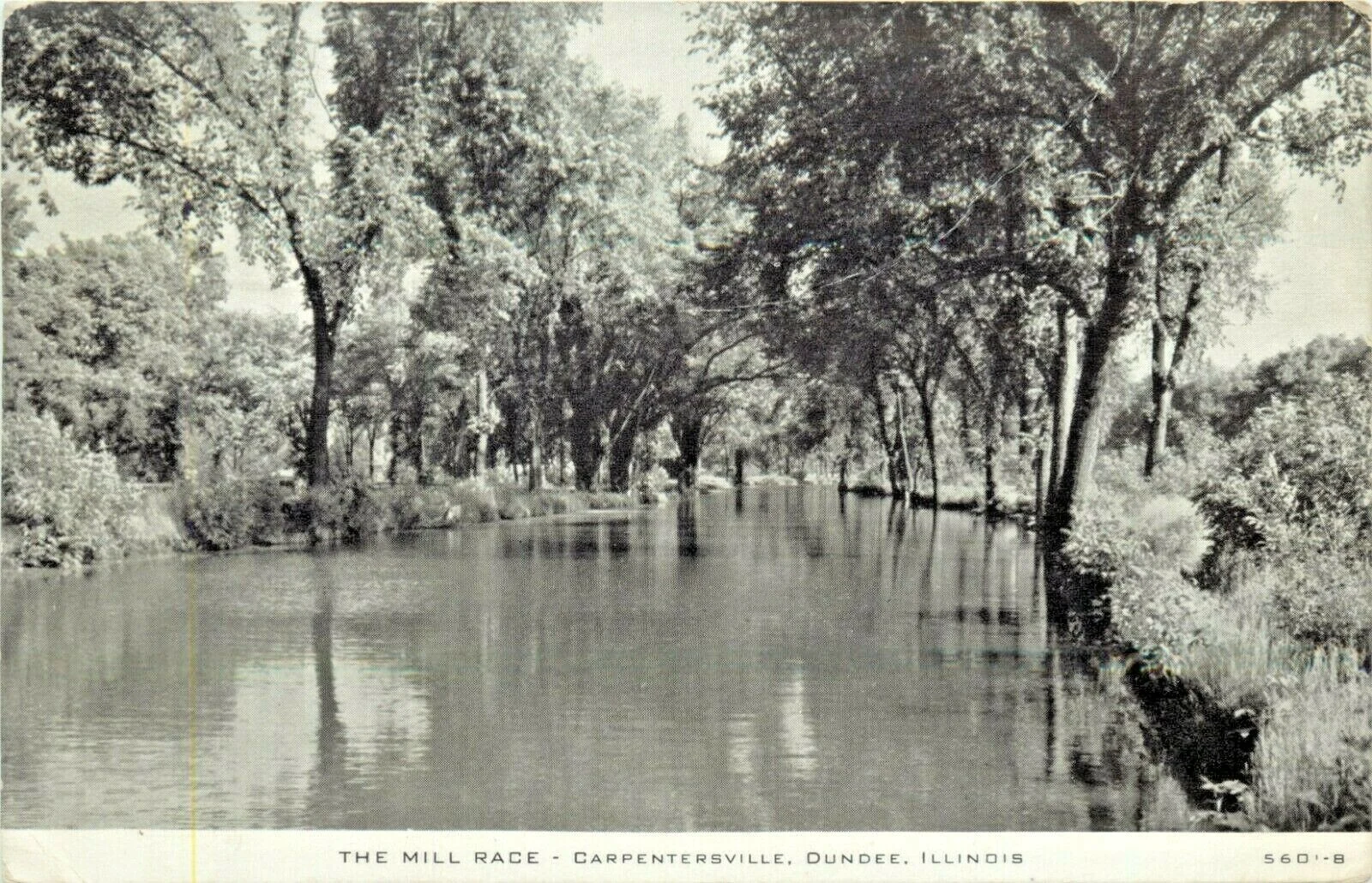
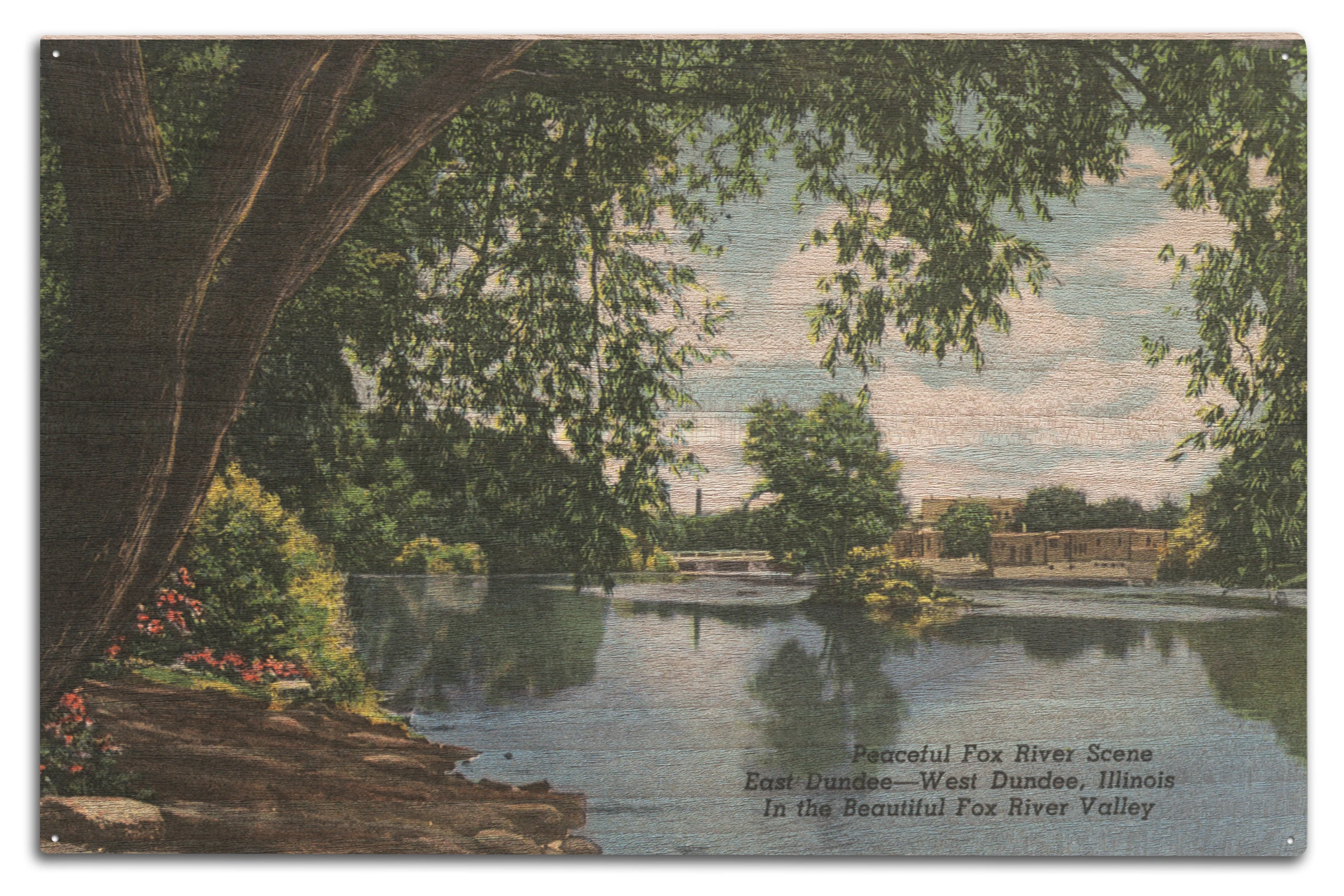
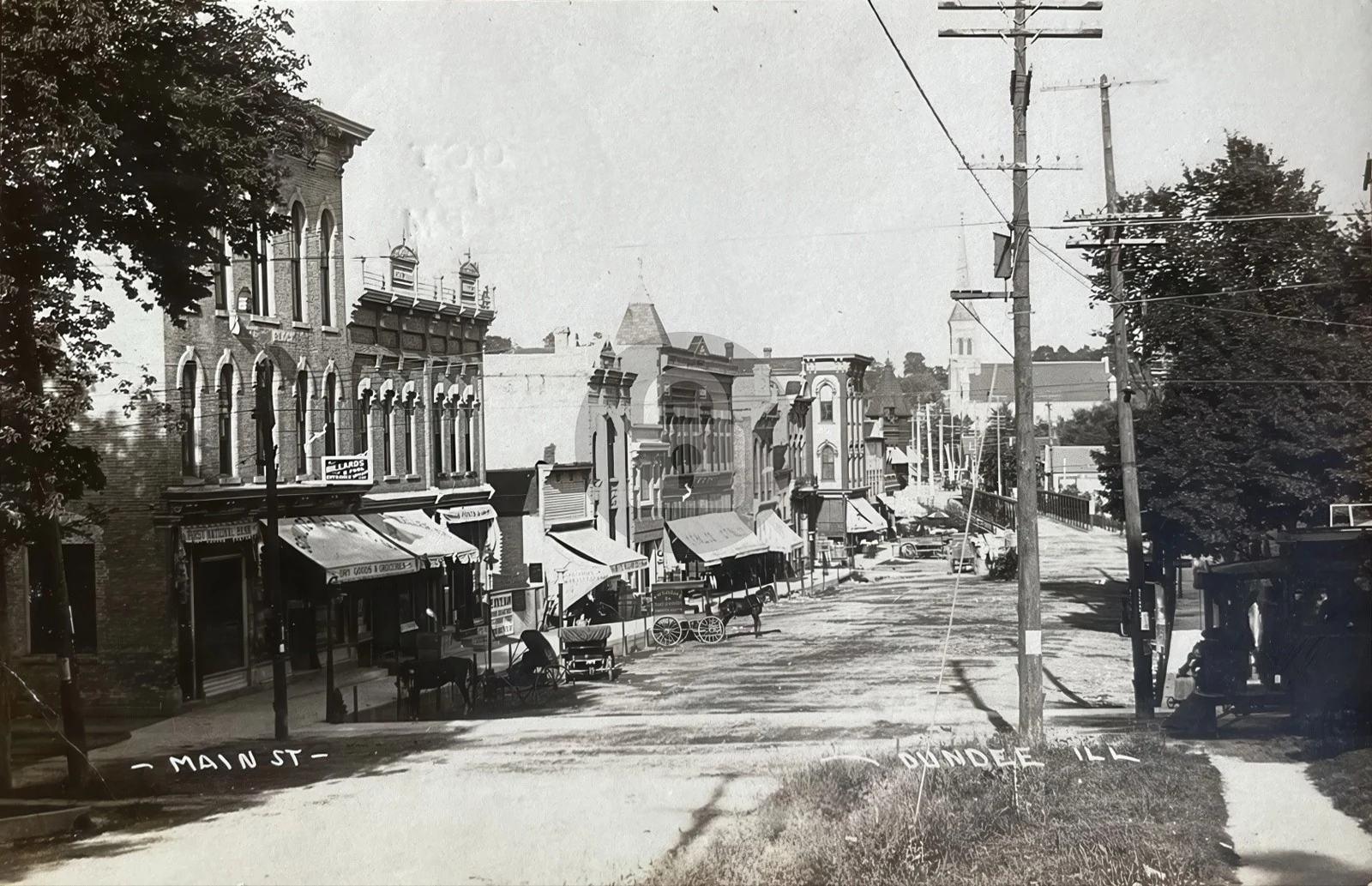
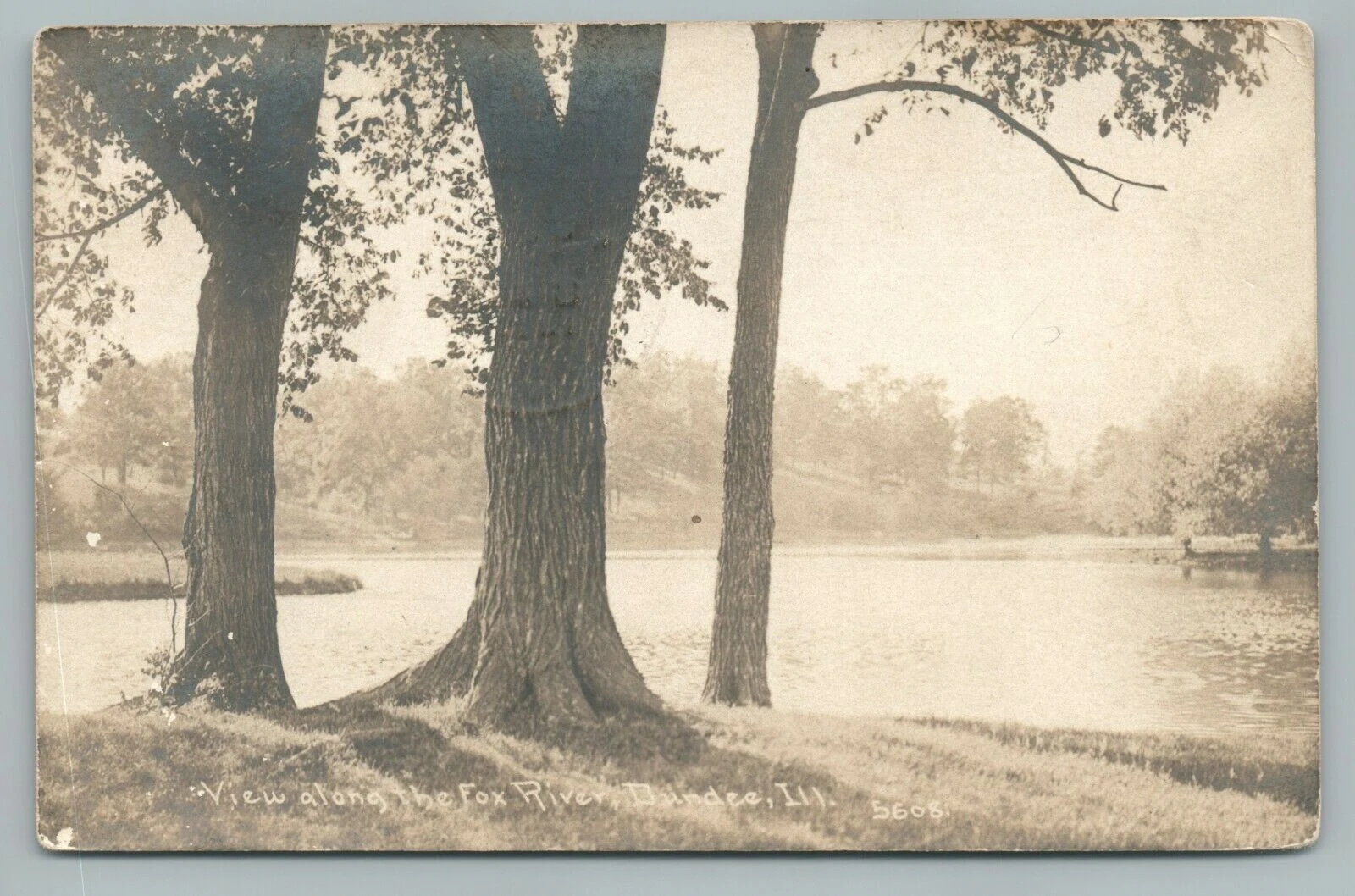
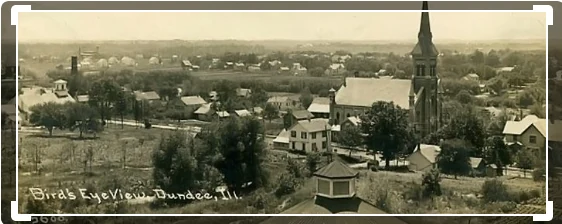
Note: a sixth submitted river photo (`Dundee Postcard 1.jpg`) appears to closely match the composition of the "Fox River — Looking North near Main Street" postcard above, on different card stock — possibly a second printing rather than a distinct scene. Not included here pending a side-by-side check.
Notable Associations
- East Dundee and West Dundee: The two incorporated villages straddling the river, together reporting a combined population of 2,023 in 1890 and 2,765 in 1900. (Source: Historical Encyclopedia of Illinois and History of Kane County (1904))
- Kane County: The county within which the Fox River corridor at Dundee falls. Located within 35 miles of Chicago, Kane County's villages were connected to Chicago by railroad as of 1875, and the county published four newspapers at that time. (Source: Historical Encyclopedia of Illinois and History of Kane County (1904); History of Elgin, Kane County, Illinois, 1835–1875)
- Flour and saw mills: Industrial operations that relied directly on the river's water power, described as "good" by the 1904 encyclopedia. The river's six mill-seats were noted as early as 1875 as the organizing nuclei of Kane County's Fox River villages. (Source: Historical Encyclopedia of Illinois and History of Kane County (1904); History of Elgin, Kane County, Illinois, 1835–1875)
- Scottish settlement at Dundee: The 1875 history of Elgin specifically noted Dundee's large Scottish population as a distinguishing characteristic of the community. (Source: History of Elgin, Kane County, Illinois, 1835–1875)
Sources
- Historical Encyclopedia of Illinois and History of Kane County, 1904. Available at archive.org.
- The History of Elgin, Kane County, Illinois, 1835 to 1875, 1875. Available at archive.org.