Known Activities
According to the Joslyn history, Gifford traveled through Kane County during the early settlement period — likely sometime in the 1820s or 1830s, though a precise date is not given (Source: History of Kane County, Ill., Vol. 1 (Joslyn, 1908)). He is recorded in connection with Samuel Gillan, an early settler who owned a cabin near present-day Algonquin and was known for extending hospitality to travelers passing through the territory.
The landscape Gifford traversed was, by contemporary accounts, a demanding one. The Fox River ran wider and unobstructed in those years, winding southward from Dundee toward Aurora with no bridges or dams to ease a traveler's crossing. Much of the surrounding land consisted of open prairie covered with tall native grasses — reported to reach ten to fifteen feet in some areas — interspersed with stands of timber. Pioneers of the era generally regarded prairie land as unfit for cultivation and left it largely undisturbed (Source: History of Kane County, Ill., Vol. 1 (Joslyn, 1908)).
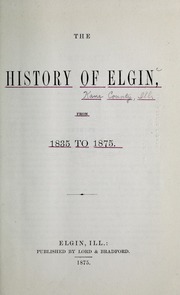
The 1875 Elgin history places Gifford's arrival in Elgin approximately fifteen years before that settlement reached a population of around 2,000 — suggesting his founding activity occurred in roughly the late 1830s or early 1840s, though a precise date is not stated (Source: History of Elgin, Kane County, Illinois, 1835–1875). Elgin, situated five miles south of Dundee along the Fox River, grew during Gifford's era into one of the more prominent Kane County villages, eventually gaining a railroad connection to Chicago, which Dundee did not receive (Source: History of Elgin, Kane County, Illinois, 1835–1875).
Timeline
| Period | Event |
|---|---|
| Early 1800s (approximate) | Traveled through Kane County; sought relief and provisions |
| Early 1800s (approximate) | Reportedly received hospitality at or near Samuel Gillan's cabin, Algonquin area |
| Late 1830s–early 1840s (approximate) | Arrived in and began founding Elgin, Kane County |
| c. 1835–1850 (approximate) | Instrumental in developing Elgin from frontier territory to an established settlement |
| Summer 1874 | Died; death lamented in the 1875 History of Elgin |
Sources
- Joslyn, J. H., ed. History of Kane County, Ill., Vol. 1. 1908. Available via Internet Archive: https://archive.org/details/historyofkanecou01josl#offset-84615
- History of Elgin, Kane County, Illinois, 1835 to 1875. 1875. Available via Internet Archive: https://archive.org/details/historyofelginka00unse#offset-318223